Social connection is not measured by the number of activities on a calendar. A child may attend five groups and still feel unseen, or meet one friend regularly and develop a strong, mutual relationship. For home-educating families, the goal is a dependable network with chances to cooperate, disagree, repair, contribute and belong.
Map the relationships already present
Draw three circles: peers, trusted adults and community. Add cousins, neighbours, friends, librarians, coaches, faith-community members or club leaders whom the child actually knows. Notice both strengths and gaps. A teenager may have online friends but want a nearby study companion; a younger child may see adults often but need repeated play with the same peers.
Prefer repetition over constant novelty
Friendship usually needs more than one exciting event. Choose one or two activities that recur at a predictable time, then protect them for several weeks. A library club, sports practice, co-op, volunteering role or standing park meet can allow familiarity to grow. Do not judge a group solely by whether the first visit produces an instant friend.
Match the setting to the child
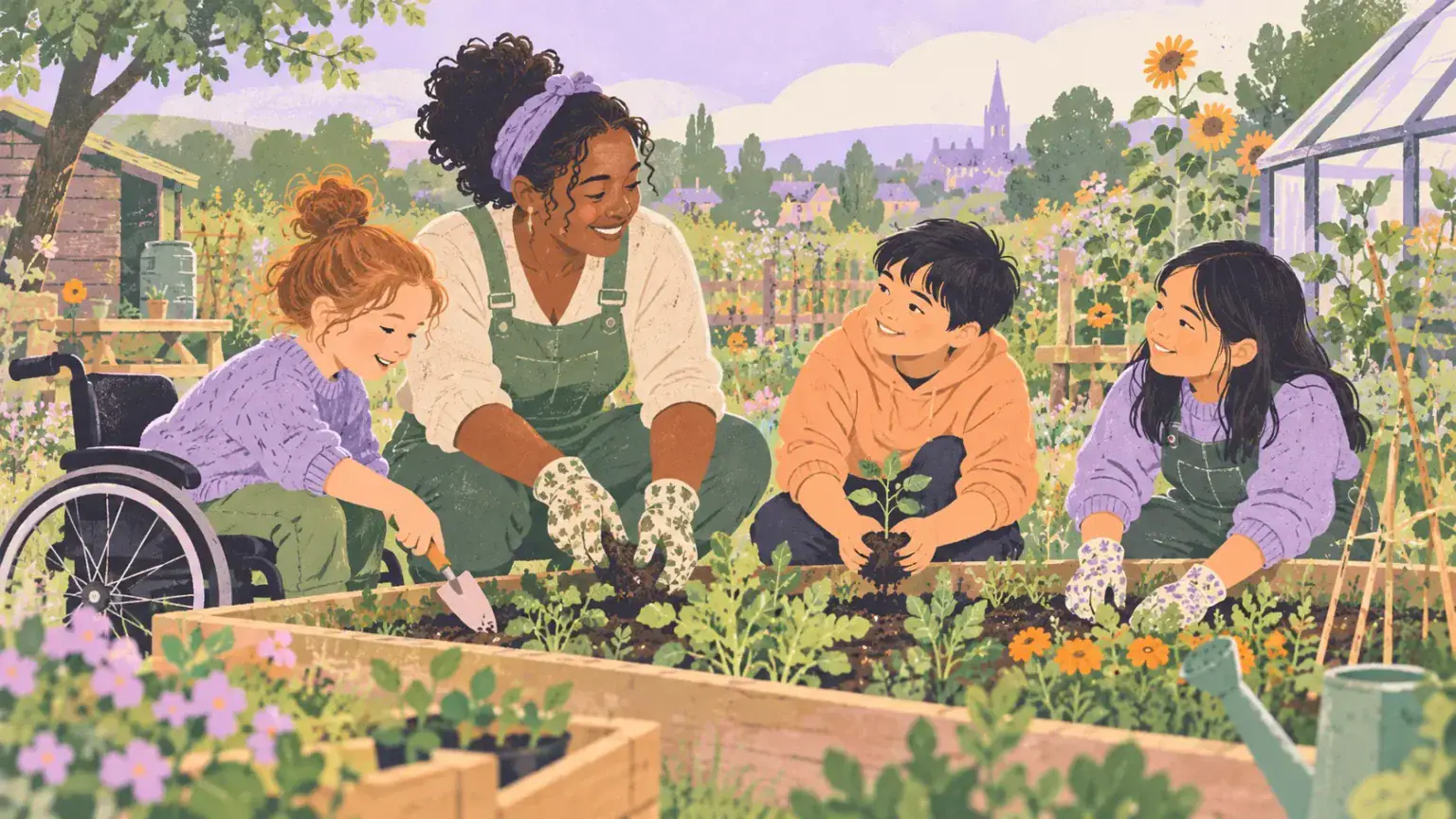
Large unstructured gatherings suit some children and exhaust others. Offer smaller groups, interest-based tasks, parallel play or a clear role. A child who struggles to enter conversation may find it easier to water plants beside another child, build something together or play a rule-based game. Accessibility includes sensory load, transport, communication and physical participation.
Teach the practical steps explicitly
- How to join: “Can I build this part with you?”
- How to disagree: “I want a turn after yours.”
- How to pause: “I need five quiet minutes.”
- How to reconnect: “That went wrong. Can we try again?”
Practise at home without scripting every real interaction. Children need room to develop their own style.
Use online connection with safeguards
Online groups can sustain niche interests and distant friendships, especially for older children, but they should not remove the need for safety boundaries. Know which platform is used, keep age settings accurate, agree what information stays private and create an easy route for the child to show you uncomfortable messages without losing all access automatically.
Leave recovery space
A social calendar must fit the whole child. Watch for headaches, shutdown, irritability or dread after repeated events. Instead of assuming the child needs more exposure, adjust duration, group size or recovery time. Let them help choose one relationship to deepen and one activity to pause.
Review for quality, not appearances
Every month ask: Is there someone my child looks forward to seeing? Can they be themselves? Do they have chances to contribute, not only receive? Is any relationship unsafe, controlling or persistently unkind? Seek local professional advice if isolation is severe, if bullying is present, or if anxiety is stopping everyday participation. Home-education law and expectations vary, so consult official guidance in your area.
If your week needs more shape, see how to build a flexible home-learning week. For a focused teaching routine, use the one-goal short lesson. A simple learning portfolio can record change without keeping every page.
Try a four-week social experiment
Pick one recurring group and one low-key individual connection. Before each event, agree on a manageable participation goal, such as greeting one person, staying for forty minutes or helping with one task. Afterwards, ask what felt comfortable, difficult and worth repeating. Do not demand a detailed report in the car. At the end of four weeks, look for growing familiarity, mutual interest and recovery cost. Keep the activity if the relationship has room to deepen; adjust it if the setting is the problem; stop if it is unsafe or consistently harmful. A quiet child does not need to become outgoing. The useful outcome is access to respectful relationships and the skills to navigate them.