Children often know they should wash their hands but rush the places that are easy to miss: backs of hands, between fingers and around nails. A coverage rehearsal can make technique visible without claiming that paint, lotion or glitter behaves like germs. The real routine remains soap, clean running water, at least 20 seconds of scrubbing, rinsing and drying.
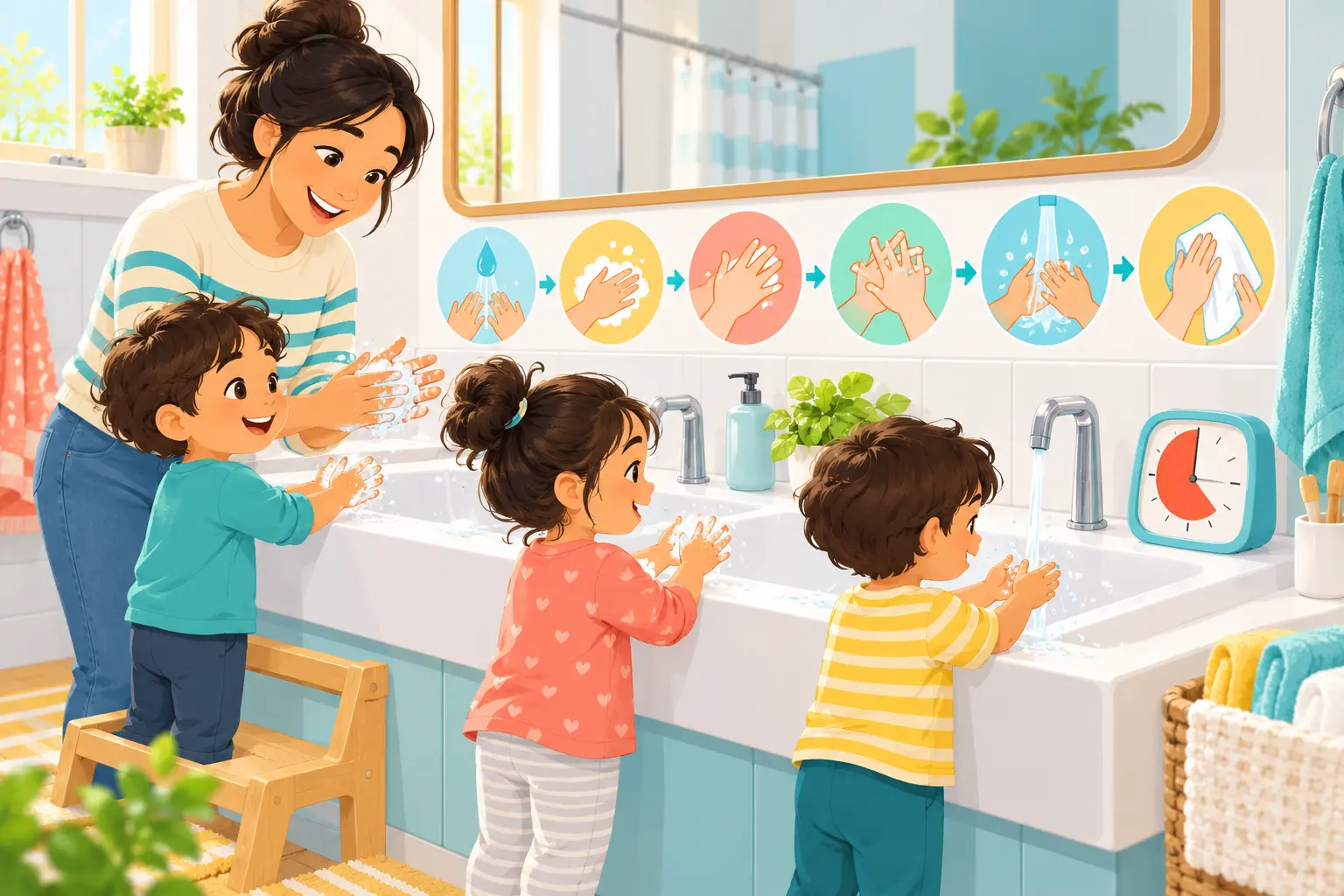
Start with the five steps
- Wet hands with clean running water and apply soap.
- Lather palms, backs of hands, between fingers and under nails.
- Scrub for at least 20 seconds.
- Rinse well under clean running water.
- Dry with a clean towel or air dryer.
Use warm or cold water that is comfortable and safe. An adult supervises young children, checks water temperature and helps them reach the sink securely. A stable step stool needs a non-slip base and close supervision.
Try a coverage rehearsal
Before washing, put a tiny amount of skin-safe, washable coloured lotion on clean hands, or practise on a paper hand outline if skin sensitivities are a concern. Ask the child to spread it as though lathering. Look for uncovered areas. This shows motion and coverage only; it does not reveal microbes or prove that hands are disinfected.
Wash the product off completely using the five steps. Stop if skin becomes irritated. Never use craft paint, harsh dye, cleaning chemical or fluorescent product not designed for skin. Do not share a lotion container during an illness outbreak without safe dispensing.
Build a 20-second cue
Children can count slowly, use a visual timer or say a familiar rhyme that lasts about 20 seconds. Avoid making speed the goal. The cue should support complete scrubbing without turning the sink into a performance. If a child needs extra processing time, give the steps one at a time.
Practise the forgotten moments
- Before preparing or eating food
- After using the toilet or helping with toileting
- After coughing, sneezing or blowing the nose
- After touching animals, animal food or waste
- After touching rubbish
- Before and after caring for a wound
Post a picture sequence near the sink if helpful. Keep language neutral: “Let’s do the between-fingers step,” rather than “Your hands are disgusting.” Excessive washing can irritate skin, so the aim is key moments and good technique, not constant washing driven by fear.
Adapt for sensory and motor needs
Offer unscented soap, a quieter sink, a pump requiring less force or a towel texture the child tolerates. A caregiver can provide hand-over-hand support only with consent and as much independence as possible. A seated child may need an accessible basin or portable setup recommended for the setting.
Soap, water and sanitiser
CDC says soap and water are best in most situations. When they are unavailable, an alcohol-based hand sanitiser containing at least 60% alcohol may be used. Adults supervise young children to prevent swallowing and keep it away from eyes and flame. Hands that are visibly dirty should be washed with soap and water when possible.
Connect hygiene practice with a calmer toothbrushing routine, packing a balanced lunch and family sun-safety habits.
Adapt the practice without adding fear
For younger children, use a short sequence card showing palms, backs of hands, between fingers, thumbs, fingertips and wrists. An adult can point to each area while the child washes. Older children can compare their first attempt with the coverage check and identify one spot they tend to miss. If a child has limited movement, sensory sensitivities or a skin condition, adapt the position, water flow and products with their caregiver or health professional; the activity should never require painful scrubbing.
Keep the message accurate: paint, lotion or washable colour shows where the practice material reached, not where real microbes are. Clean the practice material off according to its instructions, then wash with ordinary soap and water. Stop if skin becomes irritated. The success measure is a repeatable sequence and comfortable technique—not perfectly coloured hands, speed, or competition between children.