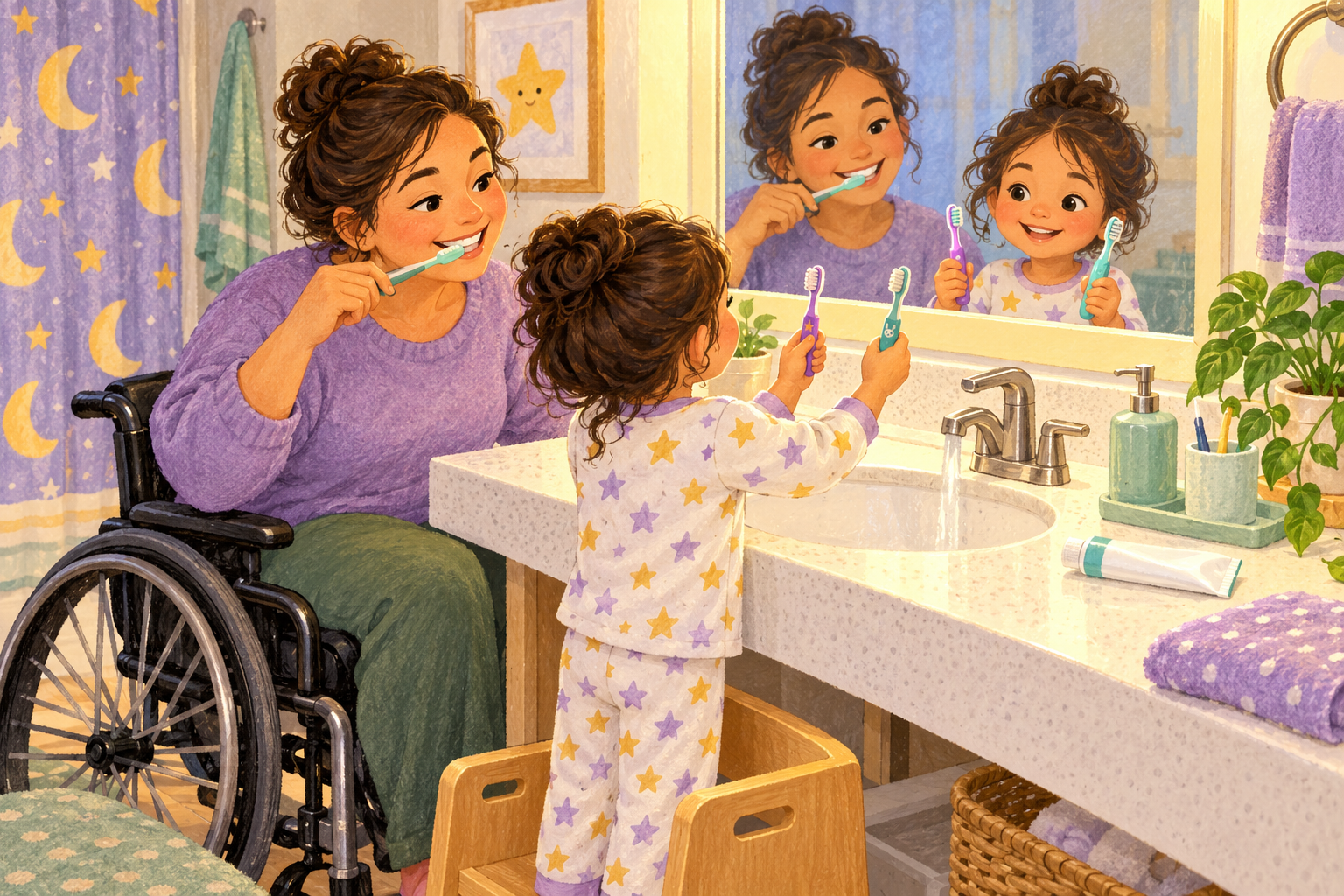
A child can dislike toothbrushing and still need an adult to make sure the teeth are cleaned. The most workable approach combines a firm, predictable routine with small choices about how it happens. The choice is not whether to brush; it is which brush, where to stand or which song to use.
Keep the health basics steady
Begin brushing when the first tooth appears. Use a soft, child-size toothbrush and fluoride toothpaste, following local dental guidance and the product label. The American Academy of Pediatrics recommends a rice-grain smear for children under three and a pea-size amount for ages three to six. Young children need adult help; many still need supervision and a final adult brush until around age seven or eight.
Brush last thing at night and at one other regular time. Spit after brushing when able; follow local advice about rinsing. A dentist can tailor guidance for a child at higher risk of tooth decay.
Make the routine predictable
- Give a short warning: “Teeth in two minutes.”
- Offer two choices: the green or purple brush; standing at the sink or sitting on a stool.
- Let the adult brush first, using a short song or visual timer.
- Give the child a turn to finish.
- End the same way: rinse the brush, place it in the cup, story time.
A visual sequence can reduce verbal prompting. Borrow the method from visual schedules for family routines and use four pictures: toothpaste, brush, spit, put away.
Find a comfortable position
Some children cooperate better while looking in a mirror; others prefer to lean back against the adult so the head is supported. Try brushing one section at a time and narrate: “Top outside, top inside, chewing surfaces.” Keep movements gentle at the gum line.
For a child with limited mobility, bring the routine to an accessible seated position and stabilize the head comfortably. A child with sensory sensitivity may prefer an extra-soft brush, unflavoured or mildly flavoured fluoride toothpaste, a manual brush instead of an electric one, or gradual practice touching the lips and teeth. Ask a pediatric dentist or occupational therapist for individualized support if brushing remains extremely distressing.
Use play, not deception
Let a toy “brush” first, take turns counting teeth or allow the child to brush the adult’s teeth with a separate brush. Avoid pinning the child down, threatening a dentist visit or pretending the brush will not touch when it will. Trust makes repetition easier.
Try language that acknowledges the feeling while holding the limit: “You do not like the mint taste. Teeth still need cleaning. Would you like the mild toothpaste or the other fluoride toothpaste?” If everyone is exhausted at bedtime, move the first daily brush to a calmer time and simplify the bedtime sequence. The strategies in a bedtime routine for endless requests can help.
When to see a dentist
Arrange dental care for ongoing pain, bleeding that persists, swelling, injury, broken teeth, new dark or white patches, bad breath that does not improve, or difficulty eating. Facial swelling, fever with dental pain, trouble swallowing or breathing, or a child who looks very unwell needs urgent care.
Routine dental visits also let the child practise the setting before a problem becomes painful. Tell the dental team about sensory, communication, mobility or anxiety needs when booking.