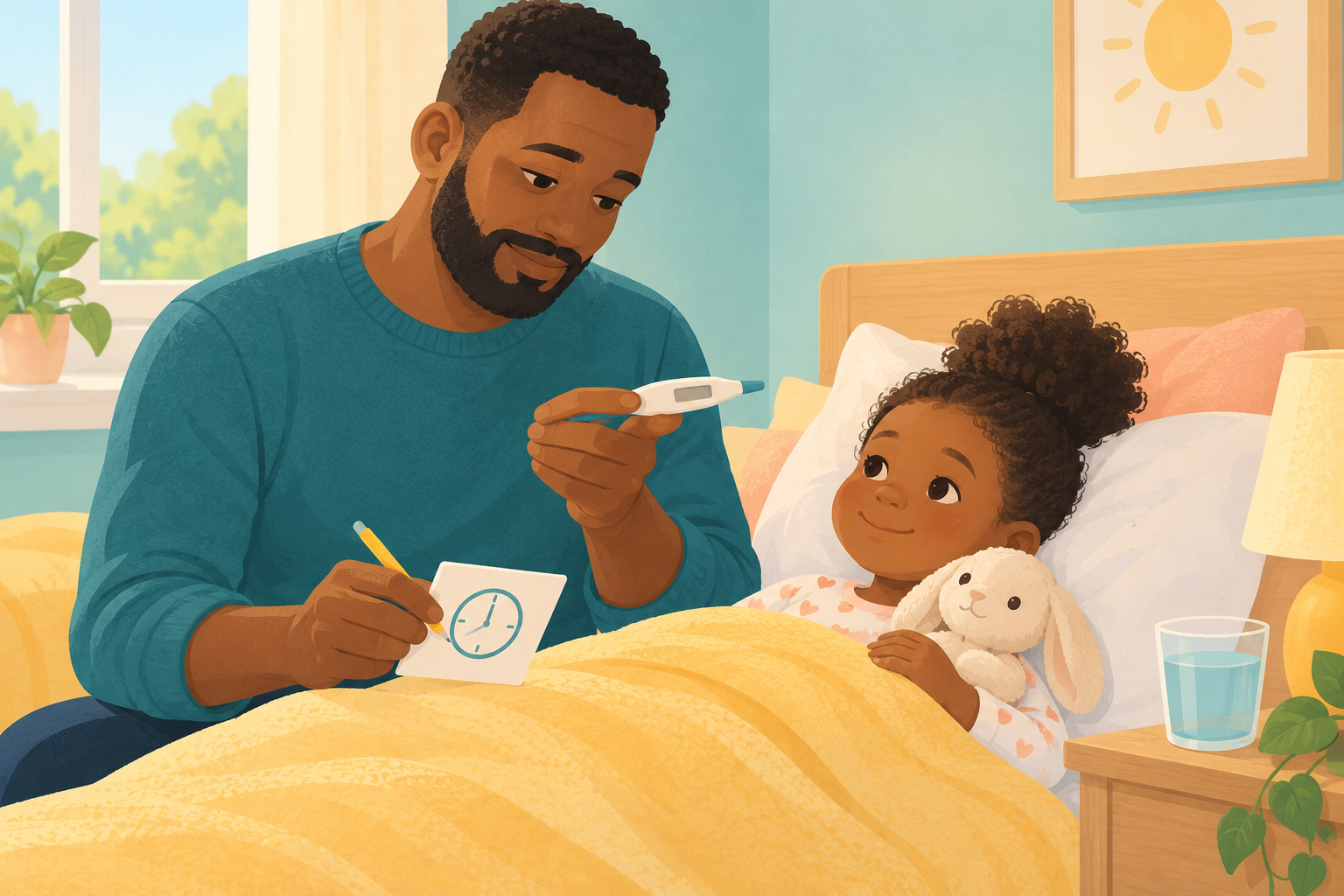
A warm forehead can make a whole household anxious, but a number on the thermometer is only part of the picture. Your child’s breathing, alertness, comfort and ability to drink matter too. This guide helps you collect useful information, support your child and know when not to wait.
Start with a reliable temperature
Use a digital thermometer and follow its instructions. Touch alone cannot tell you how high a temperature is. Note the reading, the time and where you measured it, because mouth, armpit and other methods are not directly interchangeable.
Try to measure when your child has not just had a bath, been wrapped in heavy bedding or finished vigorous play. If the reading does not fit how they look, let them settle and repeat it correctly. For babies younger than 3 months, any temperature of 38°C (100.4°F) or higher needs immediate medical advice.
Look at the child, not only the number
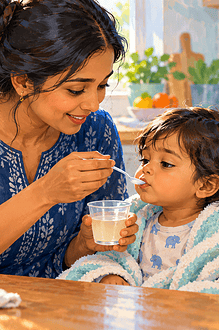
A child with fever may want more rest, closeness and fluids. Offer frequent drinks; breastfeed or formula-feed babies as usual. Dress them in light, comfortable layers and keep the room pleasantly cool rather than cold. Let them sleep, but check that their breathing looks comfortable and that they can be roused normally.
You do not need to force food. If appetite is low for a short time, focus on fluids and familiar, easy foods when your child asks. A simple guide to drinks for children can help you choose age-appropriate everyday fluids.
A short fever note helps
- Record the temperature, time and measurement method.
- Note drinking, urination or wet nappies, breathing and alertness.
- Write down any rash, pain, vomiting, diarrhoea or other symptoms.
- List any medicine already given, including the exact product, dose and time.
This is more useful to a clinician than a long list of changing numbers. Do not alternate or combine fever medicines unless a qualified health professional has told you exactly how. Use only an age-appropriate product, read the label every time and measure liquid medicine with the supplied device.
Get urgent help for warning signs
Seek urgent medical help now if your child has difficulty breathing; blue, grey or unusually pale lips or skin; a seizure; a stiff neck; a rash that does not fade when pressed; severe dehydration; persistent inconsolable crying; or is very hard to wake, confused or unusually floppy. Trust your observation: a child who looks seriously ill needs assessment even if the temperature is not especially high.
Contact a health professional promptly if fever persists, repeatedly returns, comes with worsening pain, or your child has a long-term condition or weakened immune system. Babies under 3 months with fever should not be managed at home without immediate medical advice.
Keep the plan simple
Recheck your child rather than chasing a perfectly normal temperature. The goal is comfort, fluids and watching for change. If worries are keeping everyone awake, a predictable bedtime routine can be shortened to its most soothing essentials while your child is unwell.