- Verify the sponsor and programme
- Understand how the host was screened
- Meet before travel
- Build a communication ladder
- Agree on boundaries without scripting every moment
- Make money and documents boring
- Know how a placement changes
- Practise one uncomfortable scenario
- Plan for health and access without oversharing
- Sources and further reading
The acceptance email may arrive months before departure, but the important preparation is more than flights and packing. A safe youth exchange needs a verified sponsor, a screened placement, independent ways to ask for help and a teenager who knows they may speak up even when adults have invested time and money in the trip.
Verify the sponsor and programme
Use the relevant government or education authority to confirm that the sponsor is recognised for the type of exchange offered. Contact the sponsor through details found independently, not only through an email link. Ask who regulates the programme, which local partner manages the placement and where complaints are recorded.
Understand how the host was screened
Request a written account of interviews, references, household checks and adult background screening. Find out who lives in the home, where the student will sleep, whether another student is placed there and what transport is available. Screening lowers risk; it does not remove the need for ongoing contact and a clear relocation process.
Meet before travel
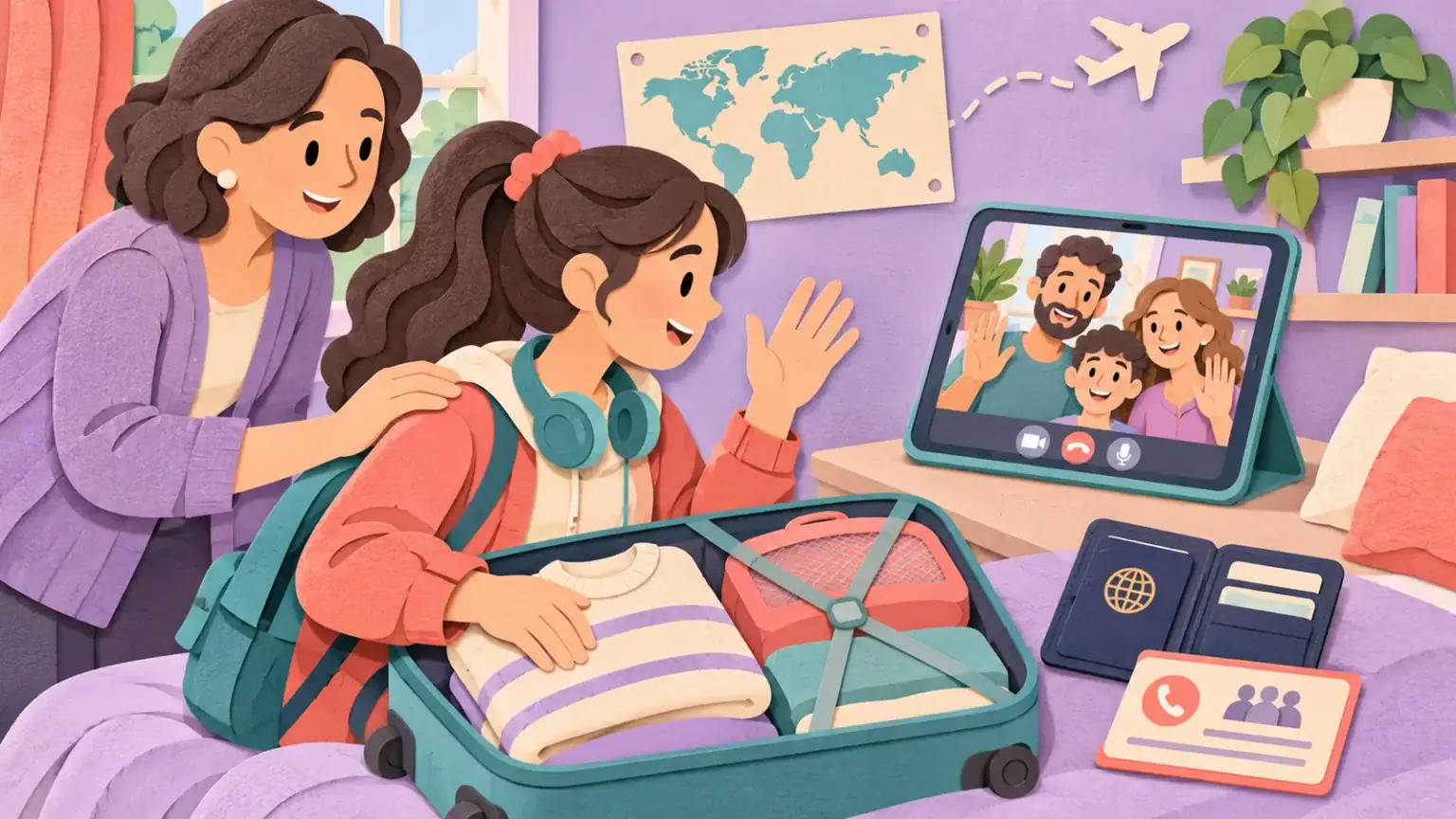
Arrange a video call involving the student, host and programme coordinator. Talk about meals, school transport, internet access, household routines, faith practices, pets, chores, privacy and visitors. The goal is not identical expectations. It is to surface assumptions before they become a conflict far from home.
Build a communication ladder
- The teenager can contact the local coordinator directly.
- The family has a 24-hour programme number and a second organisational contact.
- Both sides know how to reach local emergency services and the relevant embassy or consulate.
- A regular family check-in is scheduled, with permission to call outside it.
Put these details on a family emergency communication card and keep paper and digital copies.
Agree on boundaries without scripting every moment
Discuss transport with unfamiliar adults, alcohol or substances, sleeping arrangements, dating, photos, money, work and overnight trips. Give the teenager simple language: “I need to check with my coordinator,” “I am not comfortable with that,” and “Please help me contact home.” Curiosity and cultural respect never require accepting unsafe touch, secrecy or humiliation.
Make money and documents boring
Confirm what the programme pays for and what the student must cover. Provide a modest accessible emergency fund without requiring the host to approve every use. Keep passport copies, insurance information, visa details and prescriptions separately from the originals, following the organiser’s security rules. The family document-folder checklist can help organise copies.
Know how a placement changes
Ask what happens if the host relationship is not workable, even when no one has committed misconduct. Who decides on a move? Where can the student stay temporarily? Can the family request a different coordinator? A programme should not force a young person to endure distress merely to protect a host’s feelings or the programme’s reputation.
Practise one uncomfortable scenario
Use a realistic example: the host wants the student to ride with someone who has been drinking, or an adult enters the bedroom without knocking. Let the teenager choose the first safe action, the next contact and a fallback. Keep the practice calm; it is rehearsal, not a prediction.
Exchange can be joyful precisely because the support structure is clear. When the teenager knows where choice ends and pressure begins, they can participate more freely in school, family life and the unfamiliar moments they travelled to experience.
Plan for health and access without oversharing
Give the sponsor the information needed to support the student safely, using secure channels. Confirm medication storage, allergy plans, dietary needs, mobility access and communication support before travel. The host family does not need unrestricted access to every medical or school record. Ask who can see sensitive information and when it will be deleted.
Build in recovery time. New language, routines and social expectations can be tiring even when the placement is going well. The teenager should be able to take quiet time, decline an optional outing and contact home without being labelled ungrateful.