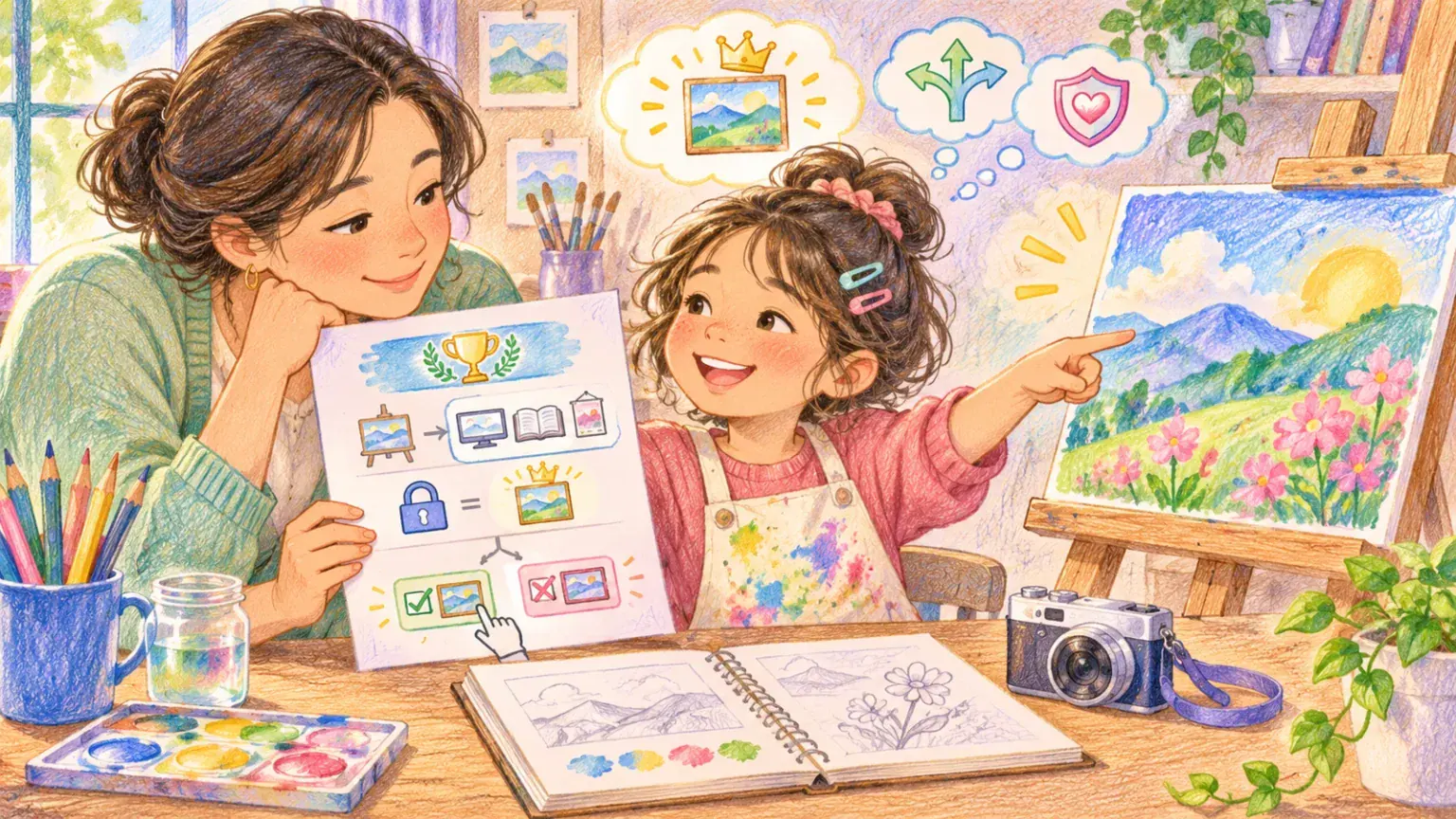
A child can be delighted to share a drawing, story, song or video and still deserve a careful adult reading of the submission terms. “By entering, you agree” may cover far more than judging the work. It can include permission to publish, edit, advertise with or license the child’s creation and image.
Separate the work from the entry
Write down exactly what will be submitted: the original file, a copy, a photograph of an artwork, a performance recording, a biography or a headshot. Keep the original and a dated copy at home. Do not send an irreplaceable physical item unless the return process and insurance are clear.
Find the ownership clause
Copyright rules vary by country, but creators generally have rights over original expression, and minors can hold copyright. Terms may ask for a licence rather than ownership. Those are different. A licence allows stated uses; an assignment transfers rights. If wording says “all rights,” “in perpetuity,” “irrevocable,” “worldwide” or “sublicensable,” pause and ask the organiser to explain it in ordinary language.
Translate the licence into real situations
- Can the organiser post the work on its website?
- Can it use the work in paid advertising?
- Can it give the work to sponsors or partners?
- Can it edit, crop, translate or combine the work with other material?
- Does the child receive credit, and can a pseudonym be used?
- Can the family withdraw permission later?
The answers should match the opportunity. A limited licence to display shortlisted work for a defined period is different from unrestricted commercial use forever.
Read publicity terms separately
Permission to use the creation does not automatically answer whether the child’s name, school, voice, face or location will be published. Ask what is optional. A child may want the work shown without becoming a public spokesperson. Do not add a school uniform, home background or identifying profile merely because the form offers space for it.
Let the child participate in the decision
Explain the likely audience and duration in age-appropriate language. For a younger child: “The organisers want to put a photo of your picture on their website. They also ask to show your first name. How do you feel about that?” For a teenager, read the actual clause together and invite questions. Adult consent should not erase the child’s refusal.
Check prizes, payment and future use
Confirm whether a prize is the only payment, whether taxes or travel costs apply and whether commercial sales are possible. If the work could become a book, product, campaign or recording, unclear rights deserve professional legal advice in the relevant country. Do not rely on a social-media comment as a contract change; request written clarification from an authorised organiser.
Save an evidence folder
Keep the rules, submission date, exact file, permissions, correspondence and result. The organiser may update a webpage later. Use the record-keeping approach in the family document-folder checklist. For the wider legitimacy check, pair it with the competition-vetting guide.
If the terms are disproportionate, the child can choose a different venue, share privately or create without submitting. Recognition is welcome; retaining control over a young creator’s work is valuable too.
Check what happens after the result
Some terms activate only for winners or shortlisted entries. Read what changes at each stage: interviews, exhibitions, publication, travel, sponsor promotion or transfer of files. Ask whether the child may decline later publicity without losing an earned prize. If the organiser wants a new permission after judging, review it as a separate decision rather than assuming the original entry covered everything.
When the child collaborates with classmates or siblings, record who created which part and confirm that everyone agrees to the submission. One person should not promise rights they do not control.