By EdCaptain editorial desk · Published
“I made this!” Your child opens an animation, then mentions that the moving character came from somebody else’s Scratch project. Before treating that as dishonesty, ask them to show you the starting point. Building on another person’s work is part of Scratch’s remix culture. The useful conversation is about describing that contribution honestly.
This guide is for children aged 8–12 with an adult. It helps a child who already has some familiarity with Scratch plan a remix and explain its origins. It does not require a new account or public posting.
Permission to remix does not mean “I made every part”
The Scratch Help Center’s guidance on credit says shared projects can be remixed, with something new added and credit given to the original creator and other significant contributors. It also recognises the platform’s automatic remix attribution as sufficient credit, while encouraging credit in project notes.
You can value your child’s work without erasing the starting point: “You chose the changes and worked out how to make them happen. Let’s also show which parts somebody else made.”
Scratch’s online community guide encourages meaningful changes and credit. For this family exercise, choose a change the child can explain. Do not invent a rule that a remix must contain a particular percentage of new work, or judge its value by how many blocks changed.
Put the starting point beside the idea
You need paper, a pencil and access to the original project’s page if the family is already using Scratch. An adult should preview the project and remain available for online activity. Keep real names, school details, contact information and other private material out of anything that might be shared.
Allow a short planning session rather than insisting the remix be finished today. Fold the paper into three sections: what was there, what I want to change, and whom to credit. The adult can write while the child talks or points.
- Identify the starting project. Record its title, creator’s public username and project link. Look at any existing notes naming other contributors; do not assume the latest creator made every asset.
- Describe what is borrowed. Use specific language, such as the character drawing, starting animation, sound or movement code. “Everything came from the internet” will not help you find the source again.
- Choose one explainable change. The child might add a scene, change what happens after a key press or give an animation a different ending. Ask what they want a viewer to notice.
- Try and check the change. Where a remix is already being made, compare its behaviour with the starting project. Let the child explain what worked and what still needs help. Keep the original source information with the draft.
- Write a short account of the work. Name the source and its creator, describe what was used, then describe the child’s changes. Add other contributors where relevant.
A child does not need to understand every script in a complex project before exploring it. They do need to avoid claiming that an unfamiliar script was their own invention. “I used the movement code and changed the ending” is a useful, honest explanation.
Make the credit informative
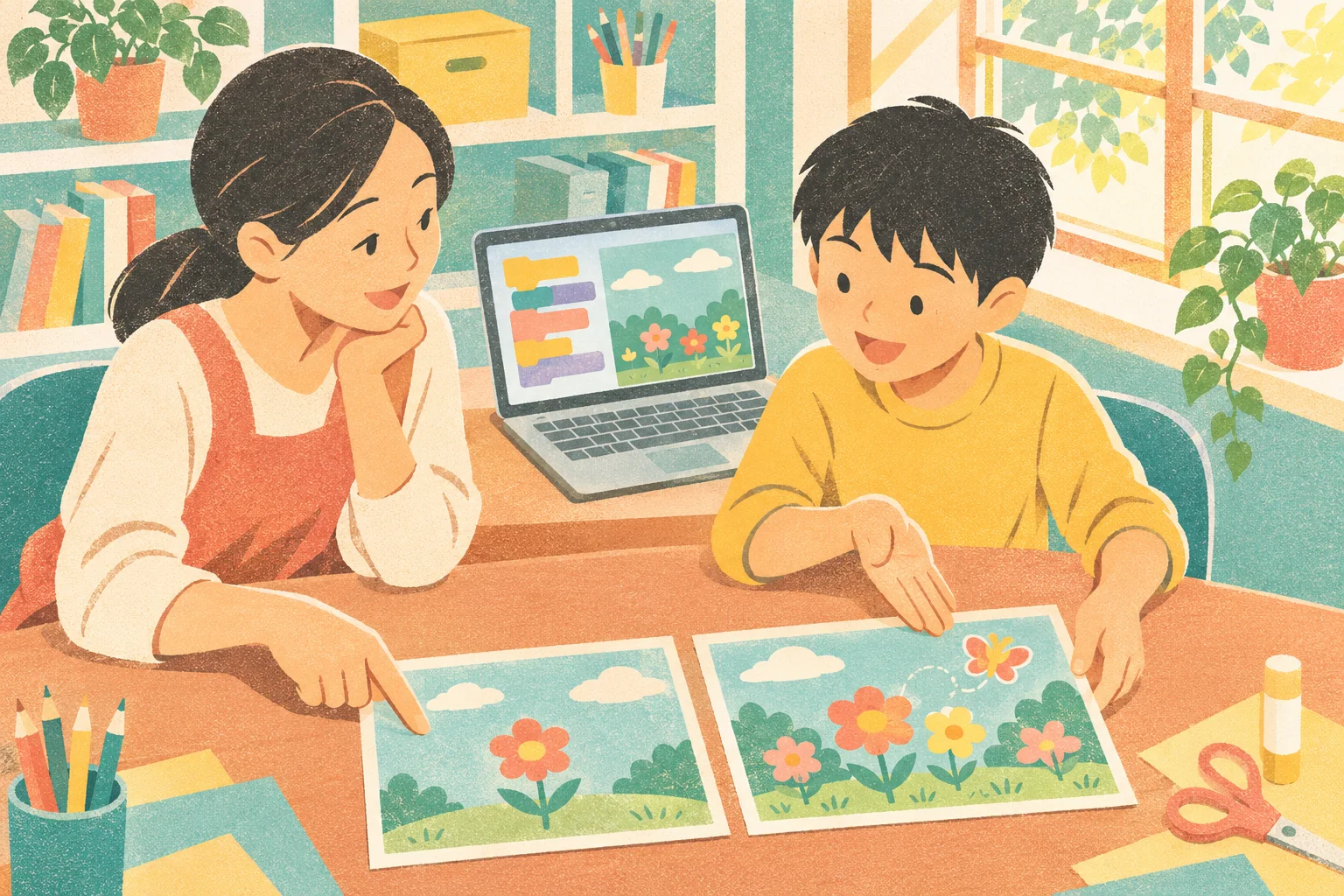
Imagine a fictional garden animation that already has a growing flower. The child adds a butterfly and changes the background. Their notes could explain: “The original project supplied the growing-flower animation. I added the butterfly and made a new background.” In a real project, include the actual project title, creator’s public username and a link to the starting work.
Keep automatic attribution visible when it is present. If material comes from several places, a general “thanks everyone” will not explain those contributions. An adult can help find the sources without rewriting the child’s description into impressive language they cannot explain.
The permission described here concerns shared Scratch projects. Do not assume it covers a song, photograph or character found elsewhere online. Use the source’s actual terms and choose another resource if permission is unclear.
A school assignment asks a separate question
Before submitting a remix, read the assignment instructions. A community may welcome remixing while a teacher needs the student to create a particular part independently.
Ask the teacher: “My child wants to start from a shared Scratch project and credit it. Is that allowed for this task, and which parts need to be their own work?” Keep the answer with the project plan. Clear credit does not automatically make a borrowed starting point acceptable for every assessment.
If work has already been submitted with an inaccurate description, help the child correct the account and follow the school’s process. Our guide to responding to copied schoolwork covers that different situation.
Keep the child’s contribution visible
For ages 8–9, work with one starting project and one change. The child can dictate the explanation or point to before-and-after scenes. For ages 10–12, add a simple source list when code, artwork and sounds have different origins, and ask them to identify which contribution belongs to whom.
If browsing or editing is not accessible today, rehearse on paper. An adult draws a simple garden, the child draws a changed version, and together you describe which idea came from the first drawing. This prepares the credit conversation without needing a live project or another person’s artwork.
Sharing is a separate family decision. Scratch’s community guide explains that shared work can itself be remixed and is publicly visible. A child who is not ready for that can keep working without publishing. If a credit dispute arises, use Scratch’s reporting route rather than posting accusations or encouraging others to confront someone.
Finish by asking, “What can you now explain about your work?” Save that reflection with a private copy if useful; our private digital portfolio guide helps keep the audience deliberate. Pride and attribution can belong in the same project.