By EdCaptain editorial desk · Published · Updated
General educational guidance. No qualified clinical review is recorded for this article. Health and safety information.
Decorate a cardboard box or other smooth-edged container and offer it as a place for written or drawn worries. This can open a conversation; it does not make a worry disappear.
Why this matters
Children often carry worries without ever putting them into words, which can let a small concern grow larger simply from going unexamined. Writing a worry down and physically placing it somewhere, rather than just thinking about it, gives a child a concrete sense of having done something with it, and it creates a natural, low-pressure opening to talk the worry through with you, rather than carrying it alone.
What you need
Use a cardboard box with a lid, paper and age-appropriate drawing materials. An adult makes any opening. Avoid sharp metal edges, small detachable decorations and materials a child might put in their mouth.
How to play
Invite your child to decorate the box. Leave the lid liftable, or have an adult make a smooth opening. The child can use pictures, words or an agreed symbol.
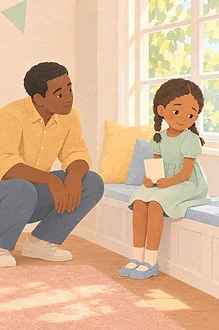
Offer the box when it seems useful, without making it a requirement. Tell your child they can also speak to you straight away. Safety concerns, threats, pain or harm should not wait inside the box for a scheduled check-in.
Making space to talk about what’s inside
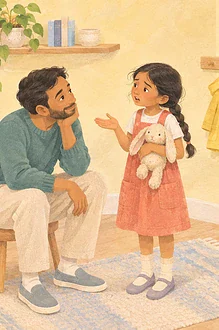
Agree on a brief time to look at the box together, and let your child choose what to share. Respect privacy while explaining that you may need help from another adult if someone is unsafe. Do not promise secrecy about harm.
Why this works better than simply being told not to worry
Telling a child “don’t worry about it” rarely makes a worry smaller, and can sometimes make a child feel unheard on top of whatever they were already feeling. A worry can does the opposite: it takes the worry seriously enough to give it a physical place to go, while keeping the whole process light enough that it doesn’t become its own source of stress.
A note on persistent worries
If the same worry keeps reappearing in the can week after week, or if your child seems to be carrying a genuinely heavy load of anxiety that doesn’t ease with this kind of regular check-in, that’s worth a conversation with a paediatrician or child therapist, who can help in ways a can and a slip of paper alone can’t.
A decorated can, a stack of small slips of paper, and a regular, unhurried moment to open it together gives a child somewhere real to put what’s on their mind, which is often the first step toward actually talking it through.
Correction, 12 November 2026: Replaced the cut-lid can with a smooth cardboard alternative and clarified that safety concerns need prompt adult attention.