Age guide: 3 to 8 years. Start with fewer items and build up.
Attention and memory are easiest to practise when they are a game. These five fit into the gaps in a day: a walk to the park, the wait before supper, the drive to school. None needs anything beyond a tray, a ball or a pair of eyes.
1. The tray and the walk
Time: 20 to 30 minutes. You need: a tray, three to five small items that suit your area, a bag or pocket for each child, and sheets of paper.
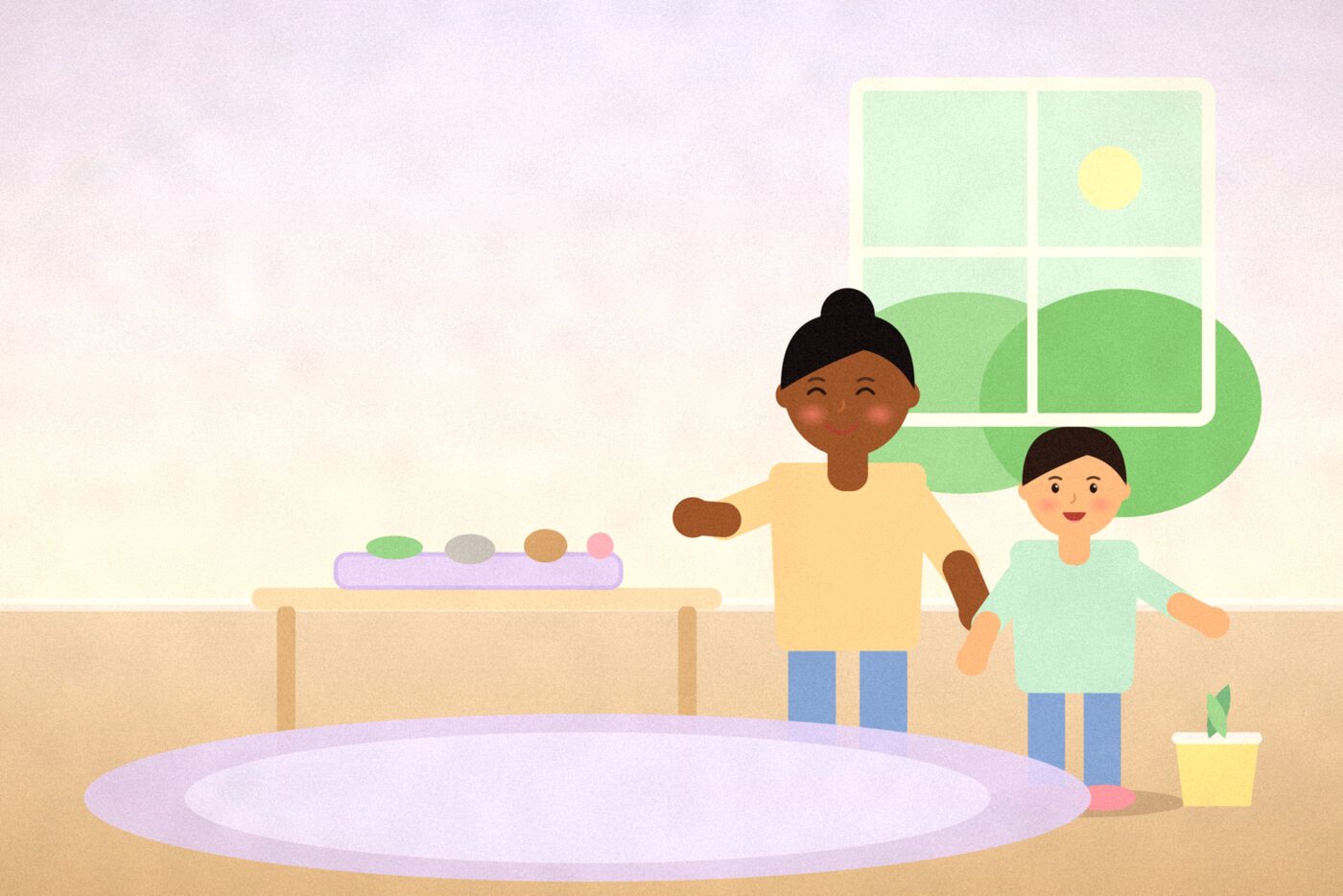
- Show a tray with three to five things on it for a minute or two, for example a pine cone, a pebble, a leaf and a flower. Start with three for younger children.
- Take the tray away and head out for a walk. Ask your child to collect things that are similar to what they saw.
- Back home, give them paper and ask them to lay their finds out the way they remember the tray.
- Put the tray back so they can check their own work.
- Talk about what is alike and what is different between their finds and yours.
Perfect matches are not the goal. A twig for a pencil or a daisy for a rose is a good answer if your child can say why. Choose items larger than a toilet roll tube for children under three.
2. What changed?
Time: 5 to 10 minutes. You need: a grown-up or sibling and a few things to change.
Everyone looks at you for a minute: what you are wearing and how. Then they close their eyes while you change three things, such as pushing up your sleeves, taking off a cardigan or putting on sunglasses. They open their eyes and guess. Start with obvious changes, then move to smaller ones like swapping a ring to the other hand. Let your child take a turn changing things, too.
3. Whisper down the circle
Time: 10 minutes. You need: a ball or beanbag and a story you have just read.
Sit in a circle. Whisper a short message from the story to the player holding the ball, for example “The bear found the honey.” That player runs round the outside of the circle and whispers it to the next person, passing the ball along. The last player puts the ball in a basket in the middle and says the message out loud. If someone forgets, those before them whisper it again.
4. Colour touch
Time: 5 minutes. You need: a room or garden.
Say a colour aloud and ask your child to find something that colour and touch it. Race back to you if you like, but walking is better indoors. Add challenges: two things, three things, one big and one small. It works well as a transition between activities.
5. Driving cars
Time: 10 minutes. You need: music with fast and slow songs, and pairs of players.
Pairs link arms and “drive” around the room like a car, speeding up for fast music and slowing for slow. Every half minute, call “cars freeze!” and everyone stops. After a few seconds, off they go again. Remind everyone to watch for other cars.
Notice, then wait
If your child forgets, wait a moment before you help. Then ask, “What do you remember about it?” For more ways to build routines that help with remembering, see gentle ways to build executive skills.