Age guide: 3 to 7 years. Good for children who find pencils tricky.
Not every child is ready to write letters on paper. These four games let them practise the shapes of letters, and the sounds that go with them, using backs, bodies and big spaces.
1. Letters on your back
Time: 5 to 10 minutes. You need: two or more people.
Stand in a line, all facing the same way. The person at the back chooses a letter (their initial, the letter of the week, or one your child has been learning) and traces it slowly with a finger on the back of the person in front. That person guesses, then traces the same letter on the next person’s back. The person at the front says the final guess aloud. Swap places and play again. Show a card to copy if the shape is new.
2. Body letters
Time: 10 minutes. You need: floor space.
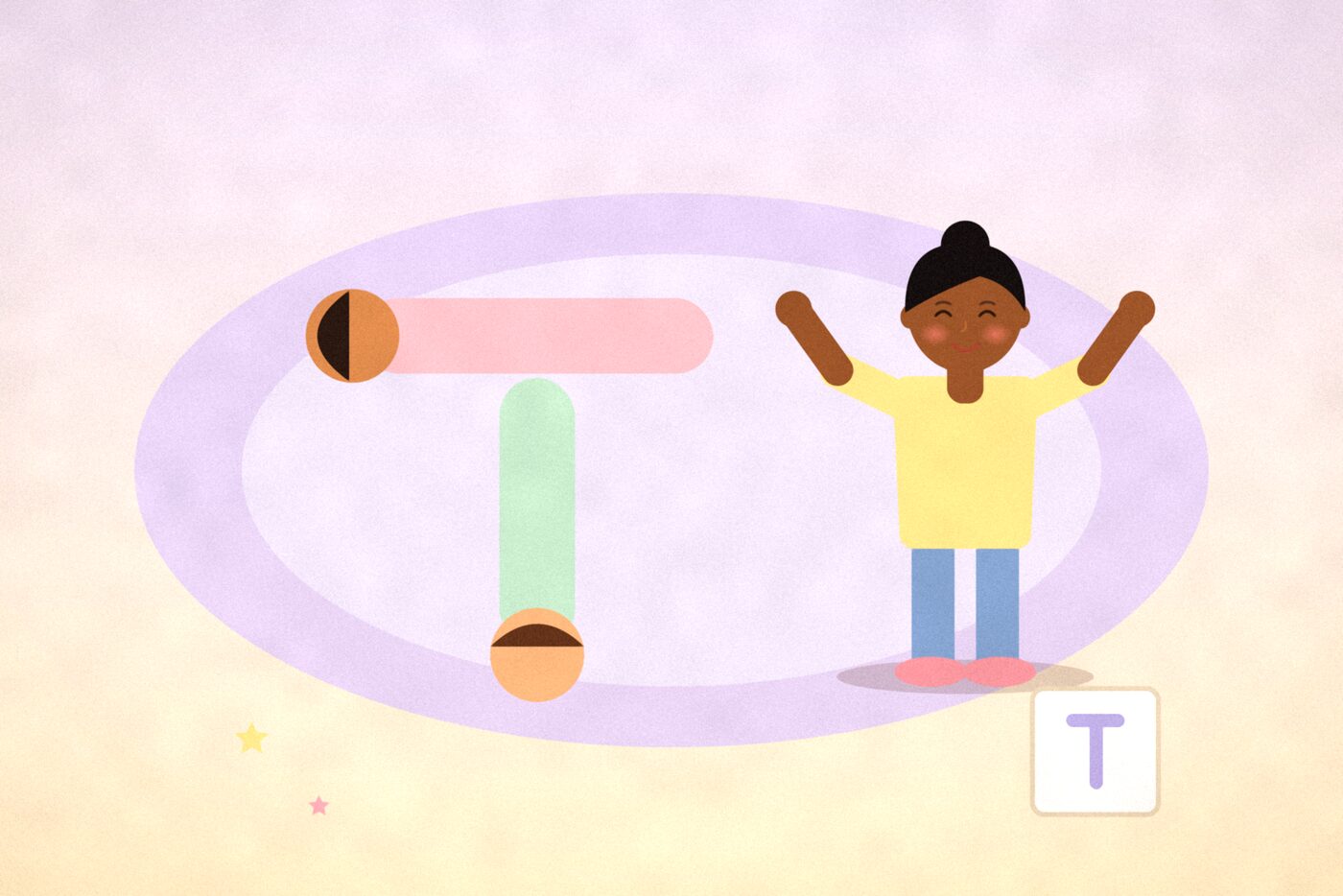
Call out a letter, upper or lower case. One to three children work together to make it with their bodies, standing, kneeling or lying on the floor. A “t” might need two children, one lying down and one standing at the top. Make sure everyone has the room to move, and let children decide how to do it. Do one letter a day, or play until everyone has had a go.
3. Alphabet hunt
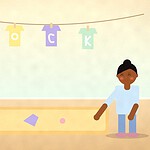
Time: 15 minutes. You need: 26 paper squares with a letter on each, or chalk.
Lay the letters out in order on the floor or pavement. On “go”, the team searches the house or garden for one object for each letter and puts it on that square. An apple goes on A, a button on B. See how quickly the family can fill the board. For younger children, prepare a few items beforehand. For a harder game, mix up the letters.
4. Big and small match
Time: 5 to 10 minutes. You need: cards with upper-case letters and cards with lower-case letters.
Give each player a card and make sure both halves of each pair are handed out. On “go”, everyone races to find their partner and sit down together. Note the time, shuffle and play again to see if you can beat it. Hold up a sample card and say the letter if a child gets stuck.
When a letter doesn’t stick
Spend a few minutes, then move on. Learning letters is a gradual process. Our ideas for everyday fine-motor play may help with the hand strength that writing will need.