Cut a set of pictures in half, hand out the pieces, and send everyone off to find whoever is holding the other half of their picture. Mix and Match turns finding a conversation partner into a small, genuinely satisfying puzzle.
Why this helps
Approaching a stranger to start a conversation can feel like a real hurdle, especially for a shy child, but approaching someone to check whether they’re holding a matching picture half feels considerably lower stakes, since the opening reason for talking is already built right into the activity.
What you need
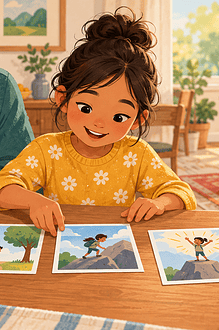
A set of pictures, one for each pair of participants, cut in half. Old magazines, postcards, or simple printed images all work well.
How to play
Prepare a picture for each pair of participants, cutting each one in half, ideally in a slightly different way for each pair so a half can’t accidentally match the wrong picture. Hand one half to each person.
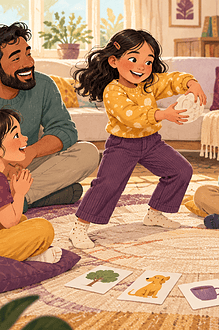
Ask everyone to circulate and find whoever is holding the matching other half of their picture. Once paired up, each person spends a few minutes learning about their partner, then introduces them to the rest of the group.
Variations
Use pictures connected to whatever the group will be doing together, a theme, a topic, a shared interest, which gives the matched pairs an extra, natural conversation starting point once they’ve found each other.
Why a shared object makes starting a conversation easier
A specific, physical reason to approach someone, “do you have the other half of this picture?”, removes the awkwardness of simply walking up to a stranger with no clear opening. The small puzzle of finding a match also gives the whole activity a bit of genuine fun and purpose beyond just “go talk to someone new.”
A set of cut-up pictures and a room full of people searching for their matching half is a simple, low-pressure way to pair up a group for introductions, built around a small puzzle that makes the first approach considerably easier than it would be otherwise.