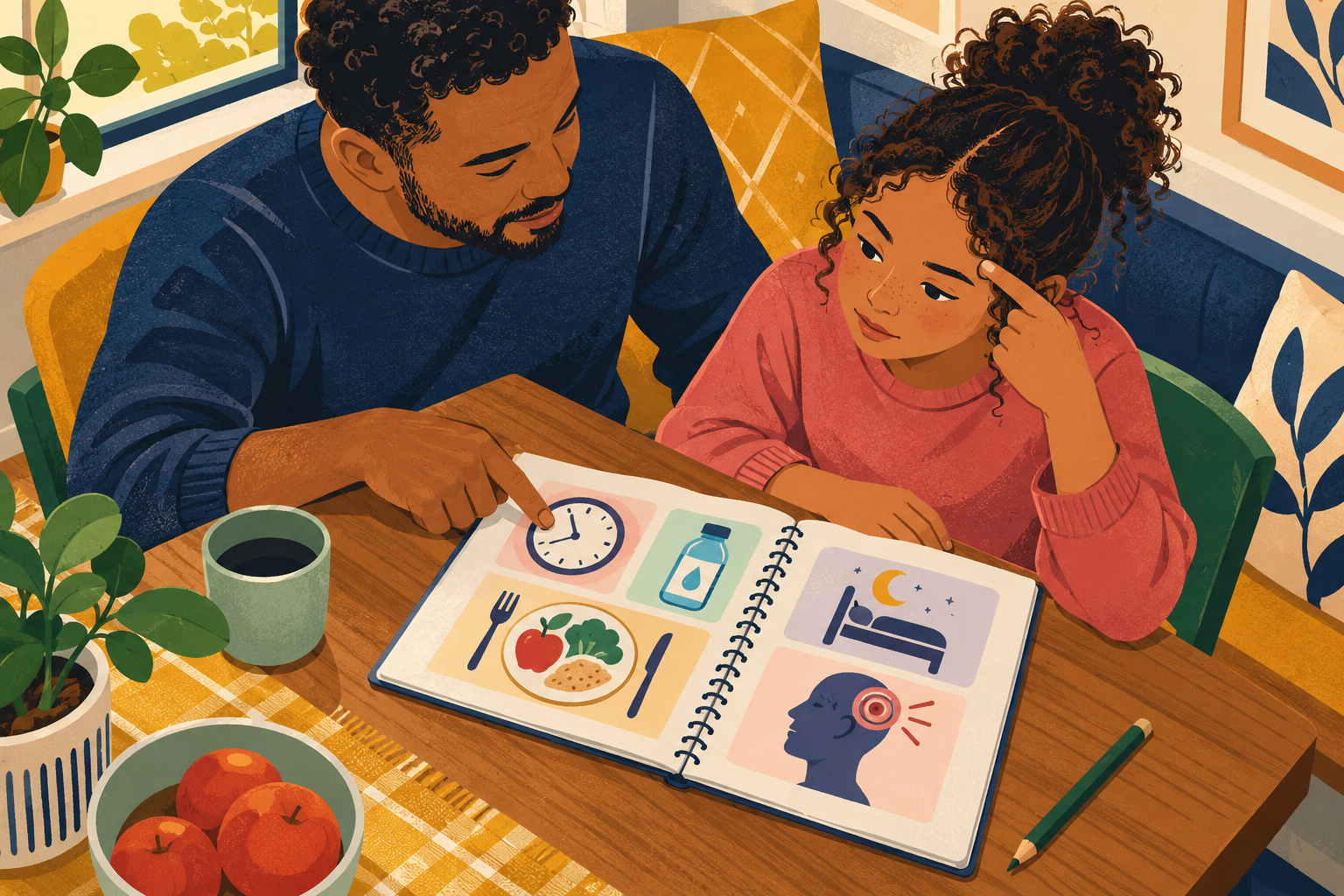
“My head hurts” can mean a brief, ordinary discomfort or something that deserves medical attention. You do not need to diagnose the cause at home. Your most useful role is to notice the pattern, support your child and act quickly if warning signs appear.
First, pause and observe
Ask where the pain is and what it feels like, using age-friendly choices: “Is it squeezing, pounding or sharp?” Notice whether light, noise, movement or smells make it worse. Check for fever, vomiting, neck stiffness, a recent fall or blow to the head, and any change in speech, balance, vision, strength or behaviour.
For a younger child who cannot describe pain clearly, watch for holding the head, squinting, seeking darkness, unusual irritability, stopping play or wanting to lie down. These behaviours are clues, not a diagnosis.
Try simple comfort
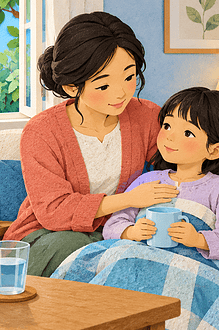
Offer water and a quiet, dim room. If your child has missed a meal and is not nauseated, offer a familiar snack. Encourage a break from screens and strenuous activity. A cool cloth on the forehead may feel soothing.
Do not give adult headache products or guess a medicine dose. If using a child medicine, check the active ingredient, age directions and dose with the label or a pharmacist. Frequent pain-reliever use can itself complicate headaches, so recurring symptoms should be discussed with a clinician.
Build a useful headache diary
A diary is a way to report patterns, not proof of a cause. For each episode, note:
- date, start time, duration and where the pain was;
- what your child was doing beforehand;
- sleep, meals, fluids, physical activity and screen use that day;
- other symptoms, including nausea, fever, visual changes or sensitivity to light and sound;
- what helped and any medicine, amount and time;
- whether school, play or sleep was interrupted.
Bring the diary to an appointment. Avoid telling your child that one food, emotion or activity is definitely “the trigger” after a single episode. Look for repeated patterns with professional guidance. If hydration may be part of the picture, this guide to children’s drinks offers practical everyday context.
Red flags that need urgent assessment
Seek urgent medical help for a sudden severe headache; headache after a significant head injury; fever with a stiff neck or non-fading rash; seizure; confusion; fainting; unusual drowsiness; weakness, numbness, trouble speaking or walking; new vision loss; persistent vomiting; or severe pain that wakes your child and is worsening.
Arrange a medical review for headaches that are becoming more frequent, repeatedly disrupt school or sleep, occur with exertion, or need medicine often. Tell the clinician about family migraine history, new medicines and any changes in stress, sleep or eating. Emotional strain can be relevant, but it should not be assumed to explain physical symptoms without assessment.
Keep the conversation neutral
Instead of repeated anxious checking, agree on a simple signal: “Tell me if the pain changes or you notice a new symptom.” Then move to calm observation. If worries about symptoms begin to dominate daily life, the strategies in supporting children with worries and fears can help alongside medical advice.