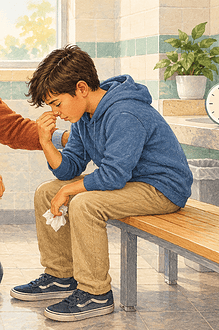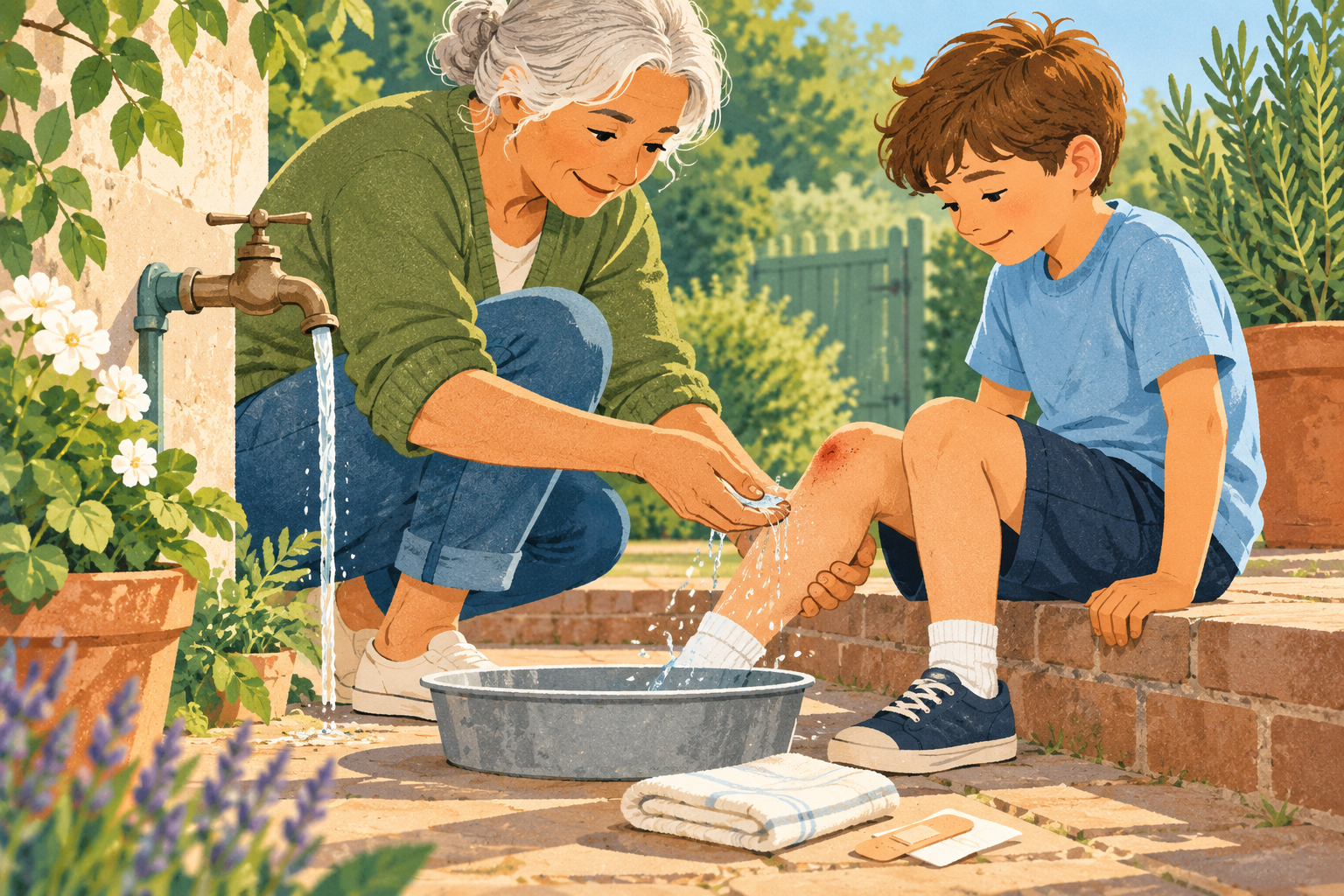
A small scrape from the playground usually needs simple care, but the first look matters. Before reaching for a bandage, check where the wound is, how deep it seems, whether anything is embedded and whether your child can move the injured area normally.
Four steps for a minor wound
- Wash your hands. Put on disposable gloves if available and if someone else is bleeding.
- Stop the bleeding. Press a clean cloth or sterile dressing firmly on the wound. Keep steady pressure rather than lifting it every few seconds.
- Rinse and clean. Once bleeding is controlled, rinse the wound under clean running water. Gently clean the surrounding skin with soap, avoiding harsh scrubbing inside the wound.
- Cover it. Pat the area dry and apply a clean, non-stick dressing or suitable plaster. Change it when wet or dirty and check the skin each day.
For a graze with visible grit, let running water loosen debris. Do not dig deeply for dirt or pull out an embedded object; stabilise the object and seek medical care. If bleeding soaks through a dressing, add another layer and continue pressure rather than peeling the first one away.
Help your child cooperate
Tell them what will happen in small pieces: “First water, then a clean cover.” Let an older child hold the clean dressing or choose between two bandage colours. For a child who dislikes touch or has a sensory difference, demonstrate on your own arm, lower the water pressure and offer pauses while maintaining safe wound care.
Afterward, praise the useful action rather than bravery as a personality trait: “You kept your knee still while I rinsed it.” This approach to specific, honest praise supports cooperation without implying that pain should be hidden.
Get professional care when the wound is more than minor
Seek urgent help for bleeding that will not stop with firm pressure, a deep or gaping wound, loss of feeling or movement, an embedded object, or a wound over the eye, face, hand, genitals or a major joint. Bites from animals or people, puncture wounds, dirty wounds and injuries caused by rusty or contaminated objects need professional advice because infection and tetanus protection may need assessment.
Over the following days, contact a clinician if redness spreads, pain or swelling increases, pus appears, red streaks develop, fever occurs, or the wound is not healing. Do not rely on the child’s skin tone to judge redness alone; compare warmth, swelling, tenderness and colour with the surrounding skin.
Check tetanus protection
Tetanus prevention depends on the type of wound and the child’s vaccination history. Do not guess. A clinician can decide whether vaccination or other treatment is needed. Bring the vaccination record if you have it, but do not delay care for a serious wound while looking for paperwork.
Minor injury care can be one of the practical tasks children gradually learn. The age-based ideas in life skills for children can help you decide which part—fetching supplies, holding a timer or replacing a clean plaster—they can safely practise.