By EdCaptain editorial desk · Published
A child may know they do not want a horror film and still sit through it because everyone else calls it funny, easy or a rite of passage. The hardest part may not be the screen. It may be admitting fear in front of siblings or friends.
Prepare the social exit before the movie starts. A child should not have to prove toughness by staying with content that feels wrong for them.
Remove the maturity test
Say plainly that adults also differ in what they enjoy. Disliking suspense, gore, jump scares or supernatural themes is a preference and boundary, not evidence of being babyish. The American Academy of Pediatrics notes that children respond very differently to frightening content and recommends considering the individual child, not only the age label.
Do not undermine that message by joking about the child later. Siblings learn from the adult’s tone whether “stop” is real or merely tolerated.
Check the actual content first
Use the official rating and detailed content advice to identify threat, violence, disturbing images and adult themes. A playful ghost story is different from realistic violence even when both are casually called scary. Tell the child what kind of fear to expect without replaying graphic details.
If the child is unsure, watch the trailer together only after checking whether the trailer itself contains sudden or intense scenes. Another option is for an adult to preview the difficult section or read a trusted synopsis.
Practise three exit lines
Choose language that sounds natural to the child:
- “I’m not into horror. I’ll join you after.”
- “I’m going to sit this one out—message me when it’s finished.”
- “This is too much for me. I’m switching rooms.”
- “I’ll watch something else; you don’t need to change it for me.”
A younger child may use a family code phrase or send a pre-arranged emoji. A child who communicates nonverbally can have a card, gesture or device button that means “pause” or “leave.” Practise when nobody is upset so the words are available under pressure.
Build adult backup into sleepovers and gatherings
- Ask the hosting adult what is planned and how films are chosen.
- Tell them privately which rating or content is outside your child’s comfort.
- Agree that the child can call or text without having to explain in front of peers.
- Make pickup possible without punishment or an interrogation in the car.
- Offer an alternative place or activity if the movie continues.
Do not make the child responsible for enforcing the rule with a group of older children. Adults set and support the boundary.
Handle sibling pressure at home
Fairness does not require every child to watch the same film. Older siblings can watch intense content later or in another room, with headphones only when safe listening is protected. The child opting out can choose a different activity without receiving a consolation prize or being made the centre of attention.
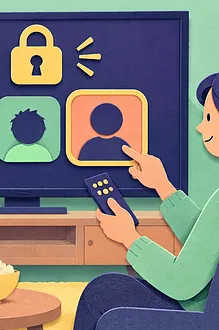
EdCaptain’s guide to sharing without forcing explains why consent matters even in ordinary family choices. The shared family-device agreement can make viewing turns and account boundaries predictable.
If the child stays and becomes frightened
Pause or leave. Avoid “I told you so.” Offer light, ordinary company and a brief reality check: “That was made with actors, sound and editing, but your body is still feeling alarmed.” Let the child decide whether they want a plot explanation. Do not replay the scene to prove it was fake.
Notice sleep, mood, clinginess or repeated worry over the following days. If distress is intense, persistent or interfering with daily life, seek qualified support rather than diagnosing the child from one reaction.
Debrief the social part
Ask, “What made it hard to say no?” The useful lesson may be about a friend’s teasing, unclear adult rules or the child needing an easier signal—not about becoming braver around horror.
Confidence is not watching what everyone else watches. It is knowing that a boundary will be respected and that help is available when group pressure makes it hard to use.
Sources and further reading
Report an error or suggest an improvement
Was this useful?