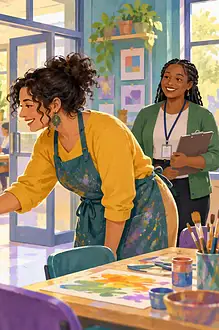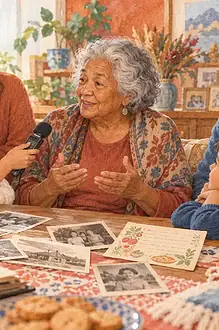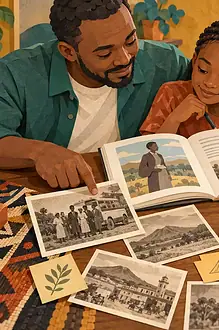
Children often meet role models in headlines and videos, but inspiration also lives nearby: the aunt who started again after a setback, the mechanic who teaches apprentices, the nurse who listens carefully or the neighbour who organises a clean-up. Everyday role models make values visible at human scale.
Begin with the quality, then find the person
Ask, “What quality do you want to learn more about?” The answer might be patience, courage, creativity, fairness or persistence. Then brainstorm people who show that quality in different ways. This avoids choosing only the most famous or powerful person in the room.
Include paid and unpaid work, care, art, trades, disability leadership and community knowledge. Be careful not to romanticise hardship; a person is inspiring because of their choices and contribution, not because suffering is automatically noble.
Plan a respectful conversation
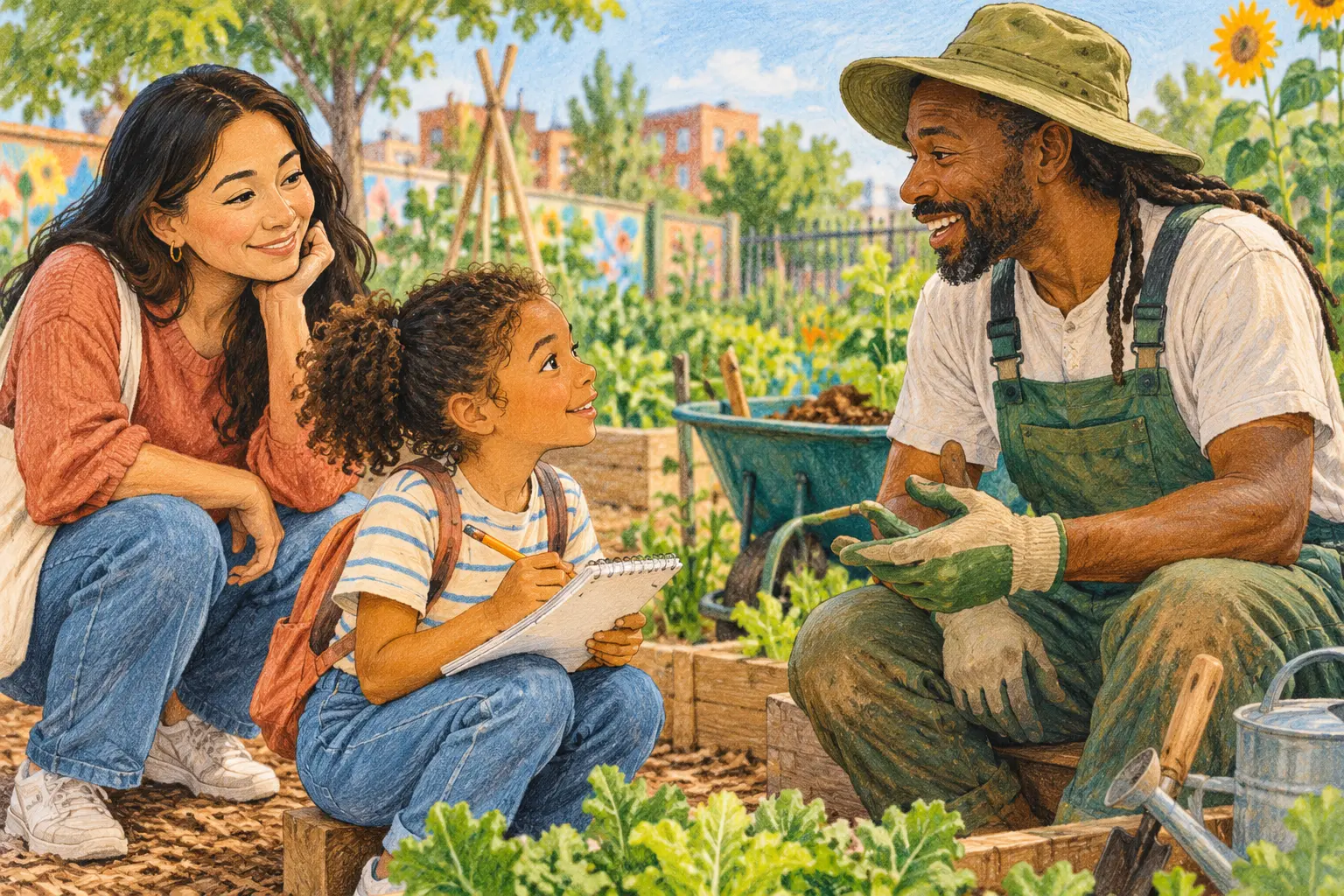
Ask the person’s permission and explain that the child would like to learn about one experience. The child can prepare five questions:
- What are you proud of learning?
- What was difficult at the beginning?
- Who helped you?
- What mistake taught you something?
- What advice would you give someone starting?
Offer choices for participation. A younger child may draw while listening. A child who is shy can send questions in advance, use audio with permission or interview alongside a sibling. No one has to disclose private or painful experiences.
Look beyond the “hero” story
Afterward, ask what support made the person’s work possible: colleagues, family, tools, public services or opportunity. This prevents the lesson from becoming “successful people do everything alone.” It also helps children value teamwork and conditions, not only individual grit.
The article on fair leadership and shared credit can deepen this reflection.
Turn learning into contribution
Choose one small action related to the conversation. Help at a community garden, practise a repair skill, write a thank-you note, organise materials for a group or learn a phrase in a neighbour’s language. The action should be useful and agreed, not a performance for social media.
If photos or recordings are involved, ask consent before capturing and again before sharing. Let the person review a quotation or caption. That models respect and protects privacy.
Avoid tokenising people
Do not ask one person to represent an entire culture, profession, disability or identity. Introduce them as a whole individual with particular experience. Let them decline questions. If the child notices difference, answer calmly and return to what the person chose to share.
The cross-cultural friendship guide offers language for curiosity without stereotyping. For broader examples, books, museums and local organisations can extend the child’s view beyond the immediate network.
Create a family “people who teach us” map
Put the child in the centre and add names under categories such as care, courage, making, learning, fairness and joy. One person can appear in several places. Leave space for people the child has not met personally, but distinguish a public figure from someone who can answer back and know the child.
Adapt by age
- Ages 3–5: Notice helpers during daily routines and ask one simple question with an adult.
- Ages 6–9: Draw a portrait and write the quality shown in a specific story.
- Ages 10–12: Conduct a short interview and identify support behind the achievement.
- Teens: Explore mentoring, job-shadowing or a service project with safeguarding and clear boundaries.
Not every conversation will produce a dramatic lesson. Sometimes the value is seeing that skill took practice and that meaningful work happens without applause. UNICEF’s parenting guidance highlights the power of adult modelling in ordinary life. Children learn that inspiration is not a distant spotlight; it can be a relationship, a craft and a choice repeated nearby.