Age guide: 3–9 years. Adapt suggestions to your child’s interests, communication and support needs.
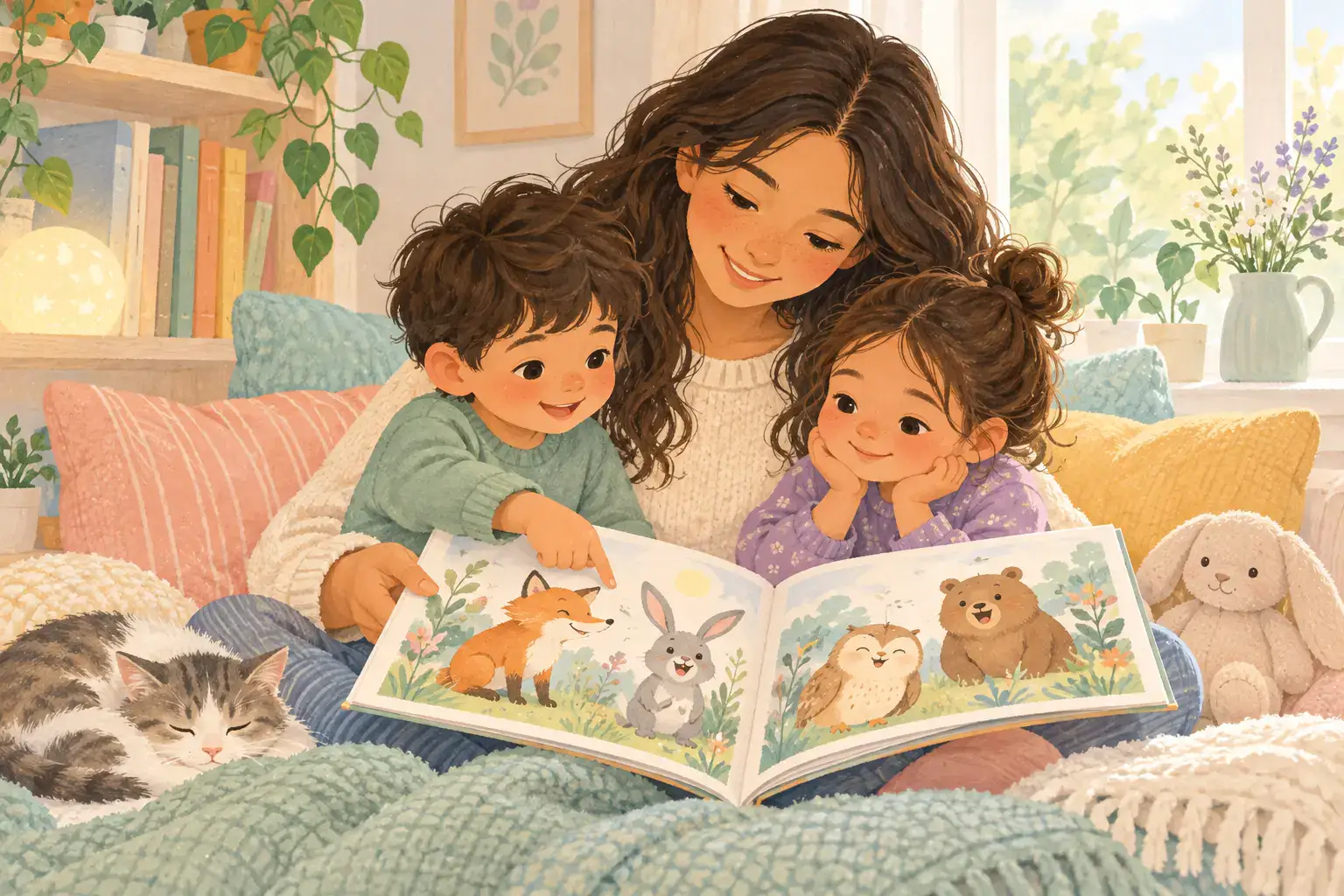
In the story, the rabbit has lost a favourite hat. Your child is more interested in the fox’s enormous boots. That is allowed. A book can be enjoyable without producing a lesson on every page.
When the moment feels right, one question can open a conversation about somebody else’s experience. Keep the story at the centre.
1. Read for enjoyment first
Let your child look, laugh, point or listen in the way that suits them. They can move while listening or return to the same page. Avoid turning shared reading into a test they need to pass before bedtime.
NAEYC’s home social-and-emotional guidance suggests talking about characters’ feelings and choices. You can use that idea lightly, without stopping the story every few sentences.
2. Choose one moment with more than one possible answer
“What might the fox think has happened?” leaves space to imagine. Follow your child’s answer with curiosity rather than marking it right or wrong.
Distinguish what the story tells you from what you are guessing. “We know the hat is missing. We don’t yet know whether the rabbit thinks someone took it.” That gives both of you room to change your minds as the story unfolds.
3. Compare viewpoints without excusing harm
A character may feel left out and still do something hurtful. Try: “They wanted to join. Was knocking the game over helpful? What else could they try?”
Understanding a feeling does not mean every action is acceptable. Keep that distinction simple, especially if a story involves teasing or frightening behaviour.
4. Retell a tiny part through play
- Use two soft toys for the characters.
- Let your child choose which role to try.
- Change one event: what if the hat was found earlier?
- Accept gestures, sounds or drawings instead of dialogue.
Keep materials age-appropriate and safe. You can take the more talkative role if your child prefers arranging the scene. There is no need to complete a full performance.
5. Let the conversation stay in the book
Resist using every selfish character as a disguised message about yesterday’s argument. Your child may stop wanting to discuss stories if each one becomes evidence against them.
If they make a connection to their own life, listen. If they want another chapter, read it. A shared book is also a place to feel comfortable together.
At the next reading, try one question only if it fits. Some evenings the most useful ending is simply enjoying the last page side by side.
Try next
- Different ways to play, the same right to belong
- “Are they sad?” Helping your child notice feelings without guessing for everyone