A dramatic clip arrives with a caption: “They don’t want you to know this.” The face looks real, the voice sounds familiar and thousands of people have shared it. Children need more than the instruction “don’t believe everything online.” They need a small process they can remember when emotion and speed are pushing them to react.
Use the five-step PAUSE check
- Pause. Do not like, forward, buy or argue yet.
- Ask who made it. Find the original account, author or organisation, not only the repost.
- Use another source. See whether reliable independent outlets or official bodies confirm the claim.
- Search the context. Check the date, full clip, location and whether an old image has a new caption.
- Explain the evidence. Before sharing, say what supports the claim and what remains uncertain.
The acronym matters less than repetition. Use it together on low-stakes posts—a surprising animal video, sports rumour or product claim—before expecting a child to apply it during a crisis.
Distinguish a mistake from deception
UNICEF defines misinformation as false or inaccurate information shared without necessarily intending harm, while disinformation is deliberately created or distributed to deceive. The practical response is often similar: stop the spread and correct the claim. But the distinction helps children avoid assuming that every mistaken friend is malicious.
Follow the claim upstream
A screenshot hides links, dates and corrections. Search a distinctive phrase. Open the organisation’s real site directly rather than tapping a forwarded link. Look for an author, evidence and a correction policy. A polished logo or verified-looking badge can be copied.
For health, emergencies, elections or school closures, use relevant official authorities and more than one reputable news source. Absence from every reliable source does not prove a claim false, but it is a reason not to share it as fact.
Check images, video and audio
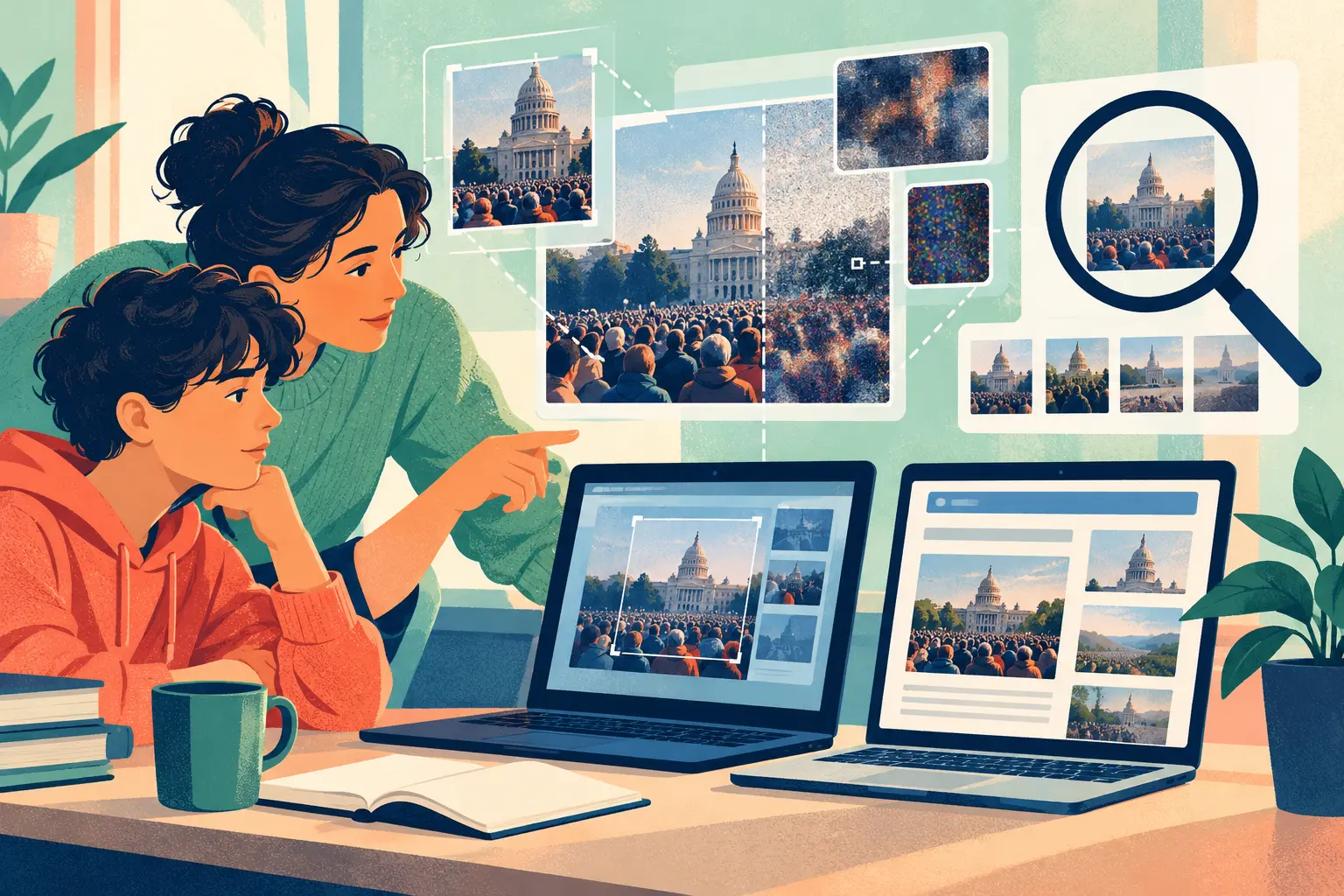
AI can generate or manipulate faces, voices and scenes that look convincing. Visual glitches may offer clues, but perfect fingers and natural blinking do not prove authenticity. Stronger checks include finding the earliest upload, comparing the full recording, reverse-searching an image and asking whether trusted sources independently captured the same event.
Teach children not to treat a deepfake as a harmless joke when it humiliates or sexualises someone. If a child’s image has been manipulated, save non-graphic evidence, report it and seek safeguarding help. Do not forward the material to warn others.
Notice emotional pressure
Misinformation often creates urgency, outrage, fear or the pleasure of being first. Ask: “What does this post want me to feel or do immediately?” A claim that demands secrecy, money, personal information or instant forwarding deserves a longer pause.
The American Academy of Pediatrics recommends regular open-minded conversations about what is real, edited, fake or advertising. Make checking a shared family norm, not a test children take alone.
Correct without humiliation
If your child shared something false, focus on repair: delete or label the post, tell recipients it was not verified and share the correction. Avoid “How could you fall for that?” Adults share misleading content too. Model your own correction aloud.
If a relative believes a false claim, children do not need to win a public argument. They can ask, “Where did this come from?” or say, “I’m going to check before I pass it on.” Respectful uncertainty is a legitimate outcome.
Adapt by age
- Ages 6–9: Compare the original source with a screenshot and use “real, pretend or not sure yet.”
- Ages 10–12: Practise date checks, reverse image search with an adult and separating adverts from reporting.
- Teens: Discuss deepfakes, bots, sponsored influencers, political manipulation and the limits of detection tools.
Connect the skill to other digital choices
Use the guide to AI chatbots to discuss confident-sounding errors. The family screen agreement can include a “pause before forwarding” rule, while first group-chat rules can cover corrections.
The goal is not permanent suspicion. It is calibrated trust: children can stay curious, enjoy creative media and still ask for evidence before a viral post becomes their belief—or their responsibility.