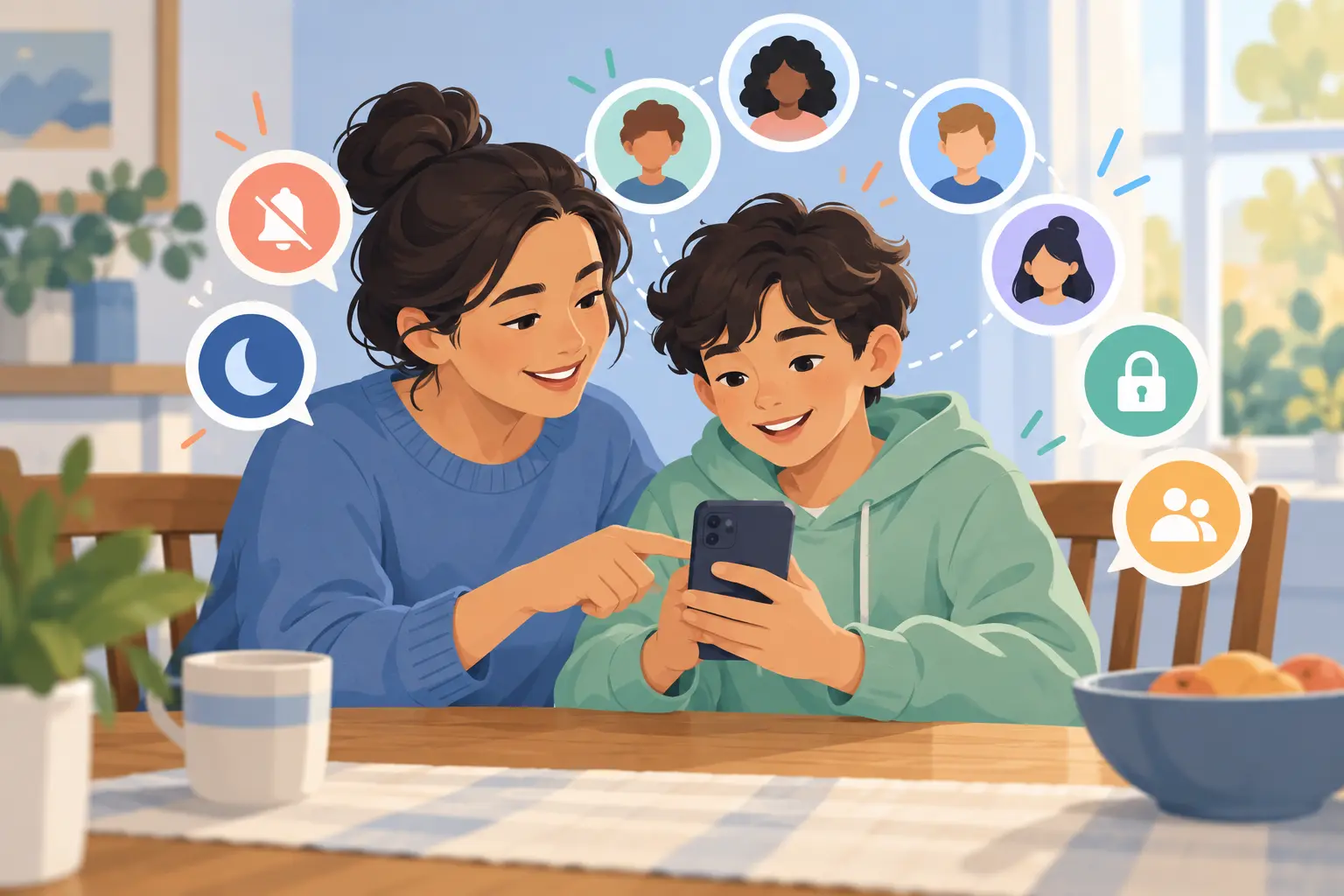
A group chat can help classmates plan homework, friends share jokes and teams coordinate practice. It can also become noisy, excluding or hard to leave. Readiness is not guaranteed by a birthday or by the fact that “everyone else has it.” Look at the child, the group, the platform and the support available when something goes wrong.
Check readiness before installing anything
Ask whether your child can pause before posting, keep private information private, handle being left on read, tell an adult about a disturbing message and follow a night-time device plan. They do not need perfect judgment. They do need enough trust to bring problems to you without expecting immediate loss of the device.
Confirm the service’s current minimum age and privacy options. An age rule does not prove readiness, but bypassing it can remove safeguards and teach the child that account information is disposable.
Learn who is actually in the group
Phone numbers, profile photos and usernames may be visible to every member. A class chat can grow when someone adds a cousin or friend. Agree that your child will not add people without group consent and will tell you if an unknown account appears.
Teach that a familiar profile is not proof of identity. If a request becomes personal, secretive or moves to another platform, use the safety plan in when an online contact gets personal.
Write six usable rules
- Ask before adding or sharing. Do not forward someone’s message, image or phone number without permission.
- Keep private details out. No passwords, live location, home address or intimate images.
- Pause group conflict. Do not pile on, screenshot for entertainment or send while angry.
- Protect sleep. Use mute or do-not-disturb overnight and charge the device outside the bedroom if needed.
- Save evidence before deleting. Screenshot threats, harassment or unsafe requests when reporting may be necessary.
- Ask for help without automatic punishment. Safety comes before a lecture.
Include adult behaviour too. Caregivers should not read every ordinary message secretly unless a specific safety concern justifies closer supervision. Tell the child what you will check, why and when the arrangement will be reviewed.
Practise common pressure points
Role-play a rapid stream of notifications during homework, a joke that targets one person, a request to vote someone out and an embarrassing photo shared without consent. Ask, “What could you do first?” Options include not reacting, privately checking on the person, asking the group to stop, muting, leaving, blocking or telling an adult.
Leaving a chat can feel socially risky. Help the child prepare a neutral line: “I’m muting this until tomorrow,” or “I’m leaving because the chat isn’t working for me.” They do not need to announce a dramatic exit when quietly muting is safer.
Respond without making honesty expensive
If your child shows you a harmful message, begin with “Thank you for telling me.” UNICEF recommends staying calm, listening, reassuring the child and deciding together whether to mute, block, report or involve the school. Taking the device away immediately can make future disclosure less likely.
If your child contributed to harm, keep the account safety issue separate from accountability. Stop the behaviour, preserve evidence if needed, help them make a specific repair and review access. Do not publicly humiliate them.
Use a two-week review
After the first fortnight, ask what feels fun, stressful or hard to stop. Check sleep, homework, in-person friendships and mood. Change notification settings or group access before assuming the only choices are unlimited use or a total ban.
The family screen agreement can hold the broader rules, while the parental-controls checklist covers device settings.
Age and ability matter
- Ages 10–12: Prefer small known groups, clear adult support and more frequent check-ins.
- Teens: Increase privacy as judgment grows, while keeping firm boundaries around threats, exploitation and intimate images.
A first group chat is not a one-time permission slip. It is a supported practice space where the child learns consent, boundaries, conflict repair and how to get help.