Ask a child to act out playing soccer, but in the slowest motion they can manage, and watch how much concentration it actually takes to move that deliberately. The Slow Motion Game turns self-control into something children can see and feel in their own bodies, rather than just being told to calm down.
Why this matters
It’s genuinely difficult to control movement when the body wants to move fast, and most children have never actually practised doing the opposite on purpose. Acting out an everyday action in exaggerated slow motion gives a child direct, physical practice at exactly that kind of deliberate self-control, in a format that’s playful rather than a correction.
What you need
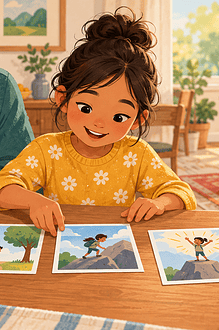
A stopwatch or timer for each child, or one shared timer. A set of simple activity cards (write a few scenes: playing soccer, doing jumping jacks, taking a test, walking a dog). A die. Paper and colouring materials for an optional certificate.
How to play
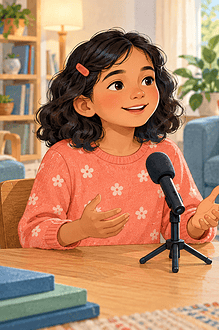
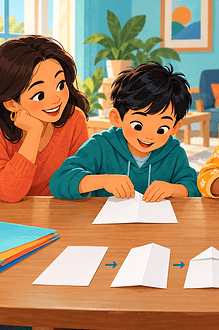
Start by talking with the children about what fast movement looks like, and ask them to show you. Then introduce the idea of slow motion, movement performed as slowly and deliberately as possible, and let them practise a round or two freely.
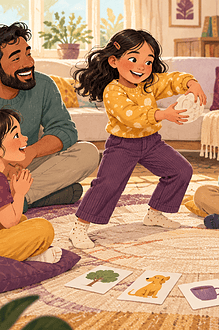
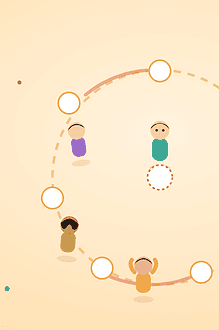
Roll a die to decide who goes first. That child picks an activity card and acts it out in slow motion at the front of the group. On the count of three, everyone starts their stopwatch, and every ten seconds, the group calls out how much time has passed. Once a full minute has gone by, everyone shouts “stop,” and the performer earns a token. Continue around the group, increasing the time with each full round.
Variations
Once the game is familiar, increase the challenge by having two children perform together in slow motion, moving in sync is considerably harder and adds a cooperative element on top of the self-control.
A handful of classic board games build a similar kind of self-control through a different mechanic, worth having in rotation alongside this one: Jenga, Operation, Perfection, and Don’t Break the Ice all demand a steady hand and genuine patience.
Why the group setting helps
Playing this with a small group, rather than just one child, adds real social motivation, nobody wants to be the one who speeds up and loses focus while everyone’s counting along. That gentle, friendly pressure tends to produce noticeably more concentrated effort than the same challenge attempted alone.
A full minute of exaggeratedly slow movement sounds easy until you actually try it. For a child who struggles with impulsive, fast movement generally, that minute of genuine, visible effort is real, valuable practice, dressed up as something that mostly just makes everyone laugh.