Blindfold one teammate, scatter a few soft obstacles across an open space, and let the rest of the team guide them through using nothing but their voices. The Maze Walk builds genuine trust and precise communication, since a blindfolded player has no choice but to actually listen and rely on their team.
Why this helps
Guiding someone who can’t see requires real precision, vague instructions like “go that way” simply don’t work, which pushes a team toward clearer, more specific communication than they might otherwise bother with. At the same time, the blindfolded player has to genuinely trust their teammates’ voices over their own instincts, which is a meaningful, if small, act of trust built directly into the game.
What you need
A blindfold. Soft obstacles to mark a path through, cushions, cones, rolled-up towels. An open, cleared space.
How to play
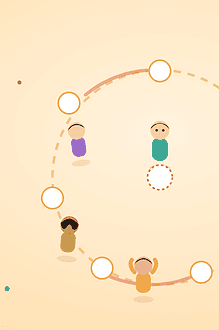
Set up a simple path through the space using soft obstacles as markers to avoid, not hard barriers to bump into. One team member puts on the blindfold and stands at the start, while their teammates position themselves around the space, able to see the full layout.
Using only spoken directions, no touching, the team guides their blindfolded player through the space, avoiding every obstacle. For an added challenge, restrict the group to very specific words or a limited vocabulary, which forces even more precise, deliberate communication.
Time each team’s attempt, or simply track how many obstacles were avoided successfully, and let every player take a turn being guided.
Safety notes
Clear the space of anything genuinely hard or sharp before starting, and use only soft, low obstacles that pose no real risk if bumped into. Keep a sighted adult close by to step in if a blindfolded player seems genuinely disoriented or at risk of a fall.
Why vague instructions fail here, instantly
A team quickly discovers that “go left” means very little without a distance and a reference point attached, which tends to produce a fast, visible improvement in how specifically the group communicates, often within the very first attempt. That rapid, obvious feedback loop is part of what makes this game such an effective, memorable lesson in precise communication.
A blindfold, a few soft obstacles, and a team learning in real time exactly how specific their instructions need to be, is a simple setup for a genuinely good lesson in trust and clear communication, the kind that tends to stick well past the game itself.