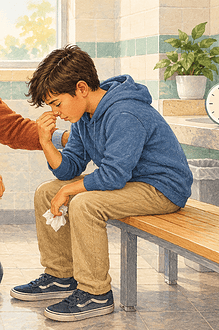
When a child is vomiting or has diarrhoea, the immediate job is not to replace a full meal. It is to keep enough fluid going in, notice what is coming out and watch how the child is behaving. Small, steady steps are often easier than a large drink.
Offer little and often
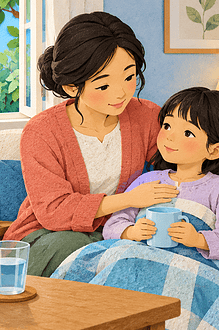
Continue breastfeeding or formula feeding. For older children, offer frequent small sips rather than a whole cup at once. If your child vomits, pause briefly and restart with a smaller amount. A spoon, medicine cup or straw may feel less daunting than a full glass.
Oral rehydration solution has a specific balance of water, salts and sugar. Ask a pharmacist or health professional which product is suitable and follow its mixing directions exactly; making it stronger or weaker changes that balance. Avoid homemade recipes unless a trusted local health service provides one for your setting.
Do not force food. When your child is interested, return to familiar foods in manageable portions. Drinks marketed for sport are not the same as oral rehydration solution. For normal, non-illness hydration, see this guide to water, milk and juice.
Track hydration, not just episodes
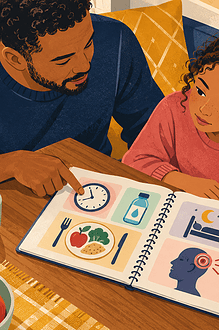
Make a short note of drinks, vomits, diarrhoea and urination or wet nappies. Possible dehydration signs include a dry mouth, fewer tears, less urine, darker urine, unusual tiredness, dizziness, sunken eyes or a baby’s sunken soft spot. A child who is becoming drowsy, floppy or difficult to wake needs urgent assessment.
Babies and young children can dehydrate more quickly. Seek advice early if they cannot keep fluids down, refuse all drinks, or have noticeably fewer wet nappies. Children with a medical condition or weakened immune system may also need earlier guidance.
Symptoms that should not wait
Get urgent medical help for green vomit, blood in vomit or stool, severe or localised abdominal pain, a swollen abdomen, a stiff neck, breathing difficulty, a seizure, confusion, a non-fading rash, or signs of severe dehydration. Vomiting after a significant head injury also needs prompt assessment.
Call a health professional if symptoms are worsening, persist beyond the timeframe your local service advises, or repeatedly return. Do not give anti-diarrhoeal or anti-vomiting medicines to a child unless a qualified clinician specifically recommends them.
Reduce spread without turning the home upside down
- Wash hands with soap and water after toileting or nappy changes and before preparing food.
- Give the unwell child their own towel where practical.
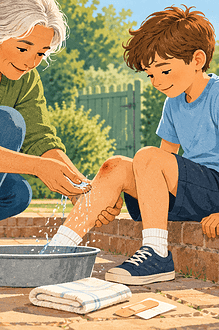
- Clean frequently touched bathroom surfaces and handle soiled laundry carefully.
- Follow local school or childcare guidance about when to return.
Once the illness settles, bowel habits may take time to normalise. If hard stools become the new problem, use the practical steps in a food, fluid and toilet routine for constipation rather than making abrupt dietary changes.