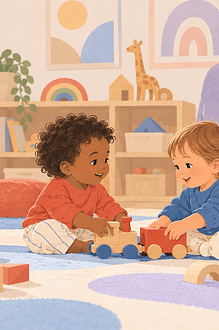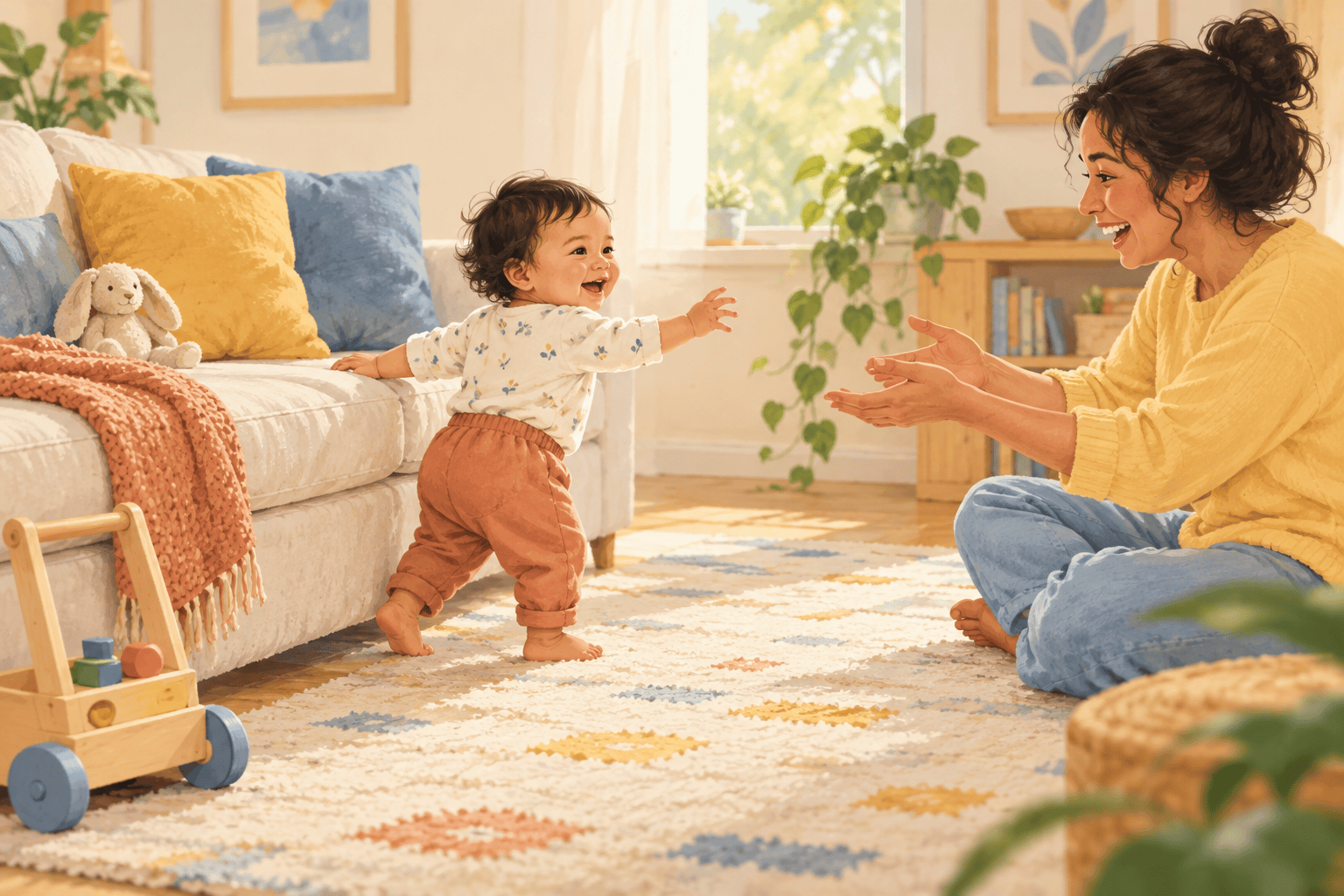
Watching other toddlers race across the room can make a child who still cruises along furniture seem suddenly “behind.” Walking develops across a wide span, but there is a point at which a conversation is more useful than waiting and worrying.
The CDC includes walking without holding on among the skills most children can do by 18 months. That is a signpost, not a diagnosis. Prematurity, health history and a child’s broader movement pattern all matter.
Notice the foundations
Can your toddler sit steadily, move across the floor in some way, pull to stand, take weight through both legs and cruise sideways while holding furniture? Do they use both sides similarly? These observations help a clinician understand the whole picture.
Set up movement, not a walking lesson
- Create a clear floor area with stable furniture that will not tip.
- Place a favourite object a small sideways step away along the sofa.
- Let your child decide whether to reach, cruise, crawl or stop.
- Sit nearby and celebrate effort without pulling the child by both hands.
- Repeat for a few playful minutes, then move on.
Bare feet on a safe indoor surface can provide useful grip and feedback. Avoid baby walkers with wheels; they can cause injuries and do not teach the balance needed for independent walking. A stable push toy may be appropriate once a child can stand and control it, but stay close.
When to ask for assessment
Talk with your child’s doctor or health visitor if your child is not walking independently around 18 months, or sooner if movement seems unusually stiff, floppy, painful or one-sided. Also mention persistent toe-walking, an unusual gait, poor balance, or difficulty bearing weight.
Promptly seek medical advice if your child loses a movement skill they had. Sudden weakness, severe pain, a significant injury, breathing difficulty, seizure or altered alertness needs urgent care.
Do not turn every play session into a test. Children need chances to move, rest and choose. Help can include a developmental assessment, hearing or vision review, physiotherapy or another referral depending on what is found.
As mobility grows, our life-skills guide offers safe participation ideas. For clearer everyday requests without repeated pressure, see how to make instructions easier to follow.