- Ask how the service wants uncertainty recorded
- Make a small history sheet with a source beside each entry
- Look for useful clues, without turning the search into a second job
- When you were not there for the early years
- Keep today’s picture alongside the history
- Hand over a clear account, then check how it was understood
- Sources and further reading
By EdCaptain editorial desk · Published
General educational guidance. No qualified clinical review is recorded for this article. Health and safety information.
“When did your child say their first words?” The form has one small box. You remember a favourite toy, a house move and a conversation in the kitchen, but no reliable date. Perhaps you were not caring for your child then, or their early records never reached you.
Give the assessment team what you know, with its limits visible. An honest gap is different from a confirmed absence of a skill. This guide is for adult caregivers completing developmental-history paperwork; it is not a test of your memory or a way to decide a diagnosis.
Ask how the service wants uncertainty recorded
Before filling every box, check the instructions. Does “first words” have a definition? Can you give an approximate range, write “not known”, attach notes or talk through the questions? Follow the particular form’s guidance rather than replacing it with your own scoring system.
If an online form demands a number you cannot support, contact the team instead of entering zero or a made-up age to move on. Try: “I can describe what I remember, but I don’t know the date. How should I submit this section?” Ask about an interpreter, an accessible format or help completing it if needed.
This differs from being unsure whether your child can do something now. For that situation, see what to mark when a milestone skill has not been tried.
Make a small history sheet with a source beside each entry
Use four headings: what happened; timing; where the information comes from; what remains uncertain. You can write, dictate or ask a trusted person to help organise your words. Keep different kinds of knowledge separate:
- Something you witnessed: “I remember her walking across the living room without holding furniture. I cannot place the month.”
- Something recorded at the time: “The nursery note dated 14 September describes her using short phrases. It does not say when this began.”
- Something another person recalls: “His grandfather remembers this happening before a house move; I did not see it myself.”
- Something unavailable: “I became his caregiver later. I do not have information about his earliest speech.”
These are invented examples of wording, not milestone targets. Use only descriptions that fit your own information. If you genuinely remember a range, label it approximate and explain the anchor: “Between starting nursery and moving home, according to my memory.” Do not narrow it to a month just because the box is small.
If two accounts differ, preserve that difference: “I remember X; another caregiver remembers Y; neither account has a dated record.” You do not need to settle the disagreement or choose the version that seems to support a particular diagnosis.
Look for useful clues, without turning the search into a second job
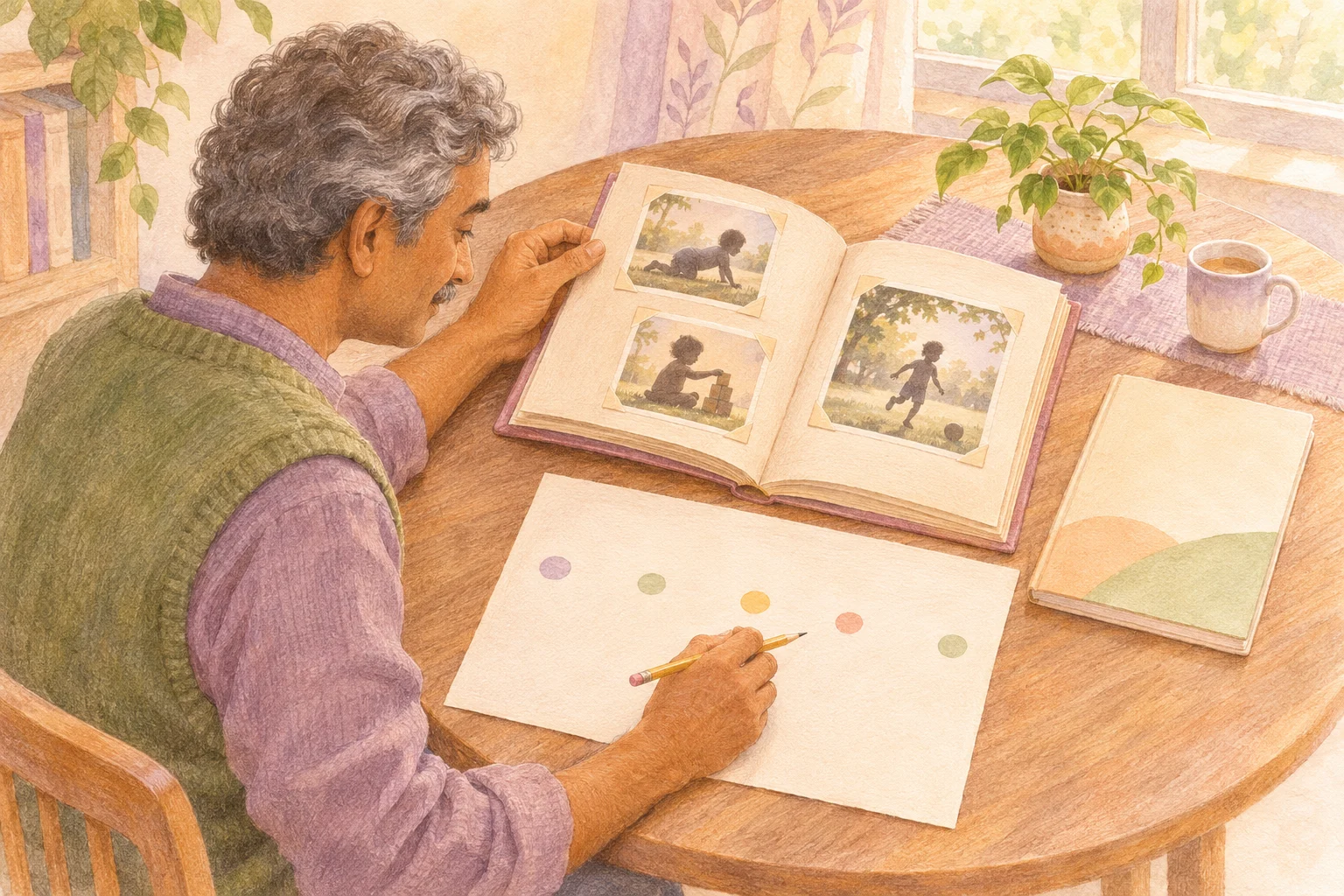
Start with material already available to you: a child-health book, existing clinic letters, nursery observations, school reports or a small selection of dated family photos and videos. RDaSH’s neurodevelopmental assessment guidance suggests that existing photos, videos and health information may help caregivers remember earlier development. Its service may arrange follow-up when information is incomplete; your service’s process may differ.
A recording can show that a skill was present when it was made. It usually cannot establish that this was the first time. An uploaded photo’s date may also differ from the date it was taken. Write the narrower conclusion the material supports: “This video shows her doing this by that date; the starting date is unknown.”
Choose a manageable search period, then ask the team which remaining gaps matter. Do not postpone contacting them while trying to recover every document. Avoid interpreting an old note’s unfamiliar clinical wording yourself; mark it for the assessor to explain.
When you were not there for the early years
A foster, kinship or adoptive caregiver may have detailed knowledge of the child now and limited information about earlier life. State when your own observations begin. Keep records, previous caregivers’ accounts and your observations clearly attributed, rather than merging them into one apparently certain story.
Ask the assessment service which information it needs and who is authorised to request it. Do not approach anyone if contact may be unsafe. Check your authority to request records, and share only the information the service needs through its approved route. Where another agency is involved, ask about an appropriate route through that agency.
The child should not have to fill every gap for the adults. Where appropriate, invite their own account using their preferred communication method, without repeated questioning or pressure to remember.
Keep today’s picture alongside the history
Record current strengths, difficulties, helpful supports and a few concrete examples from everyday life. The NHS description of children’s autism assessments includes developmental history alongside observation, reports and information from people who know the child. Early dates are therefore one part of that assessment, rather than its entire account of the child.
There can still be consequences when information is unavailable. NICE’s autism guideline for under-19s identifies missing early-life information as one reason diagnostic uncertainty may remain, including for some looked-after or adopted children. This is autism-specific guidance, not a rule for every developmental assessment or a promise about an individual outcome.
Ask: “Which unanswered questions affect your assessment? What other information could help? What support can we discuss now?” Raise new health or developmental concerns directly with a qualified professional rather than waiting for your historical notes to be complete.
Hand over a clear account, then check how it was understood
Send the requested material through the service’s confirmed route. Include a short note identifying the gaps and any attachments, and keep a copy. Our developmental appointment preparation guide can help you choose questions for the discussion.
At feedback, check that “not known” has not become an exact date or a definite “no”. If the written account contains a factual mistake, use our guide to requesting an assessment-report correction. A useful history shows what is known, how it is known and where the team still needs to exercise judgment.
Sources and further reading
- NHS: what children’s autism assessments may involve
- NICE CG128: developmental history and diagnostic uncertainty, recommendations 1.5.5 and 1.5.12
- RDaSH NHS Foundation Trust: developmental-history questionnaires and memory prompts
Read our editorial policy and review methodology.