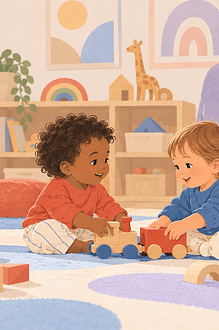
“How many words?” is the question parents hear most, but communication is bigger than a word count. A toddler may point, bring you objects, copy sounds, understand familiar phrases and take turns with expressions before spoken vocabulary expands.
Some late talkers catch up. Others have difficulties that persist and benefit from support. It is not possible to know which path a child is on from one online checklist.
Bring the whole communication picture
Before an appointment, notice examples from ordinary life:
- Does your child look, point or gesture to share interest?
- Can they follow familiar directions without relying only on the routine?
- Do they copy sounds, movements or expressions?
- Do they start interaction, respond to their name and take conversational turns?
- Are words or gestures increasing over time?
- Do they communicate differently at home, childcare or in different languages?
Write down what helps. A child may communicate more during bath time than when asked direct questions. That context matters.
Support language without testing
Get close, follow what your child is looking at and describe it simply: “Big bus. Bus goes.” If your child says “dog,” add one step: “Yes, dog running.” Pause long enough for a look, sound, gesture or word. Respond to the attempt rather than demanding repetition.
Picture books, songs and playful routines give language a reason to happen. Avoid turning the day into “What is this?” quizzes. Communication grows through useful, enjoyable exchanges.
Why hearing belongs in the conversation
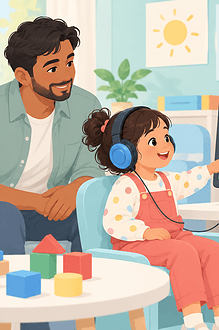
A child can respond to some sounds and still have hearing difficulty that affects speech. The NIDCD notes that a hearing test is often part of a speech-language evaluation. Ask about formal testing rather than trying to screen hearing with claps or phone sounds at home.
When to seek advice
Raise concerns with your child’s doctor and ask whether a speech-language and hearing assessment is appropriate. Act promptly if your child loses words, gestures or social communication they previously used. Also mention difficulty understanding language, frustration that regularly blocks daily life, or concern across more than one developmental area.
For gentle interaction ideas, try helping your child start a game. If directions often break down, make the next request easier to follow rather than assuming defiance.