By EdCaptain editorial desk · Published
General educational guidance. No qualified clinical review is recorded for this article. Health and safety information.
Your child is studying a picture while you continue the story. When they look back, the character has already left the house and a new problem has begun. For a deaf or hard-of-hearing child, the page, your face and your signing may all carry information. Storytime needs room to move between them.
For children aged 3–9, try changing the setup and pace before asking for more attention. This is shared reading for enjoyment, not a hearing test or a requirement to make eye contact. Use the language and communication support your child understands.
Put the book and the storyteller within reach of sight
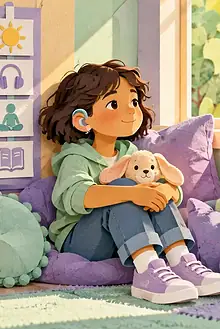
You need a picture book your child chooses, comfortable seating and enough light to see the page and faces clearly. A stable bookstand can help if you already have one; buying equipment is not necessary. Avoid balancing a heavy book where it could fall onto the child.
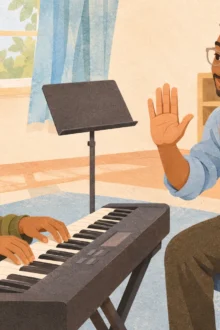
Try sitting at an angle rather than placing the child directly in front of your chest with the book hiding your face. If you sign, leave clear space for your hands. If your child uses speechreading alongside other access, keep your mouth visible. Ask where they would like you and the book to be.
The American Academy of Pediatrics’ book-sharing guidance recommends that deaf and hard-of-hearing children can see both the reader’s face and the pictures. Adjust seating for mobility or vision needs too. A child should not have to hold an uncomfortable posture to participate; ask their support team about positioning or page-turning access when needed.
Give the picture a turn, then give the language a turn
Open a page and allow time to explore it. Notice where your child points or lingers. Before adding an important piece of story, make sure they have access to your communication. That may mean a pause while they look back, repositioning yourself or using a familiar agreed attention signal.
Do not pull their chin, turn their head or insist on looking into your eyes. Looking at a page is part of reading. If they look away for a break, pause rather than treating it as misbehaviour.
For a short first try:
- Choose one page together. Keep the book open where both of you can see it.
- Wait for looking. Let your child examine the illustration before you explain its next event.
- Share a small piece of meaning. Use their familiar language, then leave space for a response.
- Return to the picture or print. Point out the part connected to what you shared, without covering it.
- Let the child choose the next move. Continue, revisit a detail, turn back or stop.
There is no correct number of seconds to wait. Watch what gives this child access, rather than keeping the story at an adult’s preferred speed.
Keep language access bigger than gestures
A pointed finger can show which tree you mean. It cannot by itself explain why a character is worried or what happened yesterday. Use the child’s established signed or spoken language and any other agreed support, rather than expecting pictures, mime or lipreading to carry every idea.
The Laurent Clerc National Deaf Education Center’s 15 Principles for Reading to Deaf Children, based on Deaf adult reading practices, include making signing and the book visible and attending to story meaning. The resource was developed for American Sign Language and English. It is not a word-for-word signing recipe or a substitute for learning the signed language your child uses.
If you are learning to sign, ask a Teacher of the Deaf, a qualified tutor or a fluent Deaf adult to help with a favourite book. You can enjoy looking and responding together now while arranging richer language access. Do not invent signs and present them as accurate translation. Our communication options guide explains why a few household signs do not replace a complete language environment.
Try one small scene
Imagine a picture of a child searching for a missing boot. Your child points to a boot partly hidden behind a curtain. Pause, look at the clue together and acknowledge their discovery using the communication they know.
You might share, “You found it. The character hasn’t seen it yet.” Then allow time to look at the character’s position. If that contrast is unfamiliar, explain it rather than asking repeated questions until the child guesses your answer.
Next time, your child might want to tell that scene to you. They might point, sign, speak, use AAC or combine methods. Keep the device or communication board available if they use one. You do not need to correct every response to keep the story moving.
Change the invitation as the child grows
For ages 3–5, one page, a familiar action and a choice may be enough: “This page again, or the next one?” Accept pointing or another clear signal. A preschooler can enjoy finding the same character several times without completing the book.
For ages 6–9, offer a short passage or scene they want to discuss. Let them choose whether you tell it, they retell it, or you take turns. Leave the printed words available and revisit a phrase after the main event makes sense. Keep any school reading practice separate enough that every favourite story does not become homework.
The National Deaf Children’s Society encourages pausing and responding to young children’s interests, and suggests storytelling and retelling activities for school-age children. Adapt these invitations to language access and interest, rather than assuming age tells you which reading skills a child has.
Notice what helped, without scoring the child
At the end, invite a favourite page or a choice about next time. You might ask, “Was the book easier to see here?” A child can also show that they want the stand moved or the page brought closer.
Privately notice one useful change: fewer missed comments, easier looking between you and the page, or more chances for your child to lead. None is a literacy score. If the setup remains difficult, ask the child’s Teacher of the Deaf or relevant professional to observe a short shared-reading moment and suggest changes.
A wordless book is another option when the child enjoys creating meaning from pictures; our wordless picture-book guide offers ways to explore it. It still needs accessible conversation. Whether there are two words or two hundred on the page, stop when the child needs a break and keep the book available for another visit.