By EdCaptain editorial desk · Published
General educational guidance. No qualified clinical review is recorded for this article. Health and safety information.
The new baby-wipe packet says “plastic-free”. The old one said “biodegradable”. Beside the changing area, the toilet is closer than the bin. Does the greener-sounding label change where the used wipe should go?
No: put used baby wipes in the appropriate waste bin, not the toilet. Thames Water’s disposal guidance explicitly includes wipes labelled plastic-free, biodegradable or flushable in its instruction to bin wipes. The useful change at home is a disposal arrangement that every caregiver can follow, including during a hurried nappy change.
Separate the material claim from the disposal instruction
“Plastic-free” is about what the wipe contains. It does not tell you that the wipe behaves like toilet paper in a pipe. Similarly, a biodegradable claim is not a reason to send a wipe down the toilet.
In its May 2026 explanation of wet-wipe disposal, Water UK says even plastic-free wipes sold as flushable should not be flushed: the materials can take a long time to break down and can still block pipes. This is UK water-industry guidance, useful when a packet’s reassuring wording seems to suggest a different destination.
You do not need to settle every environmental claim before the next change. Keep two decisions separate: which suitable product to buy, and where the used item goes. Choosing a different wipe does not remove the need for a bin.
Give the used wipe a destination before opening the nappy
Think through one complete change: clean supplies, baby, used items, clean nappy, handwashing and final waste disposal. The difficult moment is often the handover between those steps. A bin across the room invites a caregiver to put a wipe somewhere temporary and forget it.
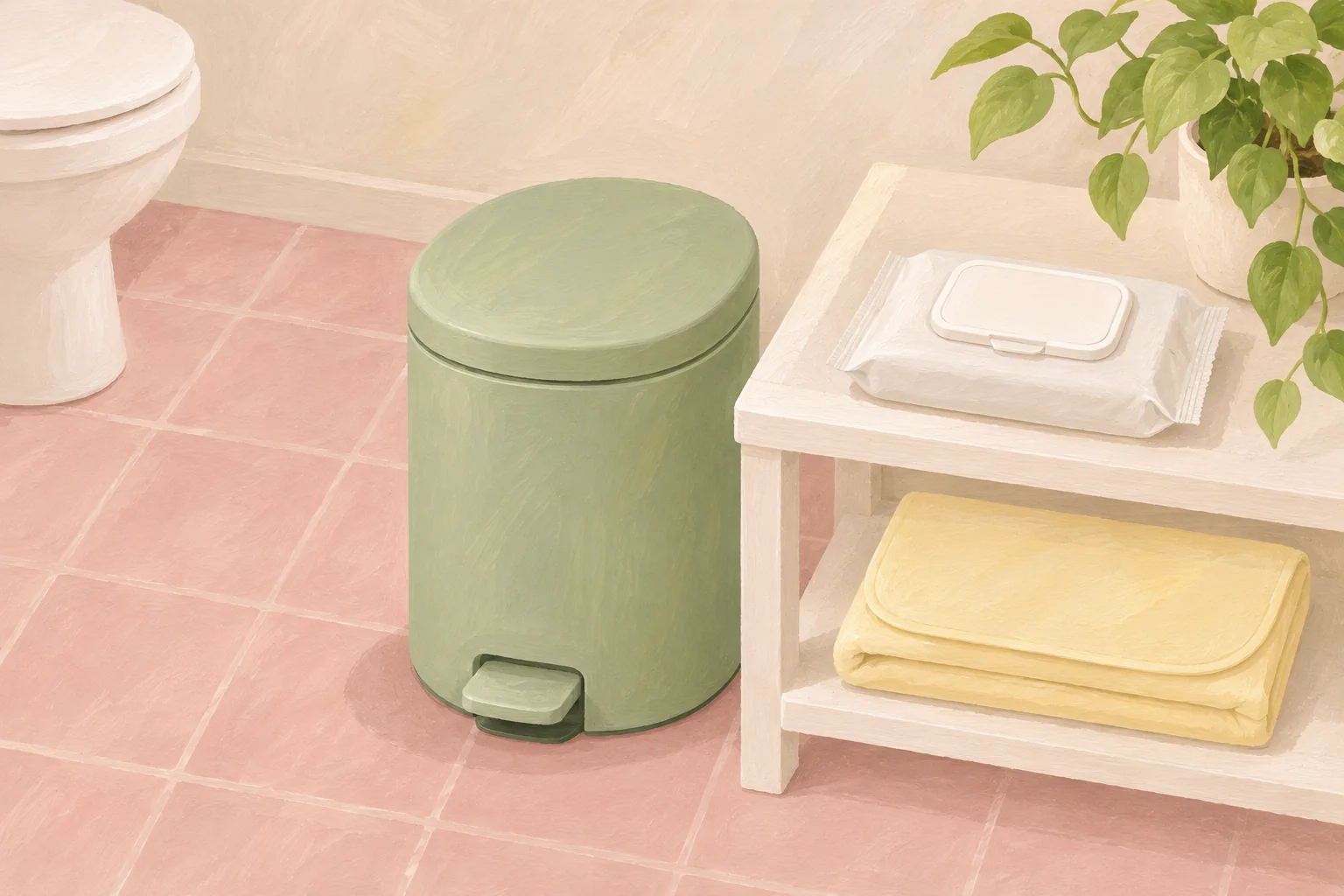
Arrange the waste container so an adult can manage the change safely while children cannot get into its contents. A lid alone is not a guarantee that a mobile baby or toddler cannot open it. Consider the actual location, access and how the container will be emptied, rather than buying a particular style on appearance alone.
- Choose the household destination. Check your local waste service’s directions for used wipes and nappies. Identify the appropriate waste bin; do not put a used wipe in paper recycling because it looks like a sheet of paper.
- Prepare before lifting your baby onto the changing surface. Have the supplies and safe waste arrangement ready. Do not discover halfway through that the liner or container needs replacing.
- Keep used items separate from the clean supply. A used wipe should not land on the clean packet, spare nappy or drying cloth while you finish the change.
- Finish the whole task. Once your baby is secure, complete waste disposal and handwashing. Agree who empties and cleans the container so this last step does not become an invisible job.
The NHS nappy-changing guide recommends gathering everything first and using a changing mat or towel on the floor. On a changing table, never walk away or turn your back. If the waste setup fails mid-change, keep your baby safe first; do not step away to fetch a bag. Our changing-station safety guide explains the arrangement in more detail.
Keep disposal bags adult-controlled
A convenient roll of nappy sacks is still a supply that needs safe storage. The NHS baby and toddler safety guidance warns that plastic bags, including nappy bags, can suffocate a child. Keep them out of sight and reach and away from cots.
Do not leave an open sack beside a baby, tuck bags under a cot mattress or give one to a toddler to “help”. Put supplies away after use. If a visiting caregiver brings their own changing bag, explain where it should be stored too. The routine should remain adult-owned as your child starts reaching, crawling and opening things.
Make the message easy for another caregiver to use
A short instruction works better than a debate at the bathroom door: “All baby wipes go in this bin, including the plastic-free packet. The bags are stored here, away from the baby.” Show the arrangement rather than assuming a familiar brand means everyone reads it the same way.
If someone has flushed wipes before, focus on the next action: “The water company says to bin these too. Let’s move the waste container so it’s easier.” There is no need to turn an ordinary care task into a test of who is the greener parent.
At a relative’s home, ask where used nappies and wipes should go before starting. In a public changing room, use the designated disposal facilities and follow the venue’s instructions. If these are missing or full, ask staff for an appropriate alternative; the toilet is not the fallback. Our guide to handling a missing usable changing facility can help with the wider outing problem.
What if a wipe has already been flushed?
Change the routine now rather than flushing another one to see what happens. A successful flush is not evidence that the wipe has left the system without causing trouble: Thames Water explains that wipes can accumulate in pipes.
If the toilet is slow, backing up or overflowing, stop using it and contact the responsible building manager, landlord, water service or qualified plumber for the situation. Keep children away from wastewater. This guide does not provide drain-clearing instructions; do not make a blocked toilet into a household experiment with cleaning chemicals.
For the next packet, read the disposal directions as carefully as the front label. The practical rule stays simple: finish the nappy change, keep your baby safe, and send the used wipe to the appropriate waste bin.
Sources and further reading
- Thames Water: what to bin and what to flush.
- Water UK: plastic-free and flushable wipe clarification.
- NHS: safe nappy-changing setup and hygiene.
- NHS: baby and toddler safety, including nappy bags.
Read EdCaptain’s editorial policy and review methodology.