By EdCaptain editorial desk · Published
The men’s toilets have no changing table. Your baby needs a fresh nappy, and the only changing sign points into a room you cannot simply enter. Being prepared for an outing does not make a missing facility any less inconvenient.
Start with a direct request for somewhere you can actually use. You do not have to hand your baby to a stranger, find a woman to do the change or balance them on an unsuitable surface. This guide is for dads out with nappy-wearing babies and toddlers aged 0–2; the same practical approach can help other caregivers.
Ask for a usable place, not just directions to “the toilets”
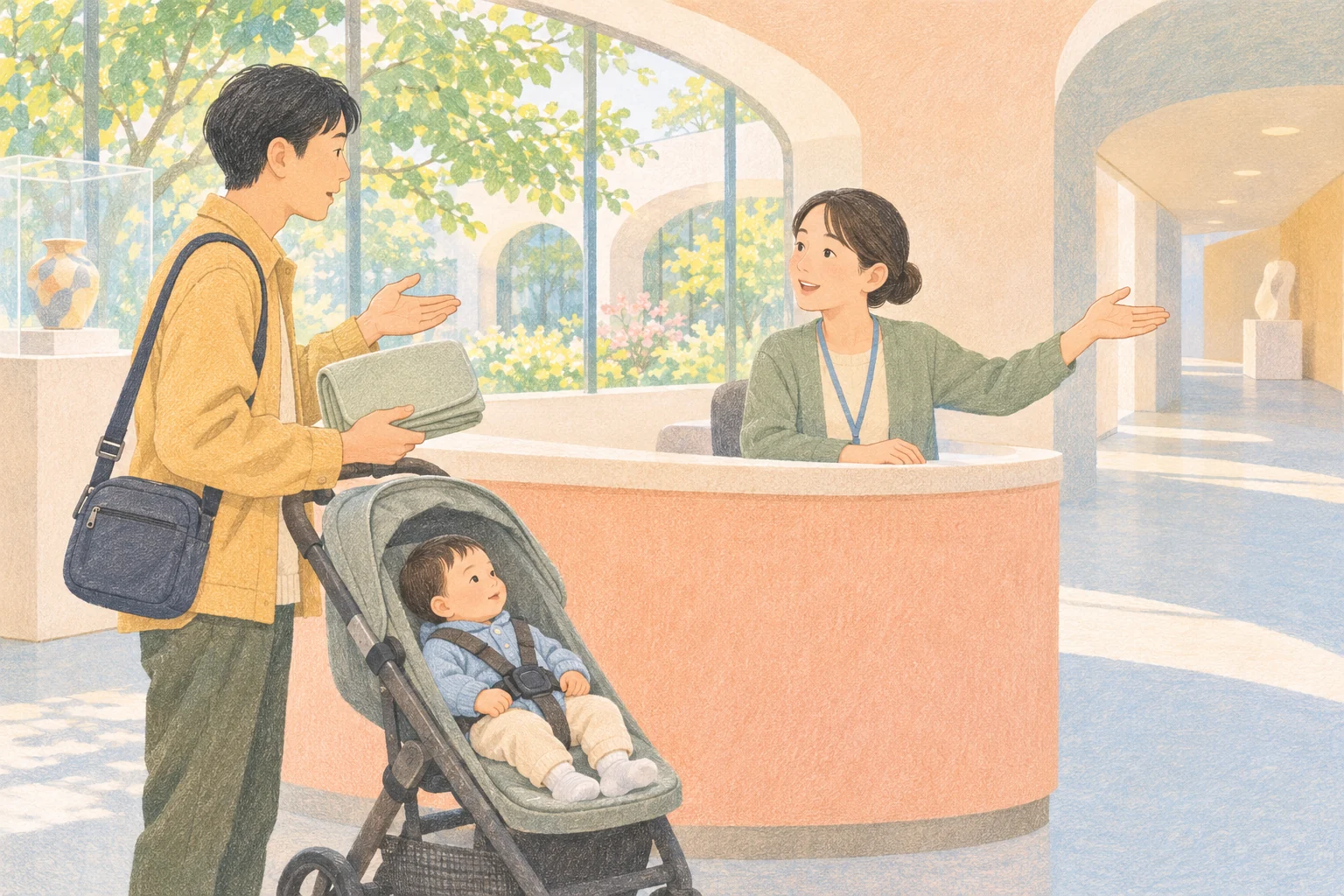
Go to reception, the information desk or a member of venue staff. Try: “I’m here alone with my baby and need to change their nappy. Where is the changing facility that I can use?” A family room may be on another floor, behind a different entrance or opened by staff.
If the answer is “It’s in the ladies’,” explain what you need: “Can you arrange access without intruding on anyone’s privacy, or show me another suitable space?” Let staff manage access and other users’ privacy. Do not walk into an occupied toilet or changing area unannounced.
Ask whether a nearby room has a proper changing facility. A quiet room is not automatically a safe place to put a baby down, and a desk does not become a changing table because someone offers it. Check the actual setup before undressing your child.
If there is a changing table, take a moment to check it
Look for damage, an unstable surface, a broken restraint or instructions showing your child is beyond the product’s limits. Do not use a faulty unit or try to repair it. Report the problem and ask for an alternative.
Health Canada’s changing-table guidance advises preparing supplies first, following the manufacturer’s instructions and keeping a hand on the baby even when a strap is used. If you need to move away, take your baby with you. A phone call or someone knocking can wait.
For arranging supplies within reach, our changing-station safety guide explains the setup in more detail. In a public venue, also check that you can reach your bag without turning away from your child.
When there really is no table
The Australian product-safety authority recommends a clear, clean floor surface when a changing table is unavailable. That does not mean any public toilet floor is suitable. A portable mat is not a way to make a wet, dirty or busy area safe.
Ask staff whether there is a clean, private area where a floor-level change is permitted. Before using it, check:
- The floor is dry and clean, with enough room for your mat and supplies.
- You are away from opening doors, foot traffic, stairs, heaters, cords and small objects.
- You can stay close, supervise continuously and keep your baby from rolling or crawling into hazards.
- You can get down and up safely while keeping your child secure.
- There is a practical route to waste disposal and handwashing.
If a floor change is inaccessible to you, say so: “I cannot safely get down to the floor with my baby. Is there an appropriate accessible changing facility nearby?” Do not push through pain or balance difficulties because the floor has been suggested. Staff may know another venue; confirm access rather than relying on a vague direction.
A sink surround, dining table, narrow bench or your lap is not a substitute for a suitable changing surface. If no safe option is available, move promptly to a known usable facility, or shorten the outing. Do not leave your baby in a dirty nappy simply to finish an activity.
Keep the change private and the cleanup manageable
Have a clean nappy, suitable wipes, spare clothes, your mat and a bag for soiled items together. Keep plastic bags and other supplies that could harm your child out of reach. Cover your baby except where you need access; avoid taking photographs or making a video of the problem while they are exposed.
Give an older baby or toddler a simple explanation: “We’re going to a quiet place for a clean nappy.” Keep attending to their movements and comfort. If the space becomes crowded or unsafe, pause and move them with you rather than trying to finish at any cost.
The NHS nappy-changing guide recommends prompt changes, supplies gathered beforehand and washing hands before and after. Use the venue’s designated nappy bin where available; do not flush nappies or wipes. Keep soiled items contained and separate from clean supplies, and clean your reusable mat according to its instructions. When a staff member offers help, a useful request is directions or opening a door, while you keep responsibility for your baby.
Make the next outing easier without accepting the barrier
For a venue you will visit again, ask a specific advance question: “Is there a working baby-changing facility available to a dad visiting alone, and which entrance should I use?” Check opening hours and whether a key or booking is needed. A venue map can be a starting point, but a symbol does not confirm that the room is currently usable.
Choose one nearby backup and carry enough supplies for an unexpected change. If a pushchair is part of your plan, our stroller safety check can help you prepare the journey. Confirm venue arrangements rather than assuming a previous visit guarantees access.
After your baby is comfortable, send the venue factual feedback: when you visited, which facility was unavailable to you and what staff offered. Ask for a changing option that caregivers can access regardless of gender. Keep your child’s private details out of public reviews. You can advocate for a better setup without turning an urgent care task into an argument at the toilet door.
Sources and further reading
- NHS: How to change your baby’s nappy
- ACCC Product Safety: Change tables guide
- Health Canada: Change tables