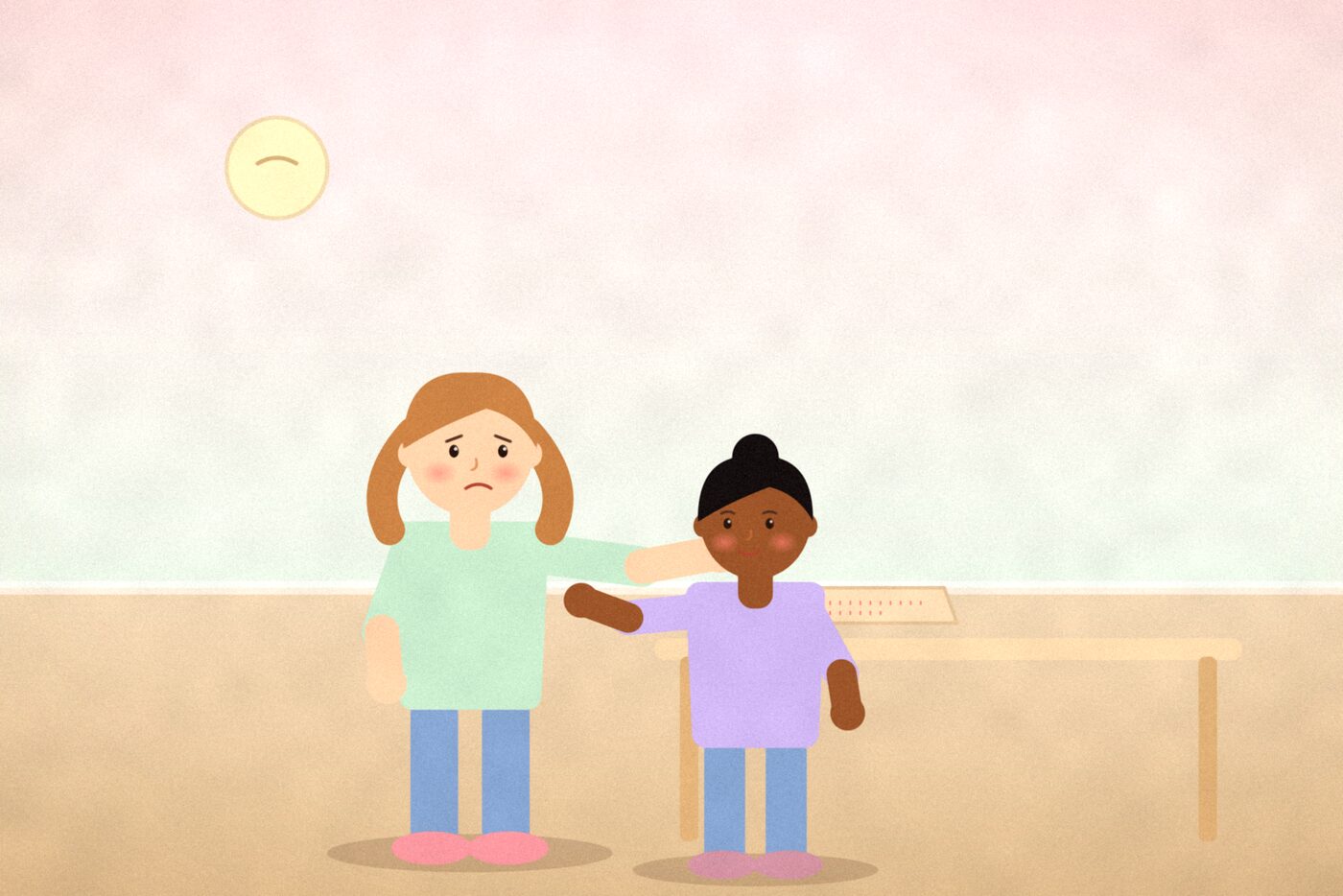
A teacher writes “disappointing effort” on an essay your teenager clearly worked hard on. A coach benches them without explanation. A friend says, bluntly, “you talk too much about yourself.” However it arrives, harsh criticism lands hard on a teenager, and what you do in the hour after it happens tends to matter more than anything you said beforehand.
The instinct to avoid, and why it is worth resisting
Two common parent responses do not help as much as they feel like they should. The first is jumping straight to defending your teenager (“that teacher is clearly unfair”), which can feel supportive in the moment but teaches them to externalise every piece of feedback rather than weigh it. The second is minimising it (“don’t worry about it, it’s not a big deal”), which can land as “your feelings about this don’t matter,” even when that is not the intent.
A more useful first move is simply to let the reaction happen. “That sounds like it really stung” gives your teenager room to be upset without you having rushed to fix the feeling or argue them out of it.
Separating the sting from the substance
Once the immediate reaction has settled, usually not in the same conversation, there is a genuinely useful skill to build: learning to ask whether criticism is accurate, separately from how much it hurt. Those are two different questions, and teenagers (like most adults) tend to blur them.
Try asking:
- “Putting the way it was said aside for a second, is there anything in what they said that’s actually true?”
- “Is this something you can do something about, or is it just how they see things?”
- “Does one person’s opinion of this piece of work change how good it actually is?”
Some criticism is fair and useful. Some is badly delivered but still points at something real. Some is just someone else’s bad day, or bias, landing on your teenager. Helping them tell these apart, rather than either swallowing every critique whole or dismissing all of it, is the actual skill here.
When the criticism is genuinely unfair or harsh
Not all criticism deserves to be taken to heart. A teacher’s comment that attacks character rather than work (“you’re lazy” instead of “this needed more detail”) is a different thing from specific, actionable feedback, and your teenager benefits from knowing the difference. You can say plainly: “That comment tells me more about how it was delivered than about your work.” Naming unfairness clearly, without turning it into a grudge against the person, helps a teenager hold onto their own sense of worth while still being able to use the useful part of the feedback, if there is one.
If a pattern of harsh or demeaning criticism is coming from one adult repeatedly, a teacher, a coach, that is worth raising directly with the school, separate from supporting your teenager through any one incident.
Helping them respond, not just recover
Once the sting has eased, it can help to ask what, if anything, they want to do next: redo the piece of work, ask the teacher a clarifying question, let it go entirely. Not every piece of criticism needs action. But a teenager who has a genuine choice in how to respond, rather than either stewing on it or being told to “just get over it,” comes out of the experience with more confidence, not less.
What you can model
Teenagers watch how adults around them handle being criticised more than they listen to advice about it. If you get a difficult performance review, a sharp comment from a relative, or pushback from your own teenager, narrate your own process a little: “I didn’t love hearing that, I’m going to sit with it before deciding what I think.” This does two things: it shows that criticism stings for everyone, not just teenagers, and it models the separation between the feeling and the assessment that you are trying to help them build.
The long view
A teenager who can take in fair criticism without it becoming a verdict on their whole worth, and can set aside unfair criticism without needing to win an argument about it, is carrying a skill that will serve them well past school: in work, in relationships, in every situation where someone else’s opinion of their effort does not match their own. That skill is built slowly, conversation by conversation, not delivered in one talk.