A child who clings, cries or begs you not to leave can make drop-off feel brutal. The goal is not to make every goodbye tear-free. It is to help your child learn, through predictable repetition, that separation is manageable, caregivers are available and you return.
Prepare before the doorway
Explain what will happen in plain language: “We’ll hang your bag, give two hugs, and Ms Amina will help you choose a book. I’ll return after lunch.” For a toddler, use familiar events rather than clock time. Older children may prefer a visual schedule. Visit the entrance if possible, look at a teacher photo or pack one small comfort item. Keep the morning steady and allow enough travel time.
Use one short goodbye
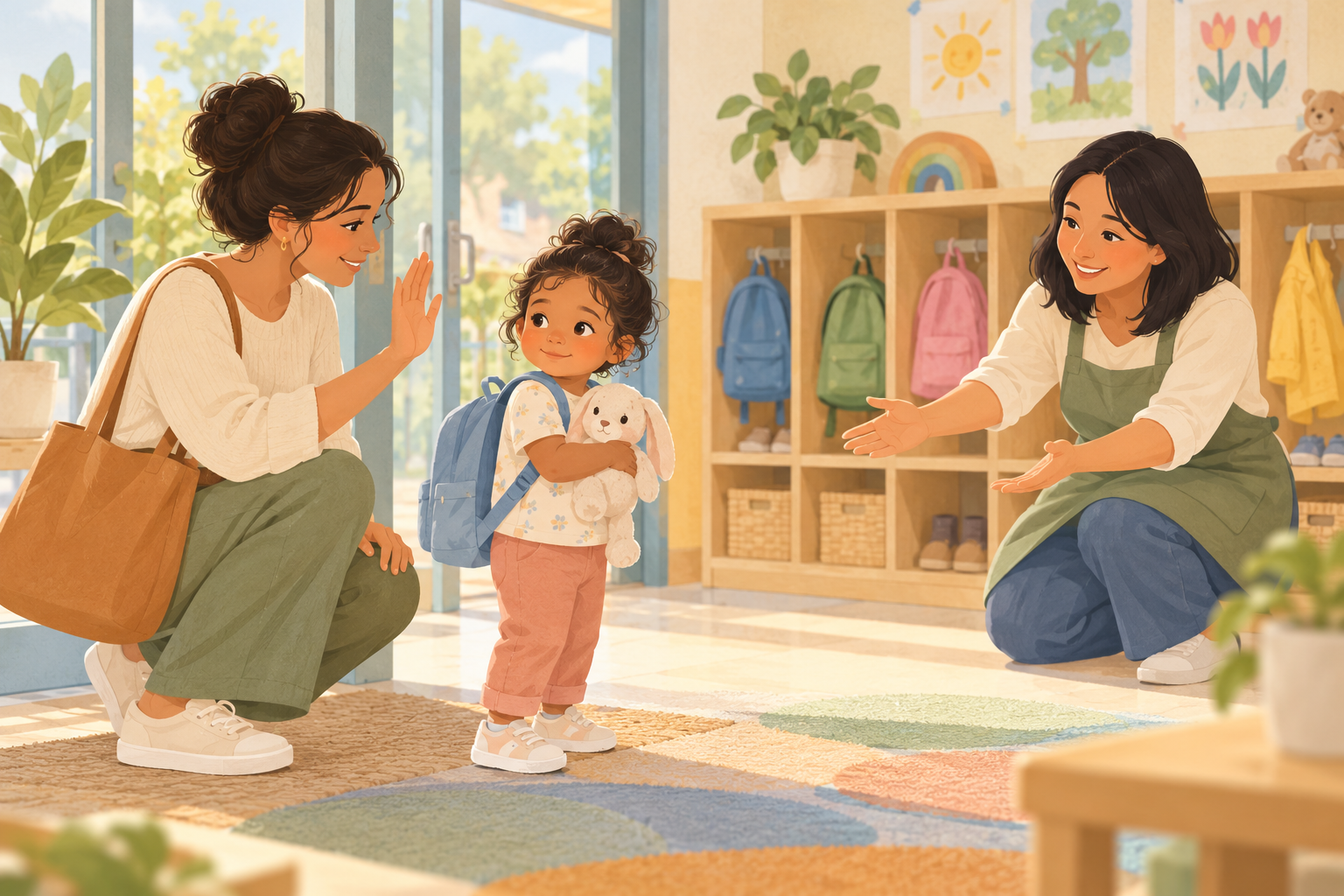
- Get low and name the feeling: “You wish I could stay.”
- State the plan: “You are safe with Mr Lee. I return after snack.”
- Do the same brief hug, wave and phrase.
- Transfer care, then leave calmly.
Try not to disappear secretly. Sneaking away can make a child watch you more closely next time. Long negotiations can also signal uncertainty. Kind and clear is more reassuring than repeated promises.
Notice recovery, not performance
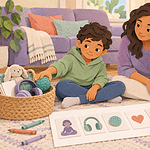
Ask the educator what helped after you left. At reunion say, “I came back, just like I said.” Notice effort: “You held your teacher’s hand even while you felt sad.” Practise the sequence with toys when everyone is calm. A child can choose the goodbye phrase or draw the steps.
For a child who uses few words, point to pictures for arrive, hug, play and return. A sensory-sensitive child may need a quieter entrance or direct handover before the hallway becomes busy. A school-age child may prefer a private signal rather than a public goodbye ritual.
When to seek more support
Work with the setting if distress lasts through much of the session, is worsening or stops attendance. Speak with a qualified health professional if separation fears strongly disrupt sleep, eating or family life. The aim is not independence on a deadline, but understanding what makes this separation hard.
See also support for a slow-to-warm child and restarting family routines.