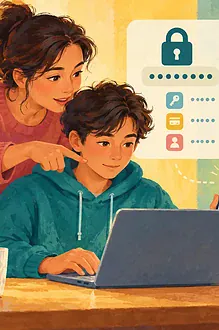
An online conversation can shift from a shared game or hobby to personal questions, secrecy or pressure. Children need a plan they can use without first deciding whether someone is “really dangerous.” The plan should protect them and preserve a route back to a safe adult.
Agree on warning signs
Pause when someone asks for a home address, school, live location, private image or sexual information; pushes a disappearing chat; sends gifts; insists on secrecy; or threatens exposure. A profile, video call or mutual friend does not prove identity or safety. Pressure to move away from a moderated space deserves attention.
Stop, save, block, tell
- Stop: do not reply to pressure or send more information.
- Save: keep usernames, dates and relevant messages. Do not download, forward or repeatedly view sexual images of a child.
- Block and report: use the service’s tools after preserving needed details.
- Tell: contact a trusted adult. Sexual requests, threats, meeting plans or immediate danger need prompt local safeguarding or law-enforcement help.
Tell your child in advance, “Come to me even if you replied, lied about your age, sent something or broke a rule. I will help first.” Fear of punishment can keep a child silent. Device rules can be reviewed later, after safety and support.
Practise the exit
Scripts include “I don’t share that,” “I’m leaving,” or no reply. A child who finds speech difficult can use a code emoji meaning “Please look at this with me.” Role-play a gaming contact asking to continue privately, then let the child practise ending the exchange.
Keep conversation balanced. Ask what they enjoy online, who they play with and what feels uncomfortable. Review privacy and location settings together. Younger children need closer supervision; older children still need clear routes to help.
Connect the plan to trusted adults and your family’s technology rules. If abuse is disclosed, use a calm, non-interrogating first response. Do not blame the child for being manipulated.
Sources and further reading
- Talking to your child about online safety
- Preventing online harm and abuse
- Grooming: recognising the signs
If the person knows the child offline
The same plan applies. Familiarity does not make secrecy, sexual requests or threats acceptable. Move the child to safety and seek qualified local advice.