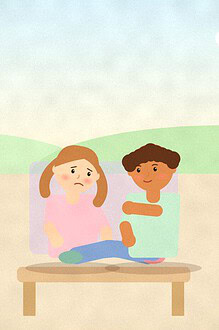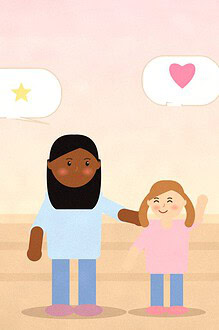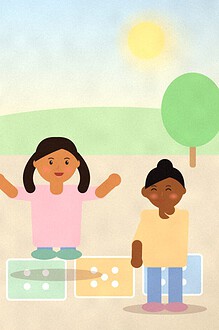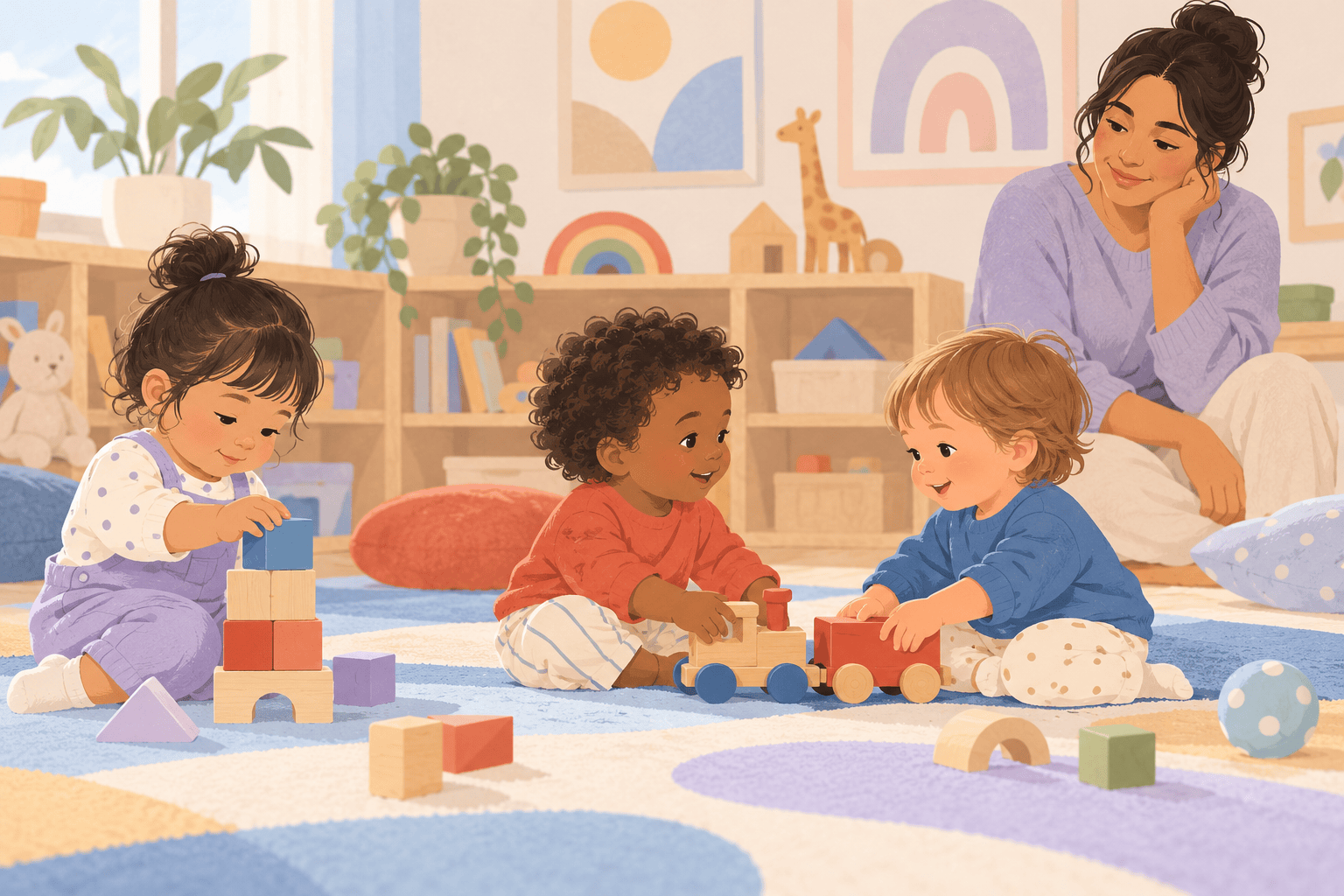
Two toddlers sit inches apart, each building a tower and barely speaking. It can look as though they are ignoring one another. In fact, playing alongside another child is part of social development. They watch, copy, protect their space and gradually discover that another person can become part of the game.
The CDC notes that by 30 months most children play next to other children and sometimes with them. Development is not a staircase with strict stages; children move between watching, solitary play, parallel play and shared play depending on familiarity, energy and the activity.
Make the setup do some of the work
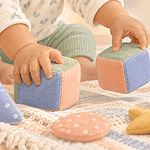
Choose an activity that allows separate participation: two small baskets of blocks, several toy animals, a wide sheet of paper or enough dough for each child. Duplicates reduce conflict when turn-taking is still hard.
Stay close without narrating every move. You might say, “Maya made a long road. Sam is putting a car beside it.” That notices connection without ordering children to play together.
Offer a small bridge
- Roll a ball from one child towards the other.
- Place a shared basket between two individual play spaces.
- Suggest one simple joint problem: “The train needs a tunnel.”
- Let a child watch before joining.
- End while the experience is still manageable.
If a child says no, turns away or keeps their project separate, respect that boundary. Social confidence does not grow from forced hugs, sharing or eye contact.
Help with the predictable conflict
Two-year-olds often need adult support to wait, share materials and solve problems. Use short language: “You both want the truck. Kim is using it. Lee can choose the bus or wait with me.” Protect special belongings by putting them away before visitors arrive.
Children who communicate differently can join through movement, pictures, signs, sounds or a clear role such as carrying blocks. Reduce noise and crowding for a child who is overwhelmed by busy play.
When to discuss a concern
Raise concerns if your child rarely notices or responds to people, loses social or communication skills, or if interaction is difficult across settings. A professional should consider hearing, communication, sensory needs and development rather than judging one playdate.
For more support, read how to notice feelings without guessing and how to help a child begin a game.