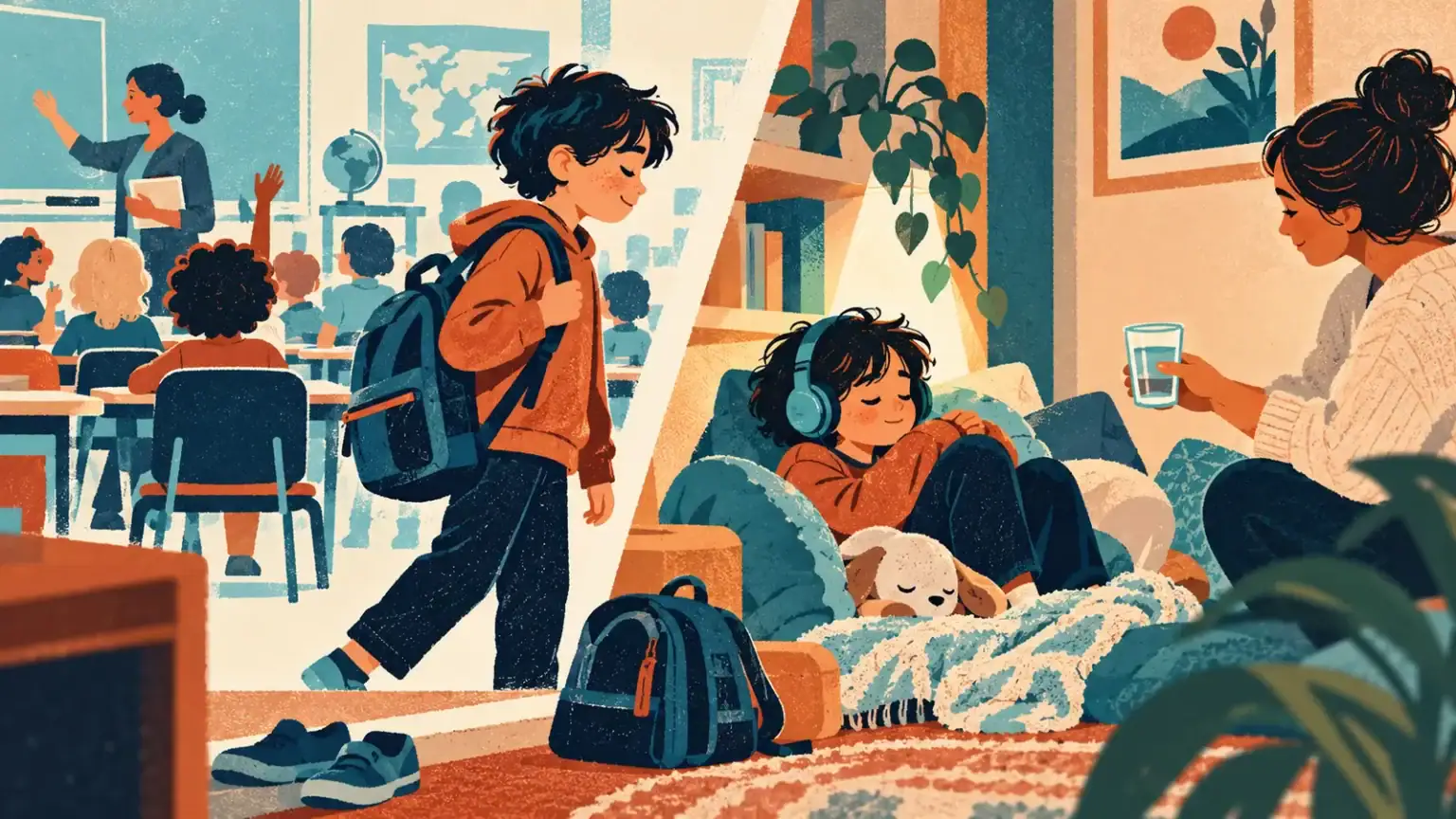
A child can follow instructions, smile and avoid drawing attention at school, then cry, shout, go silent or collapse into sleep at home. The two pictures do not cancel each other out. Some autistic children consciously or unconsciously mask: they hide distress, imitate expected social behaviour, suppress movement or endure sensory discomfort to get through the day. The cost may appear only in a safer place.
Look beyond “fine at school”
Masking can include rehearsing conversations, copying peers, forcing eye contact, not asking for help, holding the body still, or laughing without understanding. It can also look like extreme compliance. A child may be learning academically while using most of their energy to interpret people and tolerate noise.
After-school distress is not proof of masking, and families should not diagnose from one pattern. Hunger, bullying, learning difficulty, pain, anxiety and sleep problems can look similar. Record when the pattern happens and ask open questions when the child is calm. “Which part of the day takes the most energy?” is often easier than “What is wrong at school?”
Change the first hour at home
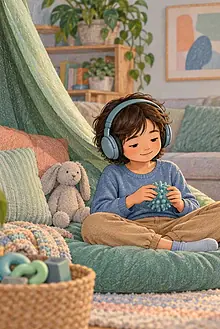
Consider the arrival home a recovery transition. Reduce questions and instructions. Offer food, drink, access to the toilet and the child’s preferred regulation activity. Some need movement; others need darkness, quiet, repetitive play, music or time alone. Say, “You don’t have to talk yet. I’m here when you’re ready.”
A predictable landing routine might be: bag down, snack, 30 minutes with no demands, then a visual check of the evening. For a teenager, agree on how they will signal whether they want company. Recovery is not a reward to be earned by calm behaviour; it is support after a demanding environment.
Bring useful observations to school
Instead of debating whether the child “really copes,” share concrete data: headaches on school nights, the time needed to recover, days or lessons linked to distress, and the child’s own words. Ask the school to observe less visible signs such as withdrawal, perfectionism, delayed responses, frequent toilet visits or copying before starting work.
The National Autistic Society notes that autistic pupils may mask at school and need support with sensory differences, communication and change. Useful adjustments might include:
- a named adult the child can approach without having to explain everything;
- planned quiet breaks before distress is obvious;
- clear written or visual instructions;
- advance information about substitutions, assemblies and room changes;
- alternatives to crowded lunch or unstructured break spaces;
- permission for safe movement, headphones or communication tools.
Adjustments should reduce the need to mask, not teach the child to perform neurotypical behaviour more convincingly. Ask the child which supports feel discreet, respectful and genuinely helpful.
Protect identity and connection
Use neutral language about autistic traits. Stimming, looking away or needing precise information are not moral failures. Make home a place where safe self-regulation is accepted. At the same time, keep boundaries around harm: “You can be angry and need space; hitting is not safe. I will move back and help you find another way.”
Talk explicitly about consent, friendship and asking for clarification. A child who works hard to imitate others may be vulnerable to going along with unsafe requests. Help them practise phrases or AAC messages such as “I need time,” “I don’t understand,” and “I want to check with my adult.”
When more help is needed
Seek support if exhaustion is persistent, school attendance is falling, the child talks about hopelessness or self-harm, or anxiety and shutdowns are limiting daily life. Urgent safety concerns require immediate local emergency or crisis help. A healthcare professional can also check sleep, pain and co-occurring conditions.
Families may find it useful to revisit talking about an autism diagnosis, supporting sensory needs and what happens in assessment. The aim is not to make home look as calm as school. It is to make every setting safer enough that the child does not have to disappear inside a performance.