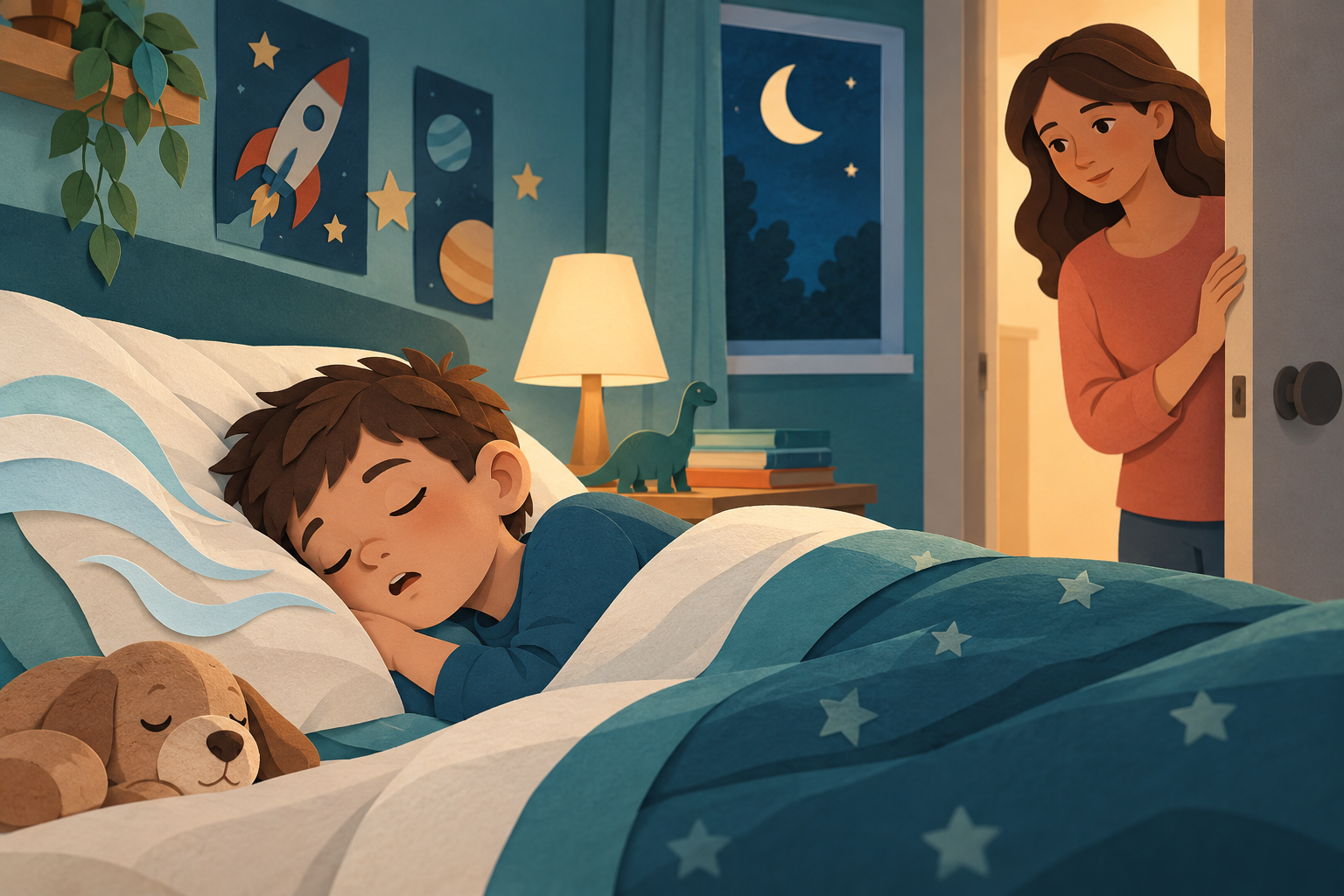
An occasional snuffle during a cold is not the same as loud snoring night after night. Snoring is the sound of air moving through a narrowed airway. It does not tell you the cause, and it does not diagnose sleep apnea, but a repeated pattern deserves attention—especially when breathing, sleep quality or daytime life seem affected.
Start with a simple observation, not a diagnosis
For three to seven nights, note what you actually see and hear:
- Is the snoring soft or loud enough to hear outside the room?
- Does it happen only with a cold, or on ordinary nights too?
- Do you notice pauses, gasps, choking sounds or unusually hard breathing?
- Is your child restless, sweaty or sleeping in an unusual position?
- In the morning, are they hard to wake, complaining of headache or waking with a dry mouth?
- During the day, are they very sleepy—or unusually irritable, impulsive or unable to concentrate?
A short audio or video clip can be useful for a clinician if it is taken respectfully and stored privately. Record the date and whether your child was unwell. Do not stay awake counting every breath; the aim is to capture a pattern.
When to book a medical conversation
Talk with your child’s pediatrician or family doctor when snoring is regular, loud, persists after a cold has cleared or comes with gasping, breathing pauses, restless sleep or daytime difficulties. Mention nasal allergies, frequent blocked nose, enlarged tonsils, medicines and any family history of sleep-related breathing problems. A clinician may examine the nose and throat and, when appropriate, arrange a sleep study. Only a qualified professional can determine whether sleep apnea or another condition is present.
Do not begin decongestants, antihistamines, nasal sprays, supplements or positioning devices simply to treat snoring without age-appropriate medical advice. Avoid unapproved sleep products and never use weighted sleep products for an infant.
Know the urgent signs
Call your local emergency service if your child’s breathing stops for a prolonged period, their skin or lips become pale, bluish or gray, their muscle tone changes, or they are difficult to rouse and not recovering normally. If you are unsure and your child appears seriously unwell, seek urgent help.
Support sleep while you wait for advice
Keep the bedroom smoke-free and follow your clinician’s plan for known allergies or asthma. Maintain a regular bedtime and wake time; a calm routine will not fix an airway problem, but it can reduce other sources of broken sleep. Our guide to a clear, kind bedtime finish offers a practical structure.
If your child is waking the household early as well as snoring, keep the two questions separate. The steps in our one-week plan for early waking may help with timing, but breathing signs still need their own medical assessment.
Adapt the conversation to your child
For a younger child, say, “The doctor will help us understand the sounds your breathing makes while you sleep.” An older child or teen can help keep the sleep log and describe morning symptoms. Avoid comments about weight, blame or “bad sleeping.” Snoring is a health observation, not a character flaw.
The most useful next step is neither panic nor dismissal. Notice the pattern, preserve urgent warning signs and bring clear observations to a qualified health professional.