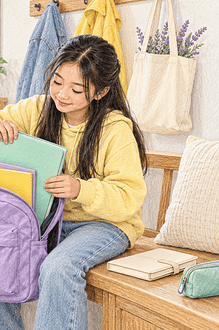
Moving to middle or secondary school changes more than the building. One teacher may become several, one classroom becomes a timetable, and a child who felt competent can suddenly be unsure where to go or whom to ask.
Preparation works best when it turns unknowns into small rehearsals. You do not need to promise that everything will be easy. You can help your child know what they will do when it is not.
Ask what the child is actually wondering
Adults often lead with grades while children worry about toilets, lunch, getting lost, older students or carrying the right book. Try: “What are three things you’re curious about and one thing you hope will not happen?”
Do not correct every fear immediately. Write questions down. Sort them into facts the school can answer, skills to practise and worries that need reassurance rather than certainty.
Create a practical preview
Use orientation visits, school maps and official information where available. Practise:
- the journey to and from school, including a backup plan;
- opening and organizing the bag, locker or digital portal;
- reading a sample timetable and identifying room changes;
- buying or carrying lunch according to the school routine;
- finding the office, library, toilets and a named safe adult.
A child with mobility, sensory, communication, health or learning needs should be involved in access planning early. Ask about quiet spaces, lifts, visual directions, technology, medication procedures and how adjustments follow the student across different classes. Systems vary, so contact the receiving school rather than relying on assumptions.
Rehearse help-seeking
Belonging is strengthened when a student knows at least one adult who can help. Official NSW transition guidance highlights advocacy at school, explicit expectations, feedback and high expectations as important supports.
Practise short lines: “I’m new and I can’t find room 12,” “I missed the homework instruction—where is it posted?” and “I need to speak to my year adviser privately.” Put key contact names in the child’s phone or planner if permitted.
Build a light organization routine
Do not introduce an elaborate system on the first morning. Choose one place for the timetable, one place for assignments and one transport folder. Pack together at first, then fade your help. A ten-minute weekly reset can catch papers, notices and missing supplies before they become a crisis.
During the first month, ask process questions instead of “How was school?” Try “Which part of the day felt easiest?”, “When did you need help?” or “Who did you sit near at lunch?” These questions produce information without demanding a performance.
Support friendships without managing them
If possible, help your child maintain one existing connection while making room for new ones. Clubs, sports, arts and interest groups offer repeated contact around a shared activity. A shy student can prepare one opener: “Have you had this teacher before?” or “Is this seat free?”
Do not panic if friendships shift. Watch instead for persistent isolation, bullying, dread, sleep changes or refusal to attend. Report bullying or safety concerns promptly through the school’s process; they are not a normal price of transition.
Protect recovery time
New schedules require more concentration. Some children will be talkative after school; others will need food, quiet and movement before conversation or homework. Keep the first weeks lighter where possible and preserve sleep routines.
Expect unevenness. A child may master transport but forget books, or enjoy classes but feel lonely at lunch. Choose one problem at a time and involve the child in the adjustment.
A simple first-month review
At the end of each week, use three questions: What is working? What is still confusing? What one change should we try next week? If difficulties persist, contact the subject teacher, year adviser, counsellor or learning-support team early. Early collaboration is easier than waiting for a child to feel they have failed.
Related guides include a calmer school-morning routine, support after the school-day crash and age-appropriate executive-skill support.