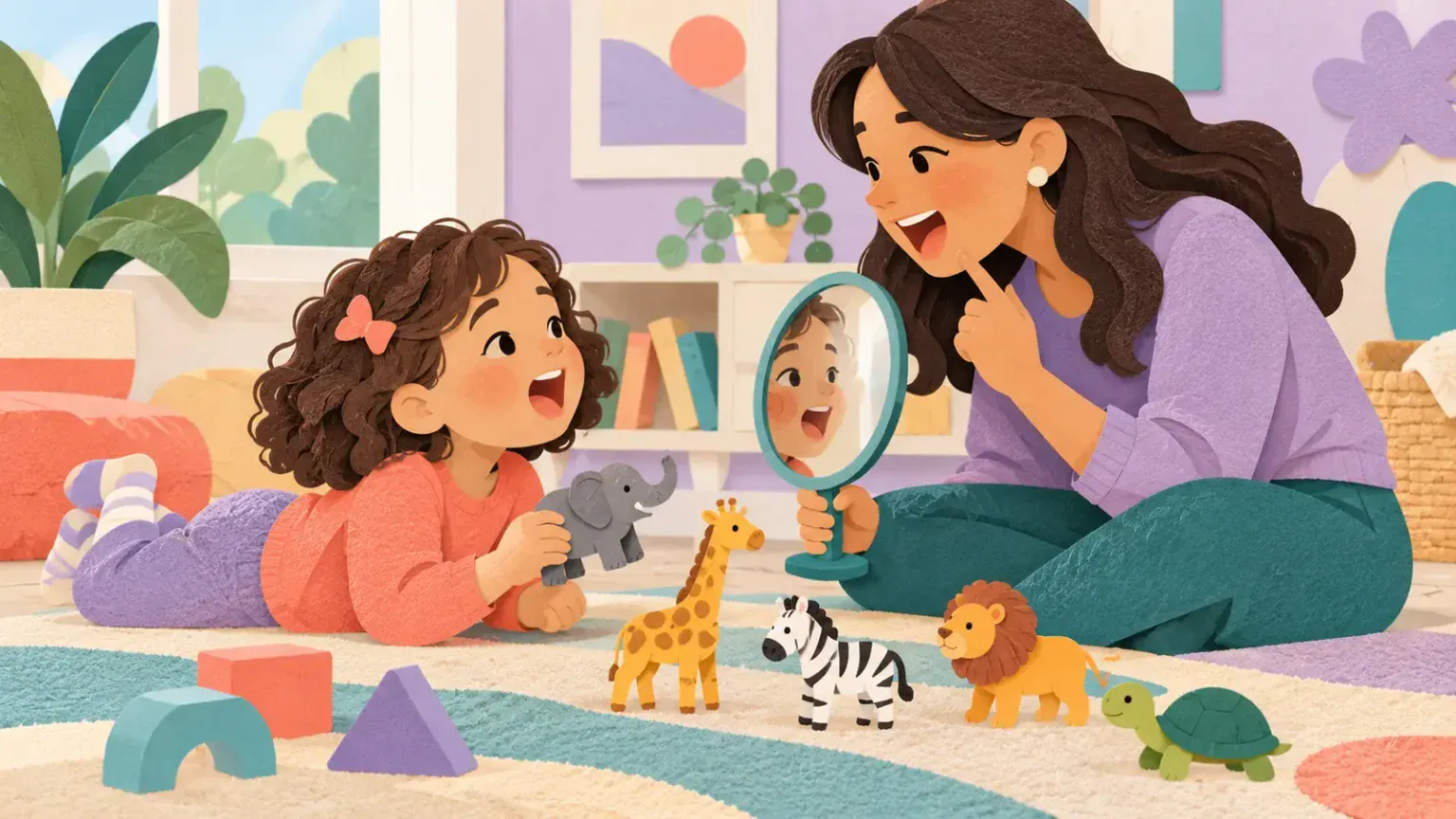
Young children do not produce every speech sound perfectly, and development varies across languages. A speech sound disorder is considered when sound patterns are unexpected for the child’s age and language background or make communication persistently difficult. Families can support progress without turning every conversation into a correction session.
Start with understanding, not a label
Notice who understands the child, in which situations and whether certain sound patterns repeat. Does the child leave off parts of words, substitute one sound for another or find longer words especially hard? Record frustration, teasing and avoidance as well as speech examples.
ASHA explains that speech sound disorders can involve articulation or the sound system of a language and may occur alongside language or literacy difficulties. A qualified speech-language professional should assess the pattern. A hearing check is also important, particularly with persistent ear problems or a change in speech.
Make everyday conversation successful
- Face the child and reduce background noise.
- Give time without asking them to repeat many times.
- If you miss the message, say what you understood: “You said something about the blue car—show me.”
- Use gesture, pointing, drawing or pictures to repair communication.
- Respond to the idea before the pronunciation.
Do not pretend to understand when safety or consent is involved. Calmly use another communication route. The aim is successful communication, not guessing.
Model naturally instead of correcting constantly
If the child says “tat” for cat, you can reply, “Yes, the cat is sleeping,” with a natural clear model. Do not demand repetition every time. Constant correction can reduce talking and make family interaction feel like therapy.
Use only the home-practice activities agreed with the speech-language professional. A sound that is appropriate to practise for one child may be the wrong target for another. Short, frequent, playful practice is usually easier to sustain than a long drill, but the clinician should specify the words, cues and schedule.
Ask what the assessment found
Useful questions include: Is this mainly a speech sound pattern, a motor-speech concern, or part of a broader language need? How were all the child’s languages considered? Is hearing information current? Which target will make the biggest functional difference? How will progress be measured across words and ordinary conversation?
A bilingual child should not be treated for a sound difference that is normal in their languages or accent. Assessment may require a clinician with relevant language knowledge or a trained interpreter.
Coordinate with nursery or school
Teachers can give the child time, avoid forced public repetition and check meaning privately. Agree on how adults respond when peers do not understand. The school should address teasing as a behaviour problem; the child should not have to “fix” speech to earn respect.
Because speech sound difficulties can overlap with phonological awareness and literacy needs, ask whether reading and spelling development should be monitored. This is not a prediction that every child will struggle, but a reason to look at the whole learning profile.
Protect confidence
Talk about speech neutrally: “Some sounds are hard right now, and your therapist is helping us find useful practice.” Notice the child’s stories, jokes and ideas. Never imitate errors for humour.
Seek review sooner if speech becomes less clear, skills are lost, talking is painful, or there are feeding, swallowing, voice or breathing concerns. Related EdCaptain articles cover late talking, literacy support and preparing for an appointment.
Review home practice when it creates conflict or the child begins avoiding conversation. Tell the clinician exactly which cue is confusing or which activity the child refuses. Practice can be redesigned around interests and successful words. The quality of the child’s relationships and willingness to communicate matter alongside accurate production.