- Keep the opportunity open without promising an easy route
- Bring one task to the conversation
- Ask for a change that reaches the actual barrier
- Make home practice a follow-up, not a second curriculum
- Review learning and access separately from the final grade
- Make course choices with the learner, not from a stereotype
- Sources and further reading
By EdCaptain editorial desk · Published
General educational guidance. No qualified clinical review is recorded for this article. Health and safety information.
Your child likes the idea of speaking another language, but vocabulary homework takes the whole evening. Perhaps they recognise a word when the teacher says it, then cannot match it to the written version. Or they can follow a practised dialogue but freeze when asked for an immediate answer.
For families supporting learners aged 10–18, the first decision need not be “push through or drop the subject.” Find out which part is difficult, what teaching support is available and what the young person wants from the course.
Keep the opportunity open without promising an easy route
The British Dyslexia Association’s language guidance says dyslexic children should have the opportunity to learn a foreign language. It also acknowledges that learning may take longer, with difficulties involving reading and spelling, processing, word retrieval or memory.
That does not mean every learner will have the same experience. Ask your child which moments work: a conversation, a song, a clear grammar explanation, listening with the text visible, or discussing culture. Do not assume that speaking must be easy because writing is hard, or that a strong interest will remove the need for support.
Conversely, a difficult language class does not establish a diagnosis. The International Dyslexia Association’s fact sheet notes that many students find a new language difficult, including students without a learning disability. Discuss persistent concerns through appropriate school assessment and support rather than diagnosing from one subject’s grades.
Bring one task to the conversation
Choose an ordinary piece of work, not a pile of every mistake. Ask the learner to show where they lost the thread. Useful distinctions include:
- “I can say it after the recording, but I don’t know which written word it is.”
- “I understand the example, but I can’t use the pattern in a new sentence.”
- “I know the answer when I have time, but not when someone asks suddenly.”
- “I spend so long copying the words that I miss the explanation.”
These are descriptions to explore with the teacher, not a checklist of dyslexia symptoms. Note what assistance was already present. Completing a task after an adult translates every instruction tells a different story from completing it independently.
For ages 10–12, offer a choice: “Was finding the word hard, or remembering how to write it?” Accept pointing, a drawing or “something else.” Teenagers can choose their own example and decide whether they want to lead the meeting, send a note or have a caregiver speak first. Avoid turning the review into another oral test.
Ask for a change that reaches the actual barrier
Send the teacher a short message: “We want to help Sam keep learning the language. In the last task, Sam could repeat the spoken words but could not link them to the word list. Could you show us how those sound–spelling links are being taught and what practice would fit the lesson?” Replace the example with what you actually observed.
IDA guidance recommends explicit teaching of sounds and their written forms, a clear progression of concepts, review and modelled study strategies. Ask which of those needs attention for this learner. “Practise more” is hard to act on if the child does not know what to practise or how to check it.
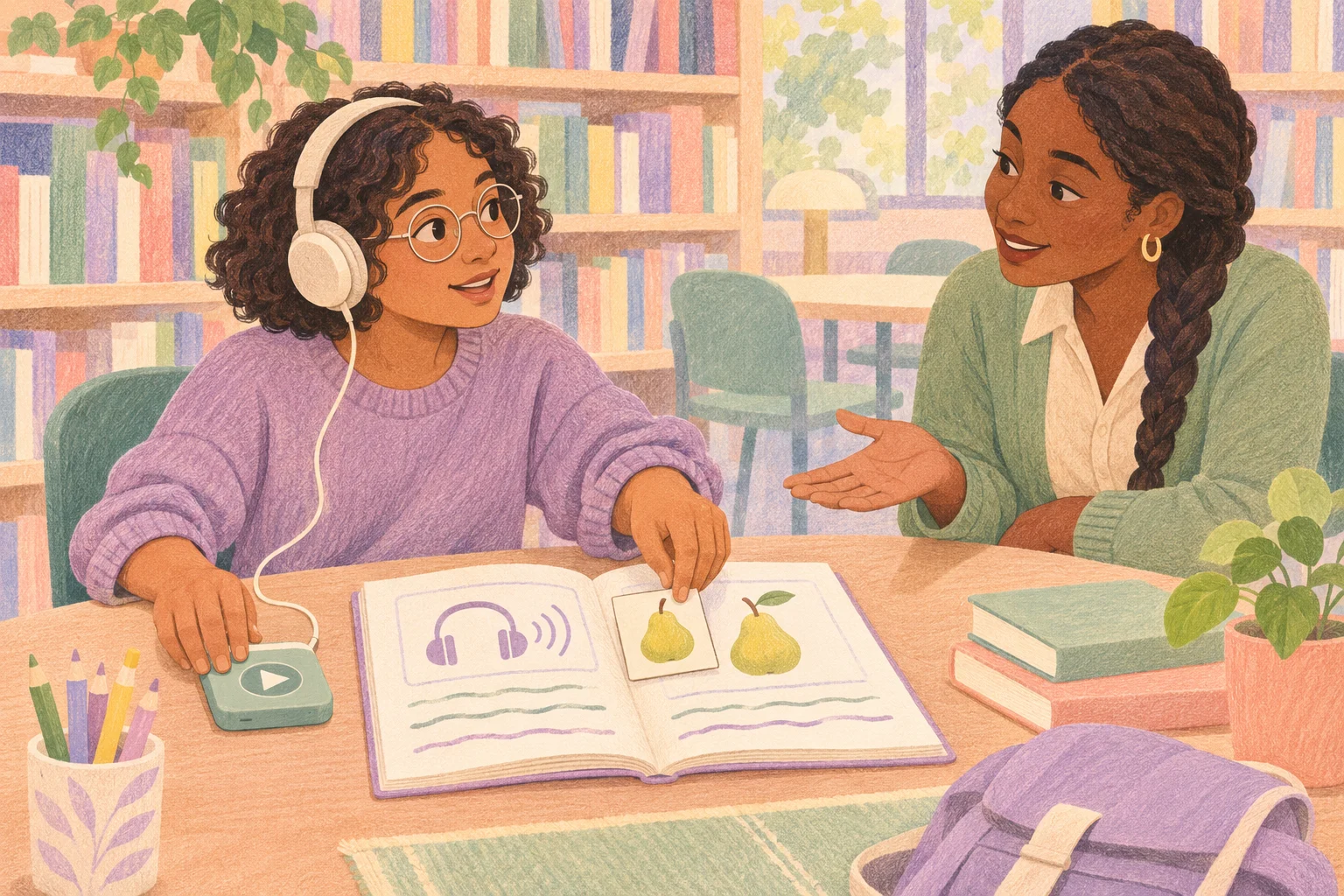
A manageable agreement might be that the teacher provides a clear recording aligned with the written words already taught, demonstrates one pattern and explains the practice goal. If copying is the barrier, ask for the relevant notes rather than making copying the gateway to hearing the lesson. These are possible requests to discuss, not a promise that every school can provide the same arrangement.
Make home practice a follow-up, not a second curriculum
Use the teacher’s model rather than improvising pronunciation from spelling. Ask for an example you can rely on if you do not speak the language yourself. The caregiver’s job can be helping the learner find the right material, notice the target and stop at the agreed point.
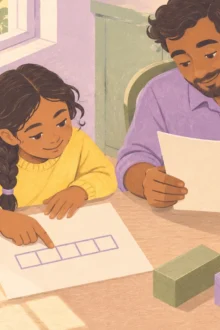
For a younger learner, sit together while they locate the matching audio and written item, then ask what the teacher wanted them to notice. For a teenager, ask them to explain their chosen practice plan: “Which part are you working on today, and how will you know you’ve checked it?” Let them request support without taking over every answer.
Agree a realistic stopping point with school when work repeatedly overruns. Record the time, task and help needed instead of extending practice late into the evening. Do not turn an accessible version into an extra assignment on top of an inaccessible one.
Our working-memory support guide offers ways to make steps available, and our school support-plan guide can help specify who will provide an agreed adjustment.
Review learning and access separately from the final grade
At the follow-up, look at the original barrier. Can the learner now match the spoken and written forms with the agreed support? Can they explain the taught pattern? Is the workload more manageable? If not, ask whether the support was available, understood and matched to the difficulty before concluding that the child did not try.
The NHS dyslexia guidance describes school support and further assessment when difficulties persist. Use the relevant additional-needs contact in your education system. A language teacher and a learning-support specialist may need to plan together.
If a test is coming, ask what it measures and which adjustments are permitted under its current rules. An oral assessment is not automatically an appropriate substitute for a writing assessment. Get clear advice about the actual course rather than assuming the home support arrangement will apply.
Make course choices with the learner, not from a stereotype
If changing or discontinuing the course is being considered, ask the school for the available options, deadlines and implications for later study. Requirements differ across schools and qualification systems. Do not rely on a general claim that a dyslexia diagnosis guarantees exemption, or that one language is always the right choice.
Include the young person’s interests and experience alongside the workload and support available. A teenager may value continuing but want a different route; another may have a considered reason to change. Explain the options to a younger learner in manageable language without making them responsible for solving the school’s access barriers.
If distress is persistent or affects attendance, sleep or daily life, seek support from school and an appropriate health professional. The next step should answer a real need: clearer teaching, a usable adjustment, further assessment or an informed course decision—not a verdict that the child is “bad at languages.”
Sources and further reading
- British Dyslexia Association: modern foreign languages
- International Dyslexia Association: foreign-language learning in school
- NHS: dyslexia support and assessment
Read our editorial policy and review methodology.