“Peer reviewed” is useful information, but it is not a promise that every conclusion is correct. It means experts examined a manuscript before journal publication and the authors usually answered questions or revised the work.
What reviewers may examine
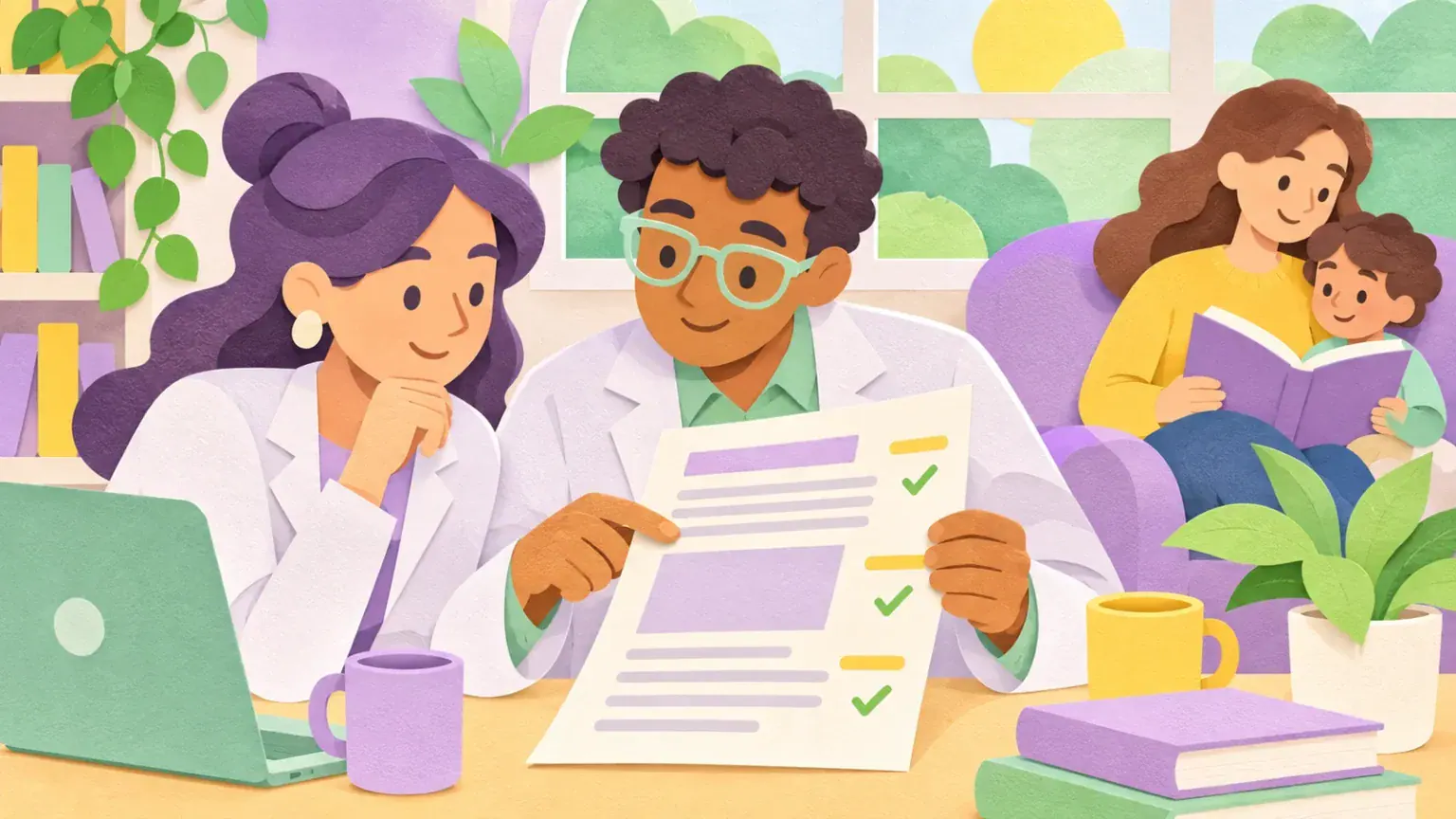
Reviewers can question the study design, measurements, analysis, interpretation and reporting. They may notice a missing comparison, an unsupported claim or a result that needs clearer uncertainty. Editors use those reports to accept, reject or request revisions.
NIH describes science as an iterative process and notes that journal papers undergo peer review. That process can improve a paper, but later studies may still challenge it.
What peer review cannot promise
- Reviewers do not usually repeat the entire study.
- They may not see raw data or every analysis decision.
- Reasonable experts can disagree.
- Fraud, errors or bias can sometimes escape detection.
- A sound result may apply only to the population studied.
Different journals also use different review processes. A journal name, database listing or polished layout is not enough by itself.
Check what kind of article you have
A research article, review, editorial, letter and news story are different. A journal may peer review some content but not every item in the same way. Look for a methods section, results, references, dates and a clear article type.
Read beyond the badge
- Identify the research question and design.
- Check who participated and what was measured.
- Read the limitations written by the authors.
- Look for funding and conflicts of interest.
- Compare the result with other reliable studies or a systematic review.
MedlinePlus recommends checking participant numbers, study duration, study type, funding and applicability. The sample size and confidence interval guide can help with the numbers.
Corrections are part of science
A paper can later receive a correction, expression of concern or retraction. That does not mean the whole scientific process failed; updating the record is one way it corrects itself. Search the title or digital object identifier and confirm you are reading the latest version.
Use a calm family translation
Instead of saying, “Scientists proved it,” try: “Experts reviewed this study before publication. It is one piece of evidence, and we still need to check how it was done and whether other research agrees.”
For a surprising claim, use the one-study checklist. If a finding concerns health care, discuss it with a qualified professional rather than changing treatment from a paper alone.
Sources and further reading
What reviewers usually examine
Reviewers may question whether the methods fit the research question, whether analyses are described clearly, whether conclusions match the data, and whether important prior work is acknowledged. Authors may revise the paper, explain decisions, or supply extra analyses. That scrutiny can improve a manuscript, but reviewers do not normally repeat the experiment or independently verify every data point.
Peer review also varies by journal and field. A reviewed paper can still have a narrow sample, imperfect measurement, missing data, or an interpretation later challenged by stronger research. Retractions and corrections are reminders that science includes revision after publication.
A parent’s two-minute check
- Confirm that the item is a research article, not an editorial, news story, or conference abstract.
- Find the methods and limitations sections.
- Ask whether the participants resemble the families to whom the headline is being applied.
- Check whether the effect is meaningful in everyday life, not merely statistically detectable.
- Look for later studies, systematic reviews, corrections, or professional guidance.
The best stance is neither automatic trust nor blanket suspicion. Peer review earns a paper a closer look; it does not end the evaluation.
That distinction keeps evidence useful without asking one editorial checkpoint to carry more certainty than it can.