By EdCaptain editorial desk · Published
You may know exactly how your child was conceived and still struggle to find the first sentence. Should you explain the treatment, the donor or why you needed help? Start with the part that belongs to your child: accurate information about their beginnings, shared in words they can understand.
This guide offers conversation ideas for ages 3–18. Adapt them to sperm, egg or embryo donation and your own family structure. Donor conception, adoption and surrogacy describe different things; use the terms that match what actually happened.
Check the facts before choosing the words
Gather the information you already have, such as clinic records, donor information and any agreements. Separate facts from hopes. Was the donor someone you knew? What information was recorded? What remains unknown? You do not need every answer before beginning, but you should avoid filling gaps with an invented story.
The American Society for Reproductive Medicine’s ethics guidance encourages disclosure and preservation of donor medical and genetic information. It also explains that programmes differ in what information they keep and release. Ask the relevant clinic or service about your records rather than assuming another family’s arrangements apply.
If adults in the family disagree, work through that privately, with specialist support if helpful. A child should not have to choose which parent’s explanation to believe or reassure an adult about being loved.
Begin with a short, accurate family story
For a child conceived with donated sperm, an opening could be: “To begin growing a baby, an egg and sperm are needed. A person called a donor provided the sperm that helped make you. I carried you in my uterus, and I am your mum.” Change every detail to fit your family.
For egg donation, name the donated egg. For embryo donation, explain that an embryo is an early stage of development after an egg and sperm have joined, and that the embryo was donated. If someone else carried the pregnancy, explain that separately. You can add more biology as questions arise without changing the core facts.
Avoid implying that all fertility treatment involves a donor. If you say a doctor helped, also name the donation; otherwise, the part you want the child to understand may disappear behind the treatment story.
The UK Human Fertilisation and Embryology Authority recommends openness in early childhood and support for families telling later. Think of this as information you can return to, rather than a speech that must explain everything at once.
Give the conversation room to grow
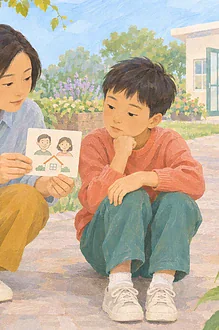
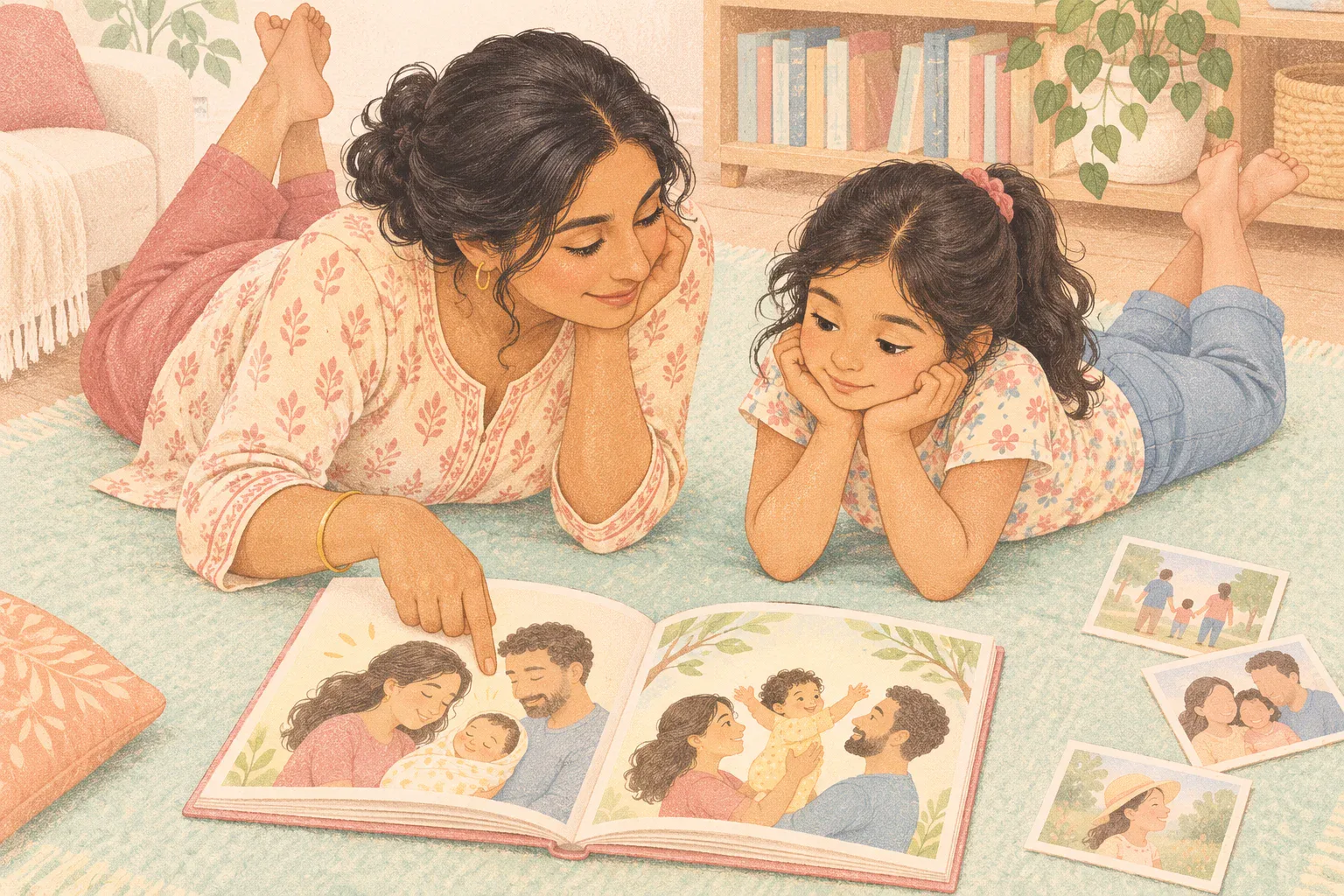
- Ages 3–5: Offer a few clear sentences during a quiet moment. A simple picture book can give you something to look at together. Explain unfamiliar words briefly. If the child changes the subject, leave the door open rather than asking them to prove they understood.
- Ages 6–9: Ask, “What do you think a donor does?” Correct misunderstandings gently. They may need help separating the person who contributed an egg or sperm from the people raising them. Invite questions about resemblance without guessing where each feature or interest came from.
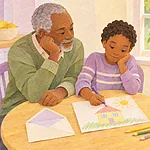
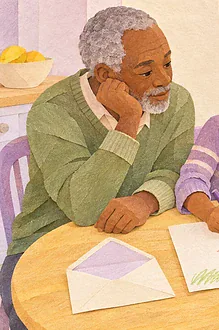
- Ages 10–12: Offer more detail about conception, the information you have and the limits of it. Ask whether school lessons about inheritance have raised questions. Let them choose a private way to ask, such as writing a note.
- Ages 13–18: Make space for questions about identity, genetic relatives and who else knows. Offer access to appropriate records and support with understanding them. Discuss possible searches thoughtfully, including privacy and uncertain outcomes, rather than demanding immediate interest or agreement.
Use the child’s strongest language and familiar communication supports. Short written explanations, pictures, typing or AAC may help. Allow processing time; a quiet response is not a reliable measure of how much the information matters.
If this is the first conversation with an older child
Choose a private time with space afterwards. Begin directly: “There is important information about how you were conceived that I should have shared earlier. An egg donor helped us have you.” Use the correct version, then stop and listen.
If asked why you waited, take responsibility: “I was uncertain how to explain it, and I delayed. That was my decision.” Do not ask for forgiveness on the spot or insist that your good intentions should settle their feelings.
The Donor Conception Network offers age-related resources and support for parents telling older children. Preparation with a counsellor experienced in donor conception can help you stay available for questions without making the child manage your distress.
Answer curiosity without treating it as rejection
“Do I look like the donor?” and “Could I meet them?” are different questions. Answer the one asked. Try: “We have this information. There are things we don’t know. We can find out what options exist.” Curiosity about genetic connections does not need to become a test of family loyalty.
Do not promise a name, meeting or relationship. Access depends on the country, date, records and circumstances of the donation. The HFEA’s donor-conception FAQs describe UK information and support routes; families elsewhere should check their own clinic or regulator.
HFEA also warns that consumer DNA matching can reveal connections through relatives, even when the person has not tested. A DNA kit is therefore not a casual surprise gift. Before any search or contact, discuss consent, privacy, possible unexpected findings and available specialist support.
Protect privacy without making the child keep a secret
Tell your child who already knows. Agree what relatives may share, and avoid posting the story publicly on their behalf. A child can say, “That is private,” while still being free to ask a trusted person for help. Our guide to permission before sharing family stories offers a useful starting point.
School does not need the whole conception history to adapt an assignment. If family trees or inherited-trait worksheets create pressure, use the practical alternatives in school activities that include different families.
Return to the conversation gently: “Anything else you have wondered about?” Accept changing feelings and different levels of interest between siblings. If questions or distress feel difficult to navigate, seek donor-conception peer support or a suitably qualified counsellor. Your child can receive truthful information, care and support without being expected to feel a particular way.