
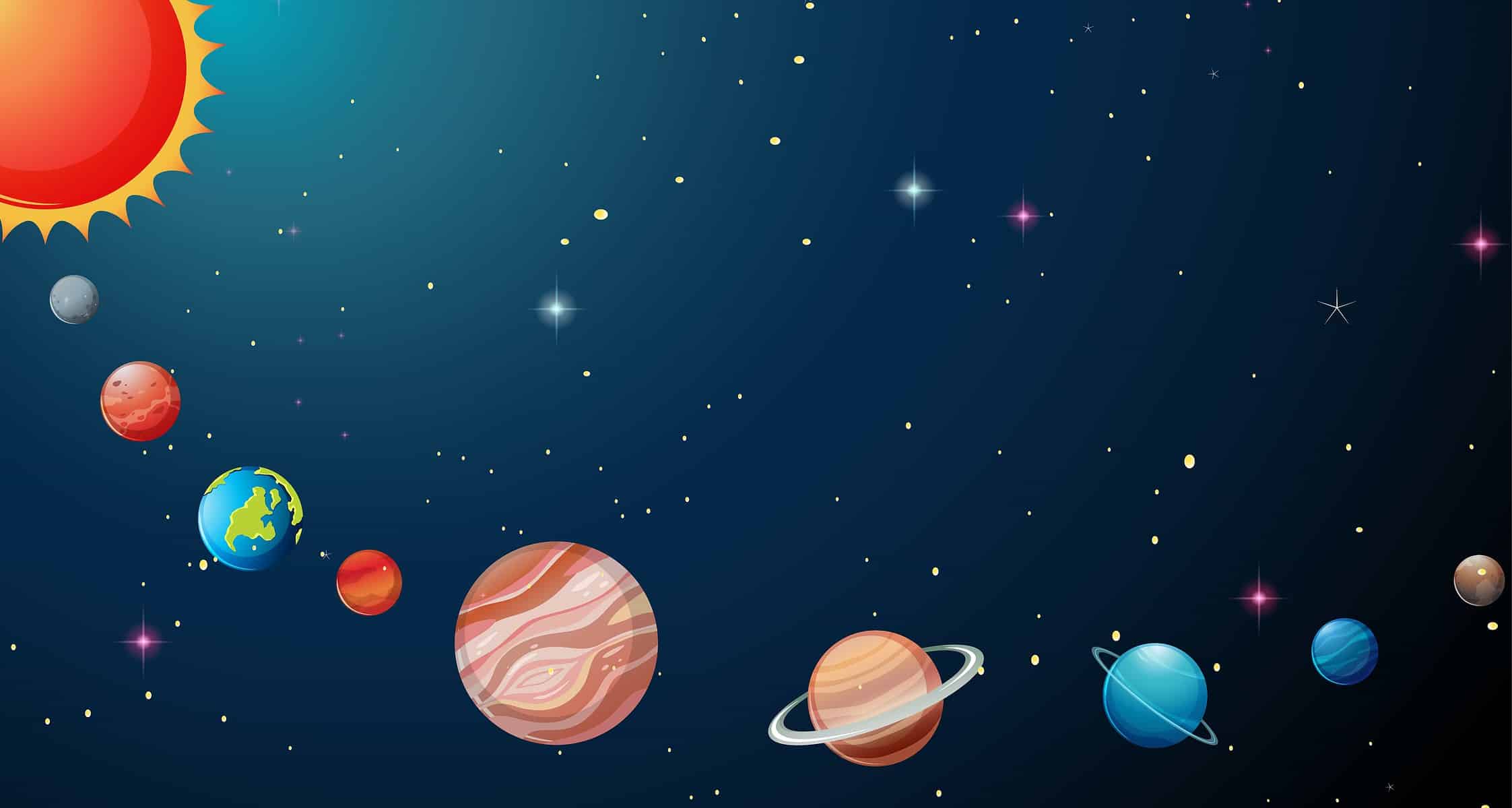
Can you turn on the spot and travel around something at the same time? A simple movement game makes two ideas easier to discuss: rotation and orbit. You can also play with paper planets on a table.
Set up your solar system
Choose a clear, accessible space and allow about 20 minutes. Use a yellow paper circle for the Sun and eight paper planet cards. Avoid balloons, loose cords and small pieces around young children. Chalk paths outdoors can work if the surface is suitable and there is room to move safely.
Place the Sun at the centre and arrange the planets in order: Mercury, Venus, Earth, Mars, Jupiter, Saturn, Uranus and Neptune. The distances and sizes in this game are not to scale. Say that aloud before you start.
Try the two movements separately
- Choose one planet. Move its card around the Sun, or invite a player to follow a clear path around the centre. This models an orbit.
- Turn the card on its own spot. This models rotation. A player can demonstrate one slow turn if comfortable, then stop.
- Use a large ball or a globe to represent Earth. Mark a place with a sticker and ask which way it faces as Earth turns.
- Compare the movements: Earth’s rotation relates to day and night; one orbit of the Sun takes about a year.
- Invite questions and let someone else move the model. You do not need eight moving children at once.
What this model leaves out
Real planets do not follow chalk tracks, and their orbits are not all perfect circles. They rotate and orbit at different rates. Avoid saying every planet spins once in less time than it takes to orbit: Venus is a notable exception when comparing its rotation period with its orbital period.
Pluto is a dwarf planet. It did not disappear from the solar system when its classification changed. The model’s eight planet cards represent the eight planets recognised today.
Keep movement optional
Children can move cards, direct a partner or use a tabletop model. Do not ask anyone to spin while walking, race or continue when dizzy. Keep paths clear and pause before switching roles.
For a skywatching follow-up, check a reliable local guide for what is visible. Venus is not the only planet visible without a telescope: Mercury, Mars, Jupiter and Saturn can also be seen in suitable conditions. Never look at the Sun directly or through binoculars or a telescope without proper specialist solar equipment.